Sports Injury Surgery in India: ACL, Meniscus and Shoulder Repairs for Ghanaian Patients
Sports injury surgery in India for Ghanaian patients: ACL reconstruction, meniscus repair and shoulder surgery, recovery times, costs and travel tips.
Published on 16 November 202615m

Adil Hussain
Health and Wellness Writer and Senior Manager, Content Development at TMTC
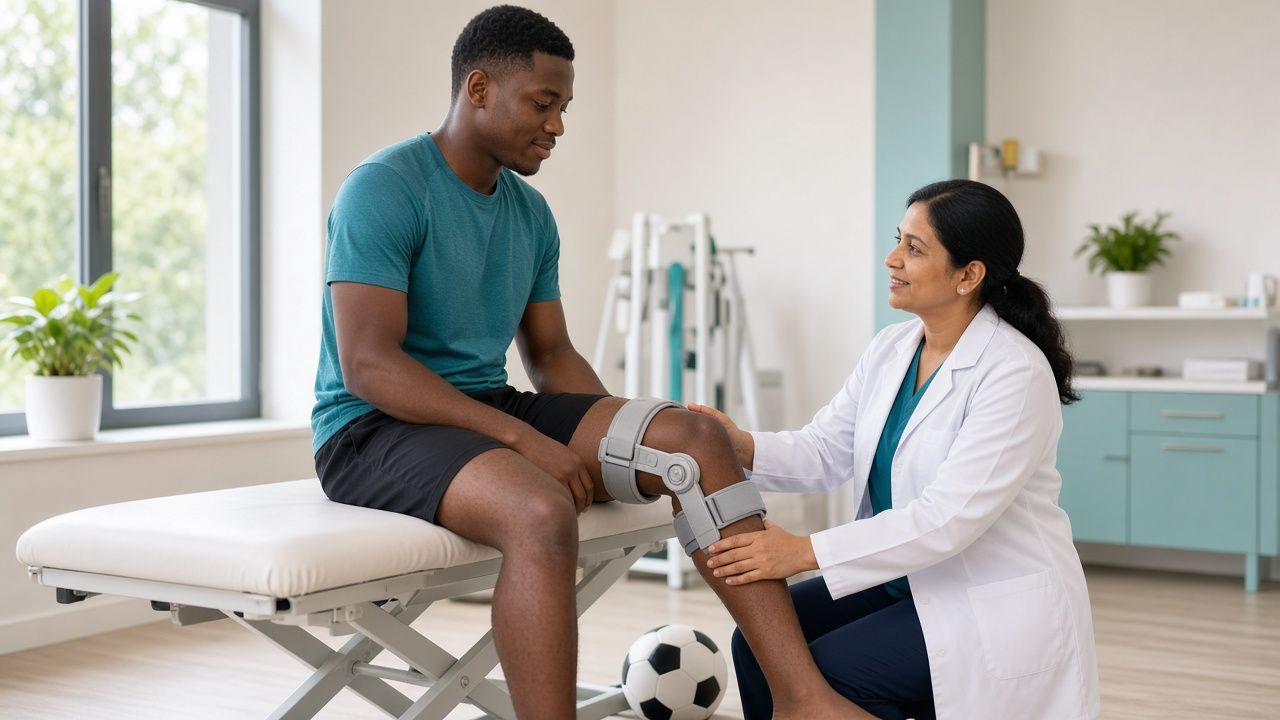
One wrong landing in a weekend football match, a sudden turn on the basketball court or a fall at the gym, and a knee or shoulder you have always trusted stops working the way it should. The pain, the swelling and the fear that the joint might give way can make even simple movements feel uncertain. If sport is part of who you are, the hardest question is often whether you will play again.
The reassuring news is that many sports injuries heal well, and not every one needs an operation. When surgery is the right answer, sports injury surgery in India gives patients from Ghana access to experienced orthopaedic surgeons and structured rehabilitation. Travel, recovery and follow-up are planned around them.
This guide explains three of the most common sports injuries: ACL tears, meniscus tears and shoulder injuries. You will learn when keyhole surgery is needed, what each repair involves, how long recovery takes and what it costs. It also covers how to plan sports injury treatment for Ghanaian patients, from your first scan at home to your return to Accra, Kumasi or wherever you live.
Common Sports Injuries That May Need Surgery
The knee and shoulder absorb the force of almost every sprint, jump, tackle and throw. That is why they are injured more often than most other joints in sport. Damage can affect ligaments, tendons, cartilage, muscle or bone, and the right treatment depends on exactly which structure is hurt.
Three injuries that often need a specialist assessment are:
- Anterior cruciate ligament (ACL) tears: damage to one of the main ligaments that keeps the knee stable. It is usually caused by a sudden turn, stop or change of direction.
- Meniscus tears: damage to the rubbery cartilage cushions inside the knee. It is often caused by twisting while the foot stays planted on the ground.
- Shoulder injuries: tears to the rotator cuff tendons, the labrum (the rim of cartilage around the shoulder socket) or the ligaments. These are caused by falls, collisions, repeated overhead movement or a dislocation.
Common symptoms include pain, swelling, stiffness, weakness and a feeling that the joint is locking or giving way. These symptoms alone do not mean you need surgery. An orthopaedic surgeon will usually examine the joint and may arrange X-rays or an MRI scan to see how much damage there is.
Seek urgent medical care if you cannot put weight on your leg, the joint looks deformed, swelling is severe or you cannot move the limb.
Timing also matters for ligament injuries. A study of ACL reconstructions at Komfo Anokye Teaching Hospital in Kumasi found that patients who had surgery within 12 months of their injury reported better results than those operated on later (Postgraduate Medical Journal of Ghana). So it is worth getting a proper diagnosis early, even if you are not sure surgery is needed.
When Is Arthroscopy Needed for a Sports Injury?
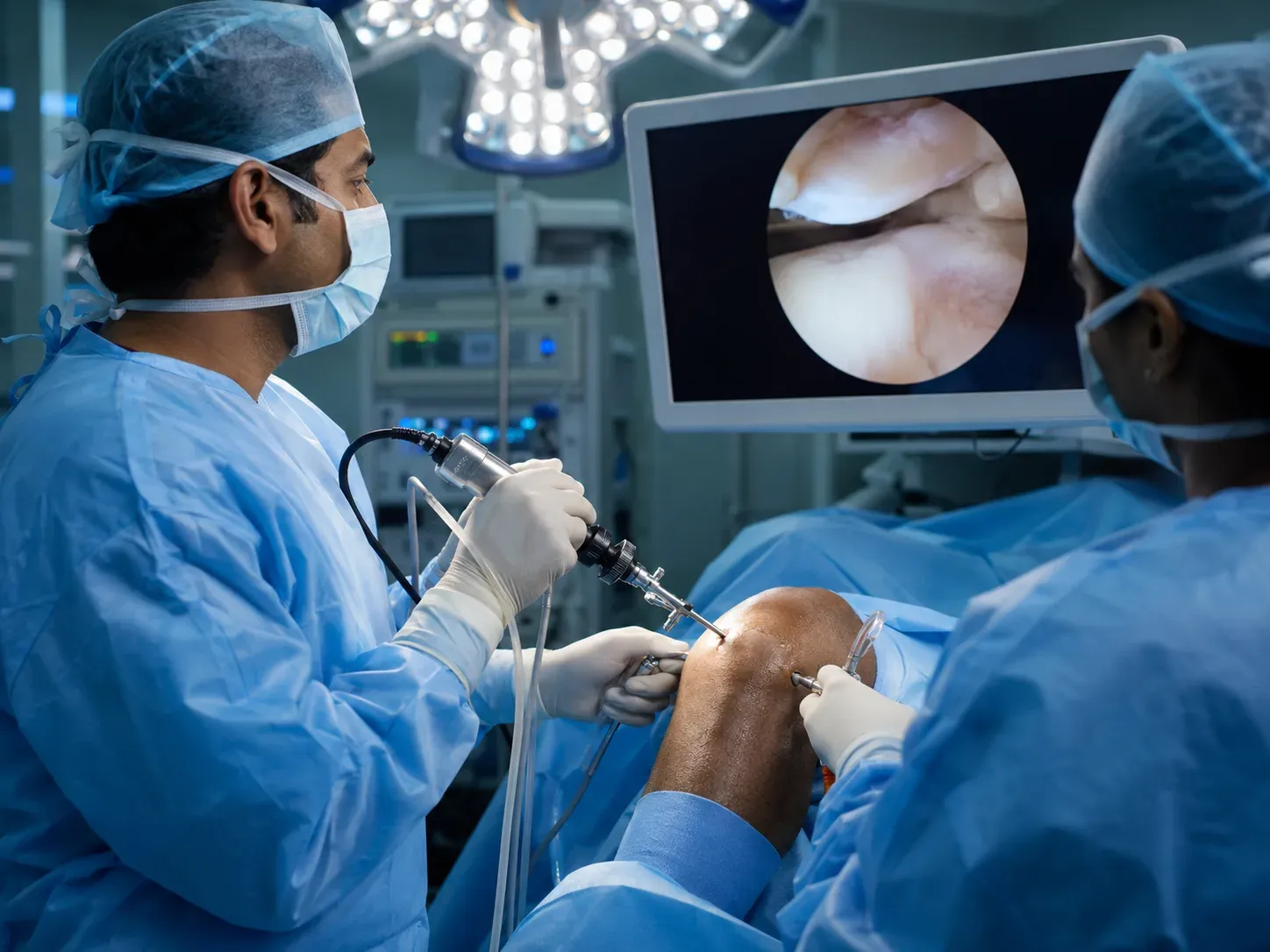
Arthroscopy, often called keyhole surgery, lets the surgeon see inside a joint through a tiny camera. The surgeon then repairs it with fine instruments passed through small cuts in the skin. Arthroscopy in India is commonly used to reconstruct ligaments, repair or trim a torn meniscus, reattach shoulder tendons and stabilise a shoulder that keeps dislocating.
Benefits and limitations of arthroscopy
Compared with traditional open surgery, arthroscopy usually means smaller incisions and less damage to the surrounding tissue. Smaller cuts do not mean a smaller injury, though. A reconstructed ligament or repaired tendon still needs months to heal, and rehabilitation takes just as much commitment.
Keyhole surgery is not suitable for every injury. Large or complex tears, injuries combined with fractures, or severe joint damage may need open surgery instead. Your surgeon will recommend the approach that best suits your scans, your injury and your goals.
ACL Reconstruction in India: Restoring a Stable Knee
The ACL runs through the centre of the knee and stops the shinbone from sliding forward or twisting too far. In football, which is played on almost every open pitch in Ghana, a quick cut past a defender or an awkward landing from a header is a classic way to tear it. Many players remember a "pop", followed by rapid swelling and being unable to carry on.
Does every ACL tear need surgery?
No. Treatment depends on how badly the ligament is torn, how stable the knee feels, whether other parts of the knee are damaged and what you want to get back to doing. Some people with partial tears and a stable knee recover well with physiotherapy, strengthening exercises and changes to their activity. Non-surgical treatment can also suit people who do not play sports involving pivoting or sudden changes of direction.
For active people whose knee keeps giving way, reconstruction is usually advised. This is especially true for those who want to return to football, basketball or similar sports (AAOS: ACL Injury: Does It Require Surgery?).
What happens during ACL reconstruction?
During ACL reconstruction in India, the torn ligament is replaced with a graft. This is usually a tendon taken from your own knee or thigh, although donor tissue may be used in some cases. The surgeon fixes the graft in place so that it can take over the job of the original ligament. The operation is usually done arthroscopically, although the exact technique varies.
The best graft depends on your sport, activity level, previous injuries and the surgeon's assessment. Ask about the benefits and drawbacks of each option before surgery.
TMTC's partner orthopaedic surgeons include Dr Jayant Arora, Senior Director and Unit Head of Orthopaedics at Fortis Memorial Research Institute, Gurugram. He trained in the UK and is known for ACL surgery, meniscus repair, rotator cuff repair and shoulder instability surgery. You can also read our guide to ACL reconstruction abroad for Ghanaian athletes.
ACL reconstruction cost in India
The ACL reconstruction cost in India depends on the hospital, surgical technique, graft, fixation devices, scans, length of hospital stay and the physiotherapy you need.
As a guide, TMTC's published starting price for arthroscopy in India for Ghanaian patients is US$1,999, against a comparison figure of US$3,999 in Ghana (TMTC Ghana). An ACL reconstruction is quoted individually once your scans have been reviewed.
Ask for a written quote based on your own medical reports, and check whether it covers:
- The surgeon's and anaesthetist's fees
- The hospital stay and medicines
- Implants and fixation devices
- Physiotherapy in India
- Post-treatment cover if a complication arises after you return home
Flights, visas, accommodation and the cost of bringing a family member are usually budgeted separately. For a wider comparison, see orthopaedic surgery costs for Ghanaian patients.
Meniscus Repair in India: Protecting the Knee's Cartilage
Each knee has two crescent-shaped menisci that spread your body weight, absorb shock and help keep the joint steady. A meniscus usually tears when the knee twists while bent and the foot stays planted. The signs include pain along the joint line, swelling, difficulty bending the knee, clicking and, sometimes, the knee locking in place.
Not every meniscus tear needs surgery. Some small or stable tears settle with rest, physiotherapy and activity changes.
When is meniscus repair recommended?
Meniscus repair in India may be recommended when a tear has a good chance of healing once its edges are stitched together. The surgeon will consider where the tear is, its blood supply, the quality of the tissue, any other injuries, and your age and activity level (AAOS: Meniscus Tears).
During arthroscopy, the surgeon uses stitches or small fixation devices to hold the torn edges together while they heal. If the tear cannot be repaired, a partial meniscectomy may be done instead, removing only the unstable part of the meniscus.
Surgeons try to save as much meniscus as possible. Losing cartilage puts extra stress on the knee and may increase the risk of arthritis later.
Recovery after meniscus surgery
Recovery depends on whether the meniscus was repaired or partly removed. After a partial meniscectomy, many people return to normal activity within weeks. A repair needs more time to heal, so you may need crutches, a knee brace or limits on how much weight you put on the leg for several weeks.
Physiotherapy is essential either way. If you have torn both your ACL and your meniscus, which is common in football, your rehabilitation plan will need to protect both repairs.
Shoulder Surgery in India: Repairing Tendons and Joint Damage
The shoulder moves more freely than any other joint, which is what makes throwing, swimming and lifting possible. That same freedom makes it prone to tears and dislocations. Shoulder surgery in India for sports injuries usually focuses on repairing torn tendons or stabilising a joint that keeps slipping out of place.
Rotator cuff repair
The rotator cuff is a group of four muscles and tendons. They lift and rotate the arm and hold the top of the arm bone in its socket. The rotator cuff can tear suddenly after a fall or heavy lift, or gradually from repeated overhead movement and wear. Typical symptoms are pain when raising the arm, weakness and pain at night.
Many rotator cuff tears improve with rest, physiotherapy and avoiding aggravating activities. Surgery is usually advised in three situations (AAOS: Rotator Cuff Tears: Surgical Treatment Options):
- Pain and weakness persist despite treatment.
- A large tear follows a recent injury.
- Your work or sport demands full shoulder strength.
In an arthroscopic repair, the surgeon stitches the torn tendon back onto the bone. Afterwards, you will wear a sling for several weeks to protect the repair while it heals.
Shoulder instability and labral repair
A dislocation happens when the top of the arm bone is forced out of its socket. Once the labrum or ligaments are damaged, the shoulder can keep dislocating, sometimes with very little force.
Surgery may be recommended if physiotherapy has not worked, or if you play a contact sport with a high risk of further dislocations. The surgeon will repair the labrum or stabilise the joint in another way.
When is shoulder replacement necessary?
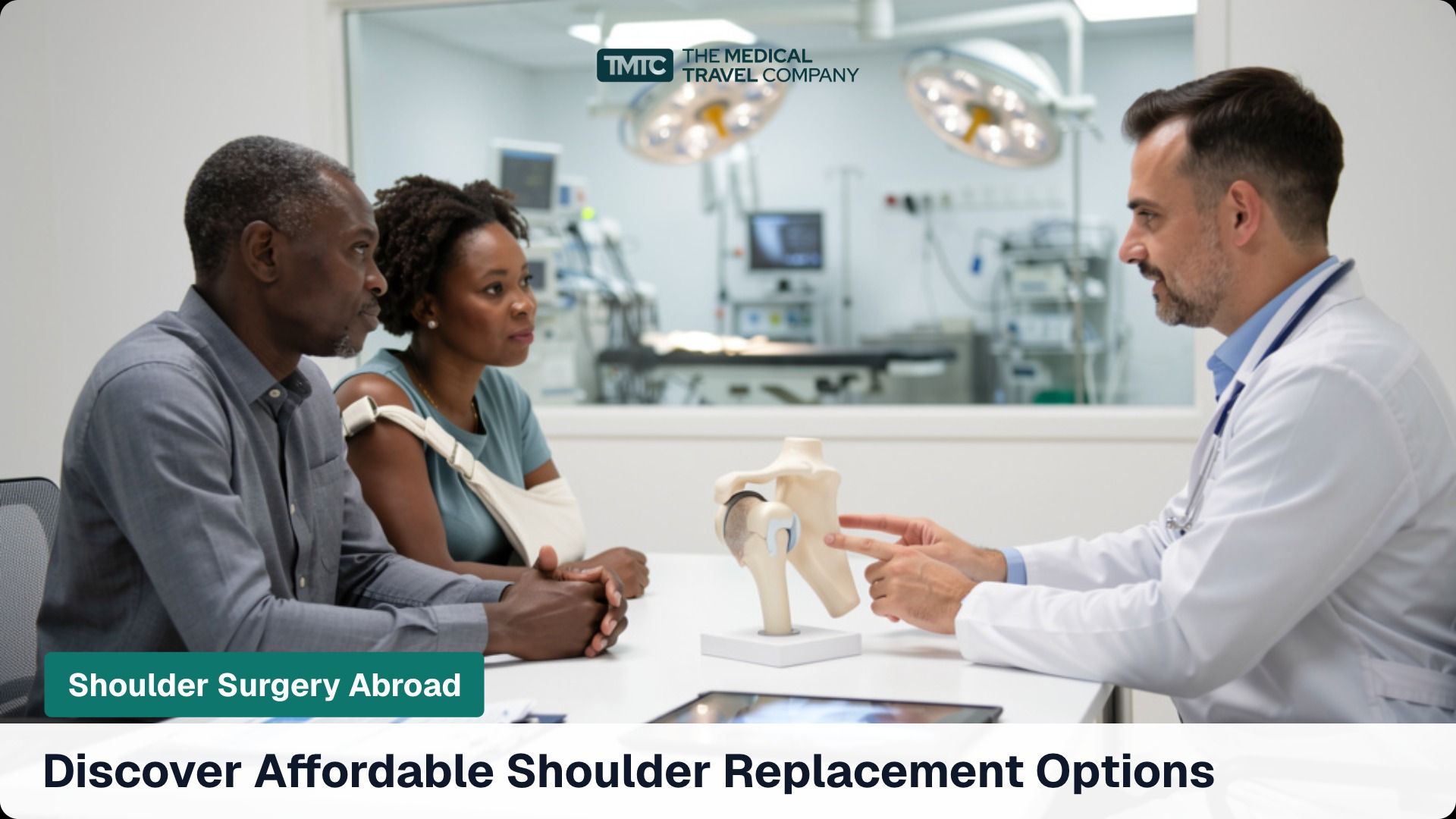
Shoulder replacement is for joints with severe damage, most often from advanced arthritis or certain complex injuries. It is not the usual treatment for a straightforward sports tendon tear.
In this operation, the damaged joint surfaces are replaced with artificial parts. The type of replacement depends on the condition of the joint, the rotator cuff and your general health. For a younger athlete with a repairable tendon or ligament injury, an operation that preserves the natural joint is usually more appropriate.
If replacement is being considered, TMTC's published starting price for shoulder replacement for Ghanaian patients is US$2,999 in India, against a comparison figure of US$6,999 in Ghana (TMTC Ghana). Our guide to shoulder replacement abroad for Ghanaian patients explains what to expect.
Recovery Timeline: When Can You Return to Sport?
After sports injury surgery in India, the operation is only the beginning. Physiotherapy restores movement, strength, coordination and confidence. How quickly you return to sport depends on the procedure, the severity of the injury and your progress. The timelines below are general guides, not clearance dates.
| Procedure | General recovery guide |
|---|---|
| ACL reconstruction | Return to football and other pivoting sports often takes around 9-12 months, sometimes longer. |
| Meniscus repair | Rehabilitation commonly takes around 3-6 months, depending on the tear and the repair. |
| Partial meniscectomy | Recovery is often quicker, usually several weeks, depending on symptoms and activity. |
| Rotator cuff repair | Many people regain everyday function in around 4-6 months, but full strength can take up to a year. |
The stages of rehabilitation
- Early recovery: The focus is on controlling pain and swelling, protecting the repair and following your surgeon's instructions on movement and weight-bearing. You may need crutches, a brace or a sling.
- Restoring movement: Physiotherapy gradually improves joint mobility and prevents stiffness. When this starts depends on the procedure.
- Strength and control: As healing progresses, exercises target the muscles around the joint, along with balance and coordination, which are vital for athletes.
- Sport-specific training: Running, jumping, throwing and changes of direction are added only when you are ready, often after strength and movement tests.
- Medical clearance: A return to competition should depend on a clinical assessment of your strength, movement and confidence, not simply on how many weeks have passed since surgery.
Planning Sports Injury Treatment From Ghana
Good planning makes the difference between a stressful trip and a smooth one. Arrange a specialist review of your records before you book any travel. That way the surgeon can confirm the diagnosis and tell you whether you need further tests.
Documents to prepare
- MRI and X-ray reports, along with the images if you have them
- Notes from previous orthopaedic consultations and treatment
- Details of any physiotherapy you have already had
- A list of your current medicines, allergies and other medical conditions
- Information about your sport, activity level and recovery goals
Visa and yellow fever certificate
Ghanaian patients can apply for an e-Medical Visa online through the Government of India's official visa portal. Alternatively, they can apply for a regular medical visa through the High Commission of India in Accra.
For a regular medical visa, the High Commission asks for a confirmation letter from the Indian hospital, a referral from your doctor or hospital in Ghana, and proof of funds. A family member travelling with you applies for a medical attendant visa. Our India medical visa guide for Ghanaian patients explains each step.
You will also need a valid yellow fever vaccination certificate, because India requires one from all travellers arriving from Ghana (High Commission of India, Accra: Yellow Fever Notice). Check that yours is valid well before you travel.
How long you will stay in India
Plan your time in India around your surgery and early recovery, not just the operation itself. For ACL reconstruction, patients usually stay around 2-3 weeks. This gives the surgical team time to check the wound, start physiotherapy and confirm that you are fit to fly.
Smaller arthroscopic procedures may need less time, while combined knee repairs or shoulder surgery may need longer. Your surgeon will confirm the right length of stay for your case.
Flying home after knee or shoulder surgery
There is no direct flight between Accra and Delhi, so most journeys connect through a hub such as Addis Ababa, Dubai or Doha. A long journey soon after surgery needs some preparation:
- Book an aisle or extra-legroom seat if your knee needs to stay straight or in a brace.
- Walk around during layovers and do the ankle exercises your physiotherapist gives you. Long periods of sitting raise the risk of blood clots after leg surgery.
- Wear compression stockings or take blood-thinning medicine only if your surgeon advises it.
- If you are in a sling, ask for help with luggage and pack medicines in your hand baggage.
Do not fly until your surgeon has confirmed that you are fit to travel.
Continuing rehabilitation back in Ghana
Most of your recovery will happen at home. Before you leave India, ask for a written rehabilitation plan and copies of your surgical notes. Share them with a physiotherapist in Accra, Kumasi or near your home.
Keep your follow-up appointments with the surgical team, which can often be done by video call. TMTC's aftercare support is designed to keep your recovery on track from the hospital in India to your first sessions back in Ghana.
Choosing the Right Orthopaedic Specialist
When comparing options for sports injury surgery in India, look beyond the price. The right team will make a real difference to your result. Consider:
- Experience with your specific injury: Ask how many ACL reconstructions, meniscus repairs or shoulder stabilisations the surgeon performs each year.
- Hospital accreditation: Look for hospitals accredited by JCI (Joint Commission International) or NABH (National Accreditation Board for Hospitals and Healthcare Providers, India). Our guide to leading Indian hospitals for international patients from Africa explains how to check this.
- Imaging and rehabilitation: Make sure the hospital has MRI on site and a sports physiotherapy team that will start your rehabilitation before you fly home.
- Follow-up after discharge: Find out who will review your progress once you are back in Ghana and how you can reach them.
You can view TMTC's partner hospitals and doctors. They include orthopaedic specialists such as Dr Subhash Jangid of Fortis Memorial Research Institute, Gurugram, who specialises in hip, knee and shoulder surgery.
Taking the Next Step Towards Recovery
A sports injury does not have to mean the end of an active life. With an accurate diagnosis, the right treatment and steady rehabilitation, many people regain strong, stable joints and return to the activities they love.
For some, physiotherapy will be enough. Others may benefit from ACL reconstruction, meniscus repair or shoulder surgery after a detailed orthopaedic assessment. Through our orthopaedic care pathway, TMTC can help you work out which applies to you and plan sports injury treatment for Ghanaian patients from start to finish.
Request a free case review and speak with our team from wherever you are in Ghana. You can discuss your medical records, your treatment options and the practical arrangements for your trip. You can also read how it works or visit our Ghana homepage to explore other treatments.
Sources
- American Academy of Orthopaedic Surgeons (AAOS), ACL Injury: Does It Require Surgery?
- AAOS, Meniscus Tears
- AAOS, Rotator Cuff Tears: Surgical Treatment Options
- Postgraduate Medical Journal of Ghana, Arthroscopic ACL Reconstruction in Ghana: A 2-Year Outcome Assessment
- High Commission of India, Accra, Visa information
- High Commission of India, Accra, Yellow Fever Notice
- Government of India, Indian Visa Online portal
- The Medical Travel Company, Ghana treatment prices
Medically Reviewed By:
Dr Piyush Das
Experience: 10+ Years
Department: General Practitioner, Industrial Health & Occupational Medicine
Related Articles

Ready to open the door to better health?