Your Guide to Egg Freezing Abroad for Zimbabwean Women: Cost, Process & Benefits
Explore affordable egg freezing abroad for Zimbabwean women. Understand costs, processes, and benefits of oocyte freezing treatment today!
Last Updated On 29 April 20269m


Medical professional with 10+ years’ experience in diagnosis, patient care, and clinical leadership.
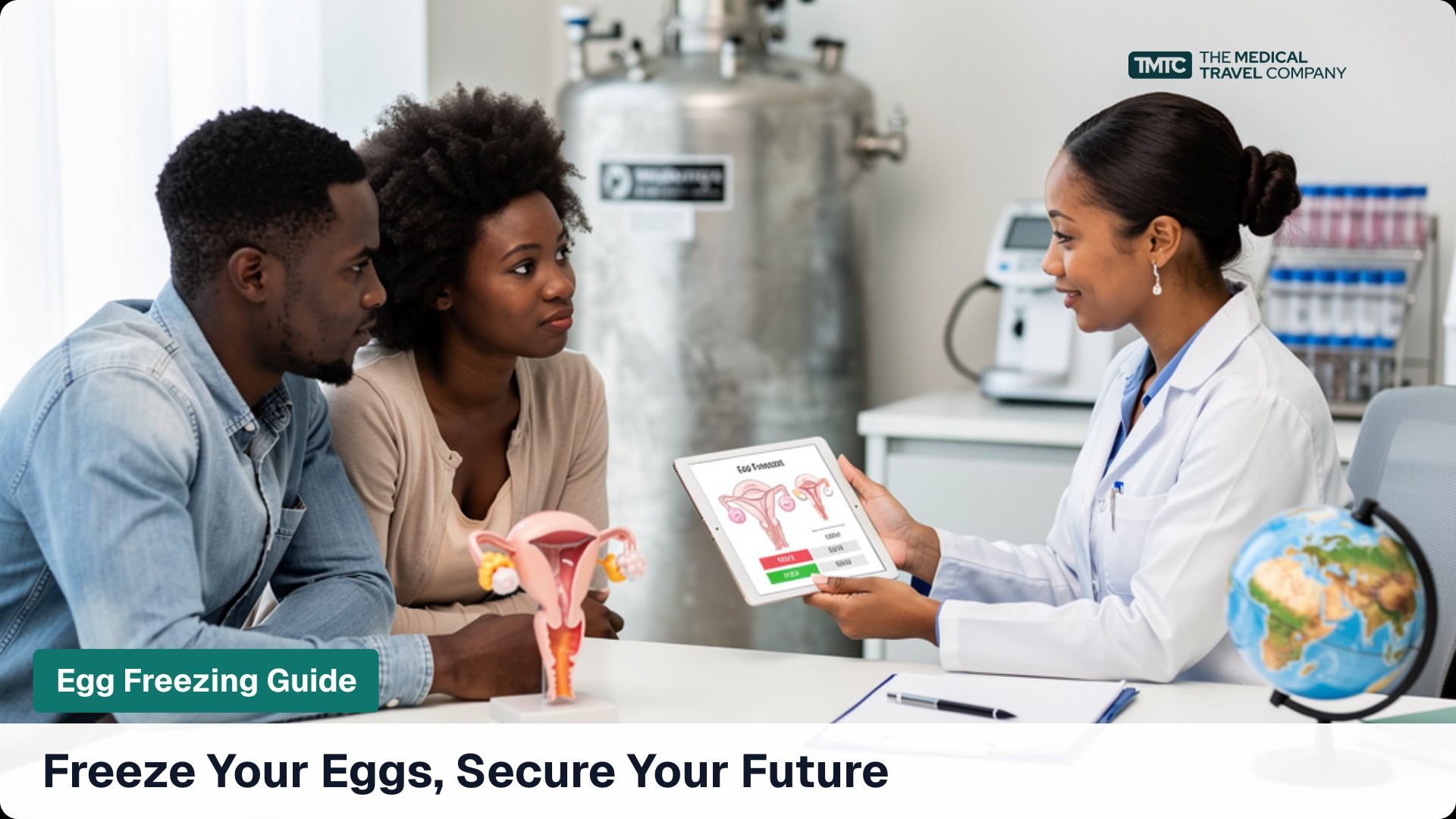
For many Zimbabwean women, the decision to freeze eggs represents a powerful step in fertility planning. Whether you're focusing on your career, waiting for the right partner, or simply wanting to preserve your reproductive options, egg freezing abroad offers world-class care at affordable prices.
You're not alone in considering this option. Thousands of women worldwide are choosing oocyte freezing treatment to take control of their reproductive timeline. With expert guidance and personalised treatment plans, the process has become more accessible than ever before.
What is Egg Freezing and Why Consider Going Abroad?
Egg freezing, medically known as oocyte cryopreservation, is a fertility preservation procedure that allows you to store healthy eggs for future use. The process involves retrieving mature eggs from your ovaries and freezing them at ultra-low temperatures, where they can remain viable for years.
Many Zimbabwean women are exploring treatment abroad because international fertility clinics often offer significant cost savings compared to local options. Countries like India provide the same high-quality care you'd expect from top-tier facilities, but at a fraction of the cost you might pay elsewhere.
The technology and expertise available internationally are often cutting-edge. Modern vitrification techniques have dramatically improved egg survival rates, with some clinics reporting over 90% of frozen eggs surviving the thaw process. This means your egg freezing investment has a much higher chance of success when you're ready to start a family.
The Complete Egg Freezing Process: What to Expect
Understanding the egg freezing process helps you feel more prepared and confident about your decision. The entire journey typically takes about 2-3 weeks from start to finish.
1. Initial Consultation and Testing
Your journey begins with comprehensive fertility testing. This includes blood work to check your hormone levels, including anti-Müllerian hormone (AMH), which indicates your ovarian reserve. You'll also have an ultrasound to count your antral follicles - the small follicles that can develop into mature eggs.
2. Hormone Stimulation Process
The hormone stimulation process is the heart of egg freezing. For about 8-14 days, you'll give yourself daily hormone injections to stimulate your ovaries to produce multiple eggs instead of the single egg that normally develops each month. Modern protocols are gentler than ever, with many women experiencing only mild side effects like bloating or mood changes.
During this time, you'll have regular monitoring appointments every 2-3 days. These include blood tests to check hormone levels and ultrasounds to track how your follicles are developing. Your doctor will adjust your medication dosage based on how you're responding.
3. Egg Retrieval Procedure
The oocyte retrieval is a minimally invasive procedure that takes about 20-30 minutes. You'll receive light sedation to keep you comfortable while your doctor uses a thin needle guided by ultrasound to collect the eggs from your ovaries. Most women describe the recovery as similar to menstrual cramps that resolve within a day or two.
4. Egg Storage
Immediately after retrieval, your eggs are evaluated for maturity and quality. The mature eggs are then frozen using vitrification, a flash-freezing technique that prevents ice crystal formation. Your eggs are stored in secure, monitored tanks where they can remain viable for decades.
Egg Freezing Cost: Breaking Down Your Investment
Understanding egg freezing costs helps you plan financially for this important investment in your future. The total expense includes several components that vary by location and clinic.
| Cost Component | India (USD) | South Africa (USD) | UK (USD) |
|---|---|---|---|
| Initial consultation & testing | $200-400 | $400-600 | $800-1,200 |
| Hormone medications | $800-1,500 | $1,200-2,000 | $2,000-3,500 |
| Monitoring & procedures | $1,500-2,500 | $2,500-4,000 | $4,000-6,000 |
| Egg retrieval | $2,000-3,000 | $3,000-4,500 | $5,000-7,000 |
| First year storage | $200-400 | $300-500 | $400-800 |
| Total first cycle | $4,700-7,800 | $7,400-11,600 | $12,200-18,500 |
The egg storage cost long term is an ongoing consideration. Annual storage fees typically range from $200-800 per year, depending on the facility and location. Many clinics offer discounted rates for longer storage commitments.
When comparing costs, remember that going abroad often includes travel and accommodation expenses, but the savings can still be substantial. For example, fertility treatment in India might cost 40-60% less than similar procedures in Western countries, even accounting for travel costs.
Best Age for Egg Freezing: Timing Your Decision
Age plays a crucial role in egg freezing success. Your eggs are healthiest and most numerous when you're younger, which directly impacts both the number of eggs you can freeze and their quality.
The optimal window for egg freezing is typically between ages 25-35. During this period, you're likely to respond well to hormone stimulation and produce a good number of high-quality eggs. Women in their late twenties and early thirties often retrieve 15-20 eggs in a single cycle, providing excellent options for future family planning.
However, don't let age discourage you if you're over 35. Many women successfully freeze eggs in their late thirties, though you might need more than one cycle to achieve the same number of stored eggs. The key is working with experienced fertility specialists who can create a personalised treatment plan based on your individual situation.
Under 35 — Women under 35 have the highest egg freezing success rates, with 85-90% of frozen eggs surviving the thaw process.
Understanding Egg Freezing Success Rates
Egg freezing success rates depend on several factors, with your age at the time of freezing being the most important. Younger eggs have better survival rates and higher chances of resulting in successful pregnancies later.
When you're ready to use your frozen eggs, they'll be thawed and fertilized through IVF. The process is remarkably similar to fresh IVF cycles, with success rates that closely mirror those of fresh egg IVF when the eggs were frozen at a young age.
It's important to understand that not every frozen egg will result in a baby. On average, it takes about 10-20 mature frozen eggs to have a good chance of one live birth. This is why many women choose to complete multiple egg freezing cycles or freeze eggs when they're younger to maximize their options.
The technology has improved dramatically over the past decade. Modern vitrification techniques have revolutionized the field, with many clinics now achieving pregnancy rates with frozen eggs that are nearly identical to fresh egg cycles. When you're considering IVF after egg freezing success, these improved outcomes mean your investment in fertility preservation is more likely to pay off.
Exploring Fertility Preservation Options
While egg freezing is an excellent option for many women, it's not the only fertility preservation choice available. Understanding all your options helps you make the best decision for your unique situation.
Fertility Preservation Options to Consider
- Egg freezing (oocyte cryopreservation) - Best for single women or those wanting to preserve eggs before medical treatment
- Embryo freezing - Ideal for couples who want to preserve fertilized embryos
- Ovarian tissue freezing - Newer option for women facing immediate fertility threats
- Natural family planning - Working with your current fertility window
- Fertility testing and optimization - Improving natural fertility before preservation
Your choice depends on your age, relationship status, medical history, and future family goals. Some women benefit from combining approaches, such as optimizing their natural fertility while also freezing eggs as a backup plan.
Expert guidance is crucial in making this decision. Fertility specialists can assess your individual situation through comprehensive testing and help you understand which fertility preservation options align best with your goals and timeline.
Planning Your Egg Freezing Journey Abroad
Planning your egg freezing journey abroad requires some preparation, but the process is more straightforward than many women expect. Most international fertility clinics have dedicated coordinators who help guide international patients through every step.
You'll typically need to plan for a 2-3 week stay abroad. Some clinics offer programs where you can do your initial testing and start medications at home, reducing the time you need to spend traveling. This approach can make the process more convenient while still providing access to world-class care.
Consider the practical aspects like accommodation, travel insurance, and follow-up care. Many fertility destinations have established support networks for international patients, including recommended hotels near clinics and local support services.
Taking the Next Step in Your Fertility Journey
Egg freezing abroad represents more than just a medical procedure - it's an investment in your future choices and peace of mind. With advances in technology and increased accessibility, more Zimbabwean women are discovering that they can access world-class fertility care at affordable prices.
The key to success is working with experienced professionals who understand your unique needs and can guide you through the process with expert care. From your initial consultation through long-term storage, having the right support team makes all the difference in your fertility preservation journey.
Don't let uncertainty hold you back from exploring your options. Whether you're 25 or 38, single or in a relationship, there are fertility planning options that can work for your situation. The most important step is getting accurate, personalized information about your fertility status and options.
Schedule a consultation with a fertility specialist to discuss your goals and learn more about egg freezing abroad. With proper planning and expert guidance, you can take control of your reproductive timeline and create the family you've always envisioned, when the time is right for you.
References:
This article incorporates current medical understanding and industry best practices for egg freezing procedures. For specific medical advice and personalized treatment recommendations, please consult with qualified fertility specialists who can assess your individual situation.
Related Articles



Ready to open the door to better health?