Egg Freezing Abroad for Tanzanian Women: A Comprehensive Guide to Cost, Process & Benefits
Explore the benefits, costs, and processes of egg freezing abroad for Tanzanian women. Make informed fertility decisions with expert guidance.
Last Updated On 29 April 202613m


Medical professional with 10+ years’ experience in diagnosis, patient care, and clinical leadership.
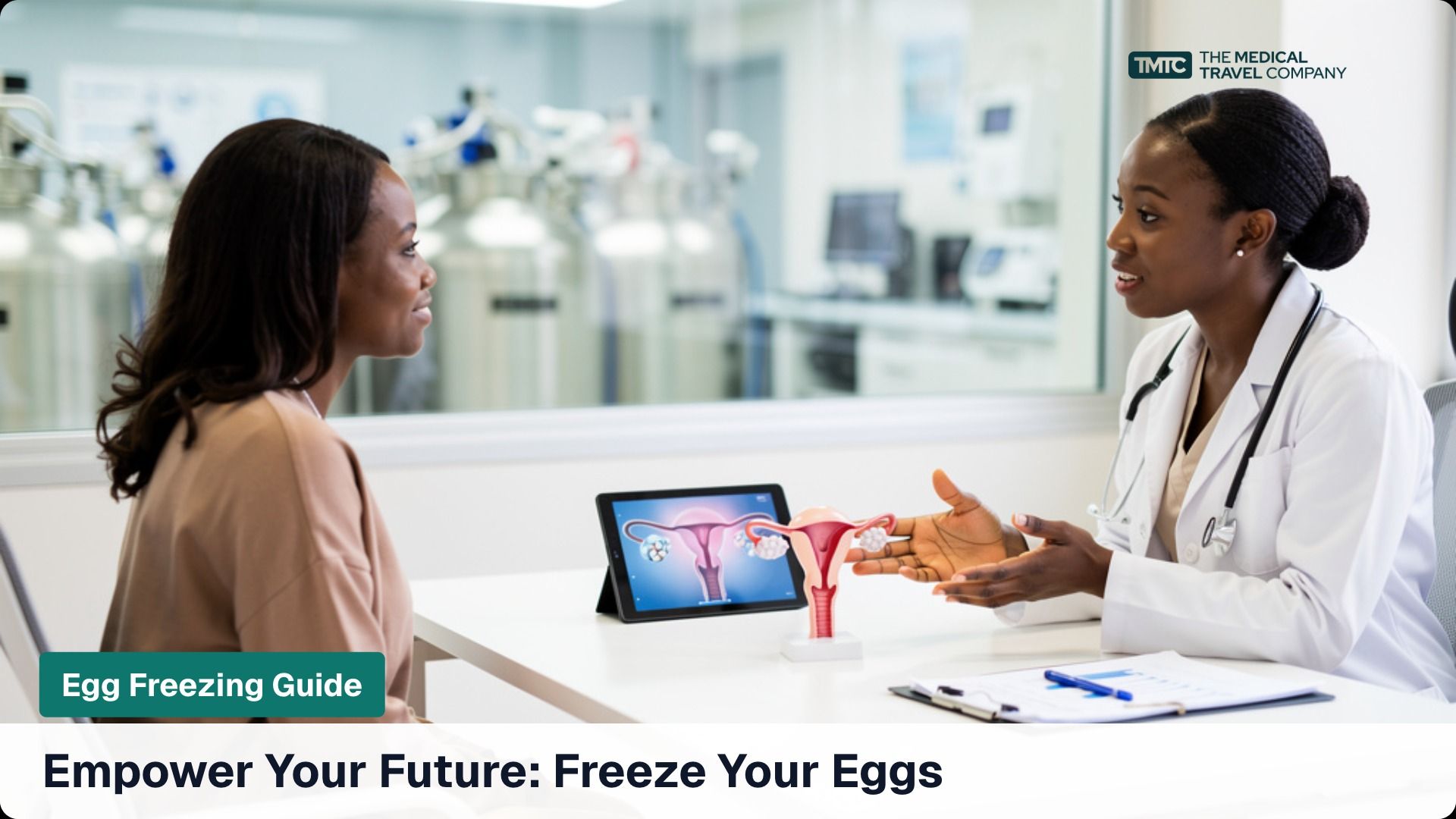
More Tanzanian women are taking control of their reproductive future by exploring egg freezing options abroad. With limited local facilities and rising career ambitions, many are discovering that preserving their fertility overseas offers both quality care and significant cost savings. This decision isn't just about timing - it's about having options when life takes unexpected turns.
Understanding Egg Freezing: The Basics
Egg freezing, scientifically known as oocyte cryopreservation, is a process that preserves a woman's unfertilized eggs for future use. Think of it as hitting the pause button on your biological clock. The procedure involves retrieving your eggs when they're at their healthiest and storing them at ultra-low temperatures until you're ready to start a family.
What is Egg Freezing?
The process begins with careful assessment of your ovarian reserve - essentially, how many healthy eggs you have available. Your doctor will use blood tests and ultrasounds to create a personalized treatment plan. This isn't a one-size-fits-all approach; every woman's body responds differently, which is why expert guidance is so important.
Unlike some fertility treatments, egg freezing doesn't guarantee pregnancy later, but it significantly improves your chances when you decide the time is right. For many Tanzanian women, this represents genuine reproductive autonomy - the freedom to pursue education, career goals, or wait for the right partner without worrying about declining fertility.
The Hormone Stimulation Process
The hormone stimulation process takes about 10-14 days and involves daily injections to encourage your ovaries to produce multiple eggs instead of the single egg released during a natural cycle. These medications are the same ones used in IVF treatments and are carefully monitored to prevent complications.
During this phase, you'll have regular monitoring appointments every 2-3 days. Your medical team will track how your eggs are developing using blood tests and ultrasounds. This close monitoring ensures the eggs are retrieved at the perfect moment - not too early, not too late. Many women find they can continue their normal activities during this period, though some experience mild bloating or fatigue.
Cost of Egg Freezing Abroad
The financial aspect of egg freezing abroad often surprises Tanzanian women - in a good way. While fertility treatments can be expensive, seeking care internationally frequently results in significant savings compared to private healthcare in Western countries, while still maintaining world-class standards.
Average Costs in Various Countries
| Country | Egg Freezing Cost (USD) | Includes | Additional Benefits |
|---|---|---|---|
| India | $1,500 - $2,500 | Consultation, medications, retrieval | English-speaking staff, established protocols |
| Thailand | $3,000 - $4,500 | Full cycle with monitoring | Medical tourism infrastructure |
| Turkey | $2,000 - $3,500 | Complete package | EU standards, affordable |
| Czech Republic | $2,500 - $4,000 | Comprehensive care | Advanced technology |
| Spain | $3,500 - $5,000 | Full treatment cycle | High success rates |
These costs represent substantial savings compared to countries like the US or UK, where egg freezing can cost $10,000-$15,000 per cycle. The savings become even more significant when you factor in that many women require multiple cycles for optimal egg numbers.
Long-term Storage Charges
Storage costs vary significantly by location and facility. Most clinics charge between $200-$600 annually for egg storage, with some offering discounted rates for longer-term commitments. It's worth noting that eggs can remain viable for decades when properly stored, giving you plenty of time to make decisions about your future.
When considering world-class fertility care in Tanzania, factor in these ongoing costs over 5-10 years. Some countries offer more competitive long-term storage rates, making them attractive options for younger women who may not use their eggs for many years.
Evaluating Fertility Preservation Options
Egg freezing isn't the only way to preserve fertility, but it's often the most flexible option for women who aren't ready for children but want to maintain their options. Understanding all available methods helps you make the decision that's right for your circumstances.
Benefits of Egg Freezing
Key Advantages of Egg Freezing
- Preserves fertility at your current age, not when you're ready to conceive
- No need for a partner at the time of freezing
- Flexibility to pursue career, education, or personal goals
- Reduces pressure in relationships regarding timing
- Peace of mind for women with family history of early menopause
- Option for women facing cancer treatment that may affect fertility
The psychological benefits shouldn't be underestimated. Many women report feeling more confident in their life choices knowing they've taken steps to preserve their fertility. This peace of mind allows for more authentic decision-making in relationships and career planning.
Alternative Options for Fertility Preservation
Embryo freezing requires a male partner or sperm donor at the time of the procedure, making it less flexible than egg freezing. However, frozen embryos typically have higher success rates in subsequent pregnancies. Some couples choose this option when they're in committed relationships but not ready for immediate pregnancy.
Ovarian tissue freezing is primarily used for women facing cancer treatments or other medical conditions that threaten fertility. This experimental procedure involves removing and freezing ovarian tissue for later transplantation. It's not commonly available and is typically reserved for specific medical situations.
Best Age for Egg Freezing
Timing is everything when it comes to egg freezing success. While women can freeze eggs at various ages, the quality and quantity of eggs decline significantly after age 35, making earlier intervention more effective.
Ideal Age Range for Optimal Success Rates
The best age for egg freezing is typically between 25-35 years old, with the sweet spot being around 30-32. At this age, women usually have good egg quality and quantity, requiring fewer cycles to achieve optimal numbers for future family building. Women in their early 30s often need to freeze 15-20 eggs to have a good chance of one live birth.
However, age shouldn't be the only consideration. If you're 37 and still have good ovarian reserve, freezing eggs can still be worthwhile. Your doctor will assess your individual situation through hormone tests and ultrasound examinations to determine if egg freezing makes sense for you.
Impact of Age on Egg Quality
Women are born with all the eggs they'll ever have, and these eggs age along with the rest of the body. After age 35, the rate of chromosomal abnormalities increases significantly, leading to higher miscarriage rates and lower pregnancy success rates. This is why many fertility specialists recommend considering preservation before this age threshold.
The good news is that frozen eggs don't continue aging once preserved. An egg frozen at age 30 will have the same quality whether it's used at 35 or 45. This biological pause is what makes egg freezing such a powerful tool for reproductive planning.
The Egg Freezing Process Explained
Understanding each step of the process helps reduce anxiety and sets realistic expectations. From initial consultation to post-procedure care, here's what you can expect during your egg freezing journey abroad.
Initial Consultation and Personalized Treatment Plan
Your journey begins with a comprehensive fertility assessment, which can often be started in Tanzania before you travel. This includes blood tests to check hormone levels like AMH (Anti-Müllerian Hormone), FSH (Follicle Stimulating Hormone), and estradiol. An ultrasound will assess your ovarian reserve by counting antral follicles.
Based on these results, your medical team creates a personalized treatment plan. This isn't a cookie-cutter approach - your protocol will be specifically designed for your body's expected response. Some women need higher medication doses, others need gentler stimulation to prevent ovarian hyperstimulation syndrome.
Step-by-Step Guide Through the Process
-
Pre-treatment preparation: You'll start birth control pills about 2-4 weeks before beginning stimulation medications. This helps synchronize your cycle and gives your medical team better control over timing.
-
Stimulation phase: Daily injections begin, typically in the evening. Most women find the injections easier than expected - the needles are small, and many clinics provide detailed training. This phase lasts 8-12 days depending on your response.
-
Monitoring visits: Every 2-3 days, you'll have blood work and ultrasounds to track follicle development. These appointments are quick, usually taking 30-45 minutes total.
-
Trigger shot: When follicles reach optimal size, you'll receive a final injection to mature the eggs. This timing is critical - the retrieval must happen 34-36 hours later.
-
Egg retrieval: This outpatient procedure takes about 20-30 minutes under light sedation. Using ultrasound guidance, your doctor retrieves eggs through a thin needle. Most women go home the same day.
Post-Procedure Care and Storage
Recovery is typically straightforward, though you might experience cramping similar to menstrual discomfort for a day or two. Most women return to normal activities within 24-48 hours, though you should avoid heavy lifting or intense exercise for about a week.
Your eggs are immediately frozen using a process called vitrification, which prevents ice crystal formation that could damage the eggs. They're then stored in specialized tanks with liquid nitrogen at -196°C. This ultra-low temperature essentially stops all biological activity, preserving your eggs indefinitely.
Egg Freezing Success Rates and Considerations
Success rates vary based on multiple factors, with age being the most significant predictor. Understanding these statistics helps set realistic expectations and informs your decision about how many eggs to freeze.
Understanding Success Rates Based on Age
| Age Range | Live Birth Rate per Egg | Recommended Number of Eggs | Typical Cycles Needed |
|---|---|---|---|
| Under 30 | 6-8% | 15-20 eggs | 1-2 cycles |
| 30-34 | 5-6% | 15-25 eggs | 1-2 cycles |
| 35-37 | 3-4% | 20-30 eggs | 2-3 cycles |
| 38-40 | 2-3% | 25-35 eggs | 2-4 cycles |
| Over 40 | 1-2% | 30+ eggs | 3+ cycles |
These numbers represent averages, and individual results may vary significantly. Some women have excellent egg quality even in their late 30s, while others may face challenges earlier. This is why individualized assessment is so important before making decisions.
Factors Influencing Success Rates
Beyond age, several factors affect your chances of success. Overall health plays a crucial role - women who maintain healthy weights, don't smoke, and manage stress typically see better outcomes. Certain medical conditions like endometriosis or PCOS can impact both egg retrieval and future pregnancy success.
The clinic's experience and laboratory quality also matter significantly. This is why many Tanzanian women choose established international clinics with proven track records. Egg freezing programs in Kenya and other regional hubs often provide detailed success rate data to help you make informed decisions.
Post Egg Freezing: What's Next?
Having frozen eggs is just the beginning of your fertility preservation journey. Understanding what happens when you're ready to use them helps you plan for the future and manage expectations about the overall process.
IVF After Egg Freezing Success Rates
When you're ready to start a family, your frozen eggs will be thawed, fertilized with sperm in a laboratory, and developed into embryos through IVF. The success rates for this process depend primarily on the age you were when the eggs were frozen, not your current age. This is the key advantage of egg freezing - it preserves your fertility at its current state.
Studies show that about 90-95% of frozen eggs survive the thawing process when using modern vitrification techniques. Of those that survive, approximately 70-80% will fertilize successfully. The resulting embryos then have similar implantation and pregnancy rates as fresh IVF cycles using eggs from women of the same age.
Planning for Future Fertility
Many women wonder how long they can wait before using their frozen eggs. From a medical standpoint, there's no expiration date - eggs have been successfully used after more than a decade in storage. However, pregnancy risks increase with maternal age regardless of egg age, so most doctors recommend using frozen eggs before age 50.
Consider creating a timeline for yourself, but remember it's flexible. Some women use their eggs within a few years, while others wait much longer. Having this backup plan often reduces anxiety about timing, allowing for more natural relationship and life decisions.
Making Your Decision: Is Egg Freezing Right for You?
Egg freezing abroad offers Tanzanian women an unprecedented opportunity to take control of their reproductive future. The combination of world-class care, significant cost savings, and advanced technology makes international treatment an attractive option for many.
The decision to freeze your eggs is deeply personal and should be based on your individual circumstances, goals, and values. Consider your current age, relationship status, career ambitions, and family history. Most importantly, don't let fear or uncertainty prevent you from exploring your options.
If you're considering this step, start with a consultation to assess your fertility potential. Many international clinics offer virtual consultations, allowing you to gather information before making any commitments. Women choose TMTC for safe treatment abroad because of comprehensive support throughout the entire process, from initial consultation to post-treatment care.
Remember, egg freezing is about creating possibilities, not guarantees. But for many women, having those possibilities represents genuine freedom - the ability to pursue their dreams while keeping their options open for the future. In a world where women are increasingly taking charge of their careers and life paths, reproductive autonomy becomes an essential component of overall life planning.
The technology exists, the expertise is available, and the costs are more accessible than ever. The question isn't whether you can afford to freeze your eggs abroad - it's whether you can afford not to explore this option. Your future self will thank you for taking control of your reproductive destiny today.
References:
- American Society for Reproductive Medicine - Guidelines for egg freezing procedures and success rates
- European Society of Human Reproduction and Embryology - International fertility preservation standards
- Journal of Assisted Reproduction and Genetics - Age-related fertility decline and preservation options
- Fertility and Sterility - Long-term outcomes of oocyte cryopreservation
- Human Reproduction - Global trends in fertility preservation and medical tourism
Related Articles



Ready to open the door to better health?