Why More Women Are Turning to TMTC for Coordinated Medical Travel
Healthcare delays can feel stressful, but coordinated medical travel is changing that reality for women worldwide.
Last Updated On 5 March 20268m

Dr Sukalpa Rathore


Medical content writer with dental expertise (BDS, MSc in F. Odont.), focused on cross-border healthcare.
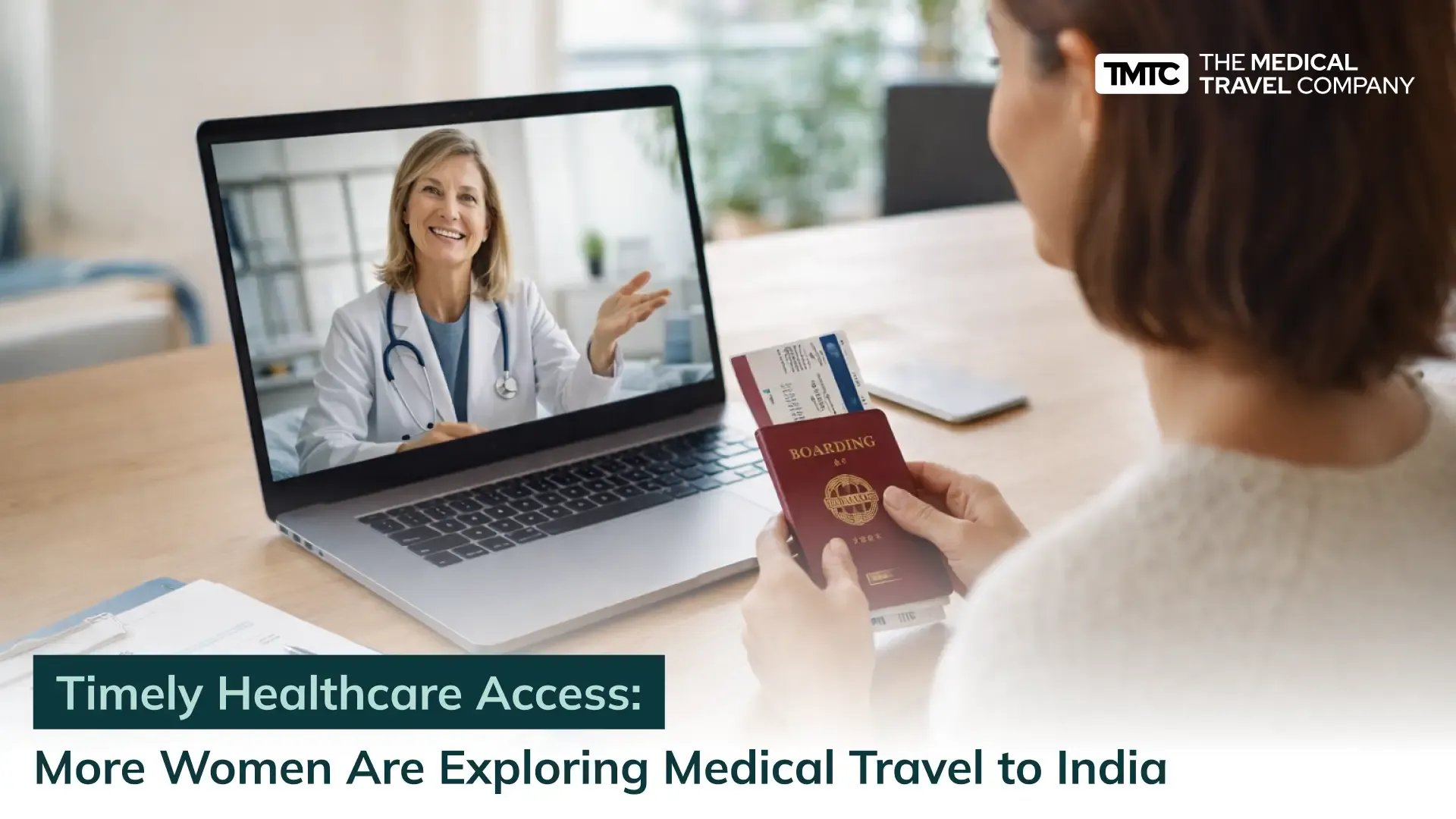
What if the biggest barrier to women's health is not treatment, but access? Global health data across 184 countries reveal that women spend 25% more of their lives in poor health than men, largely due to access barriers, creating a $1 trillion GDP gap.
On International Women's Day, conversations often centre around women’s empowerment in careers, leadership and equality. Yet for many women globally, empowerment in healthcare still begins with a more basic question: How quickly can I access the care I need?
Women represent a significant and growing segment of medical travellers globally, particularly in areas such as fertility care, oncology consultations and elective procedures. The reason is not impulsive decision-making - it is timing, clarity and structured pathways. When waiting lists grow longer or specialist care becomes limited, some women choose to look beyond borders for solutions.
Medical tourism and healthcare in India have become one of those solutions, and it is more structured than most people realise. But travelling for treatment is never just about booking a hospital appointment. It requires medical review, specialist coordination, travel planning, hospital scheduling and structured follow-up. Without the right support, the process can feel overwhelming. And for many women, the first concern is always safety.
This is where The Medical Travel Company (TMTC) plays a central role. TMTC supports women by coordinating every stage of their medical travel journey in India, from reviewing medical reports and arranging consultations at internationally accredited hospitals to guiding recovery and aftercare support once they return home. Because women's empowerment in healthcare is not just about availability. It is about informed choice, structured healthcare access, safety you can trust and feeling supported throughout the entire journey.
When Waiting Becomes the Bigger Health Risk
Access to healthcare is rarely just about availability. For many women, it is about timing and structure.
Across healthcare systems globally, increasing demand and limited specialist capacity can affect how quickly patients move from consultation to diagnosis to treatment. Extended waiting times, referral bottlenecks and system pressures create uncertainty, particularly when health concerns carry emotional weight.
In some regions, specialist expertise may be concentrated in major urban centres, requiring travel even within one's own country. In others, navigating layered referral systems can slow progression from initial concern to confirmed treatment plan.
These are not failures of care. They are realities of overstretched systems.
However, when time matters - whether for fertility treatment in UK, cancer care, complex procedures or specialist-led care, prolonged uncertainty can feel overwhelming. It is within this context that women are increasingly exploring healthcare beyond their home borders. Not as a rejection of existing systems, but as an expansion of choice. Medical travel becomes a way to access more predictable treatment timelines, specialist expertise and coordinated care pathways.
Why India Stands Out for Women's Healthcare
India has become a go-to destination for women's healthcare abroad, not because of price alone, but because of how care is structured.
-
Access to Specialist Expertise: India's leading tertiary hospitals bring together highly experienced consultants across multiple specialities, from fertility treatment, cancer care and gynaecology care to cardiology, orthopaedics, urology and dental treatments. High patient volumes and focused departments allow for refined clinical protocols and specialist care. For women seeking clarity around complex diagnoses or time-sensitive decisions, direct access to expertise is a defining factor.
-
Structured Treatment Pathways: One of the strengths of treatment in India lies in coordination. Diagnostics, specialist consultations and procedures are often scheduled within a clearly defined timeframe. Rather than navigating open-ended waiting periods, patients move through an organised pathway with confirmed dates and clear next steps.
-
Safety and Accreditation You Can Trust: Quality and safety are non-negotiable when choosing healthcare abroad. TMTC works exclusively with internationally accredited hospitals, including JCI and NABH-accredited institutions, that meet rigorous global standards. These hospitals maintain strict protocols for infection control, surgical safety and patient care. Women aren't left guessing whether care is safe. They're receiving treatment at facilities recognised worldwide for clinical excellence.
India's position in international healthcare continues to grow because it offers depth of expertise, structured progression and verifiable safety standards, a combination many women prioritise when making informed healthcare decisions.
What Your Treatment Journey Really Looks Like
The journey begins with information- review medical reports, seek specialist opinions and explore whether a clearer pathway is available. At this stage, reassurance comes from transparency, understanding what the diagnosis means, what treatment options are available, what risks are associated and how soon care can realistically begin. Clarity at this point reduces anxiety and replaces uncertainty with direction.
-
The Planning Phase - Once a decision is made, planning becomes essential:
- Consultations are confirmed with specialist care providers in India, specialising in fertility care, gynaecology care and cancer care.
- Diagnostics are pre-scheduled before arrival.
- Travel arrangements, accommodation and logistics are coordinated.
- Treatment timelines for fertility treatment, cancer care, gynaecology treatment and other treatments are mapped out clearly. When properly organised, the process feels intentional rather than overwhelming.
-
During Treatment - Predictability builds confidence. Appointments and procedures follow a defined schedule within accredited hospitals under specialist supervision. Clear communication ensures that women understand each step as it happens. Patients are able to focus on their health rather than navigating unfamiliar systems.
-
Recovery and Follow-Up - Discharge planning, structured follow-up and defined next steps ensure that care doesn't feel abrupt or disconnected after returning home. Physical healing is supported by continued guidance and accessible communication.
When these stages are aligned, the experience feels cohesive. That cohesion doesn't happen by accident. It requires someone coordinating every step.
How TMTC Coordinates Your Care Every Step
Travelling for healthcare abroad should never feel uncertain. Yet without active oversight, even well-planned care can lose clarity. TMTC exists to prevent that.
-
Before Treatment - From the first enquiry, medical documentation is reviewed carefully, and advance consultations are arranged with specialist consultants. Women don't travel to "explore options." They travel with a confirmed understanding of their diagnosis and treatment options. Here's what TMTC coordinates
- Review of medical records and diagnostic reports
- Arrangement of pre-travel consultations with specialists
- Confirmation of treatment pathways and timelines
- Selection of internationally accredited hospitals (JCI and NABH-accredited institutions)
- Clear communication of what to expect at each stage
-
During Treatment - Once treatment begins, coordination continues. Appointments remain aligned with the agreed schedule. Communication between patients and treating consultants is maintained consistently. If adjustments are required, they are managed efficiently to preserve continuity.
TMTC's role extends beyond scheduling. It is about overseeing the full experience, from the moment a woman begins considering treatment abroad to the moment she returns home with structured follow-up in place. That continuity transforms medical travel from a series of appointments into a connected healthcare journey.
What Can You Expect During Your Time in India
Arriving in another country for treatment can feel significant, even when every step has been carefully planned. There is the emotional weight of the procedure itself, the adjustment to a new environment and the natural questions that arise during any medical journey.
TMTC ensures that women are not navigating this phase alone. Here's what that looks like in practice:
-
From Arrival to Accommodation- You are met at the airport and escorted comfortably to private accommodation designed to feel calm and restorative rather than clinical. Recovery begins best in surroundings that feel secure and supportive.
-
Hospital Coordination- Before any hospital visit takes place, consultations and procedures have already been confirmed. TMTC coordinates appointment scheduling, transport to and from hospital visits, communication between patients and treating consultants, and management of any required adjustments. Women do not spend time arranging visits or navigating unfamiliar systems. The focus remains on health rather than administration.
-
During Recovery- Support continues throughout the stay with 24/7 medical support, personalised meals aligned with nutritional needs, private chauffeur services for hospital visits, and coordination to reduce physical strain.
This level of guidance allows women to focus entirely on their well-being. TMTC takes over administrative responsibilities so that attention remains where it belongs, on treatment and recovery. Support during the stay is not about dependence. It is about creating stability during a critical moment.
Does the Support Continue After You Return Home?
Recovery does not end at discharge. For most women, that is when it really begins. At TMTC aftercare is treated as a defined phase of the healthcare journey rather than a final step. Before departure, a clear post-treatment roadmap is established. Women understand what recovery should look like, when follow-up will occur and how progress will be assessed. This roadmap isn't vague. It includes specific timelines, contact protocols and clear indicators of what's normal versus what requires attention.
TMTC coordinates regular follow-up consultations with treating specialists to review healing and evaluate outcomes, comprehensive discharge documentation outlining medication schedules, recovery timelines and activity recommendations, accessible communication channels for questions or concerns that arise after return, and coordination with local healthcare providers when appropriate to ensure continuity of patient care.
Beyond clinical follow-up, emotional reassurance is equally important. Recovery often carries moments of reflection, physical progress, emotional adjustment, and renewed confidence. Knowing that professional support remains available provides stability during this transition. Women are not left to interpret symptoms alone or manage concerns in isolation. Support remains actively available, not passively offered.
TMTC's involvement does not fade once travel concludes. It continues in a measured and structured way throughout the entire recovery period, reinforcing the sense that medical travel is not a single event but a connected healthcare experience. Women return home not simply with treatment completed, but with a defined plan and continued access to guidance.
How Coordinated Care Makes a Difference
Women's empowerment in healthcare is not abstract. It is built through clarity and structure. When women are provided with clear treatment plans, confirmed timelines and defined follow-up pathways, decision-making becomes intentional rather than reactive. They are not guessing what comes next. They are informed at every stage.
TMTC's coordinated model ensures that each phase of care connects logically to the next.
Consultation leads to confirmation. Confirmation leads to treatment. Treatment leads to structured recovery.
This continuity reduces uncertainty and strengthens confidence. Women experience integrated care rather than fragmented.
As a result, they feel:
- In control of their healthcare decisions, making informed choices rather than reacting to circumstances
- Confident throughout each stage of the journey, knowing what to expect removes anxiety
- Supported beyond the procedure itself, care doesn't end at discharge
Medical travel, when managed with precision, expands access without compromising safety. It allows women to choose care pathways that align with their priorities, whilst ensuring that support remains constant. Women’s empowerment, in this context, is the confidence to act- and the assurance that support will follow.
Why Healthcare Access is True Women's Empowerment
More women today are choosing not to wait in uncertainty. They are asking clearer questions, exploring specialist pathways and making healthcare decisions that align with their timelines and priorities. That shift reflects confidence, not urgency. It reflects a desire for clarity and control. And that is empowerment in its truest form.
On International Women's Day, empowerment in healthcare is not about reacting to obstacles. It is about having real access to options, receiving meaningful support and being treated with dignity at every stage of care. For women who choose treatment abroad, that empowerment lies in knowing that their decision is informed and their well-being remains central throughout the journey.
When treatment is structured and support remains consistent, the experience changes. Decisions feel steadier. Recovery feels guided rather than uncertain. The journey becomes something intentional rather than overwhelming. That reassurance matters.
At TMTC, we understand that true women’s empowerment in healthcare is not just about having a choice. It's about feeling safe enough to make it, and supported enough to follow through with the right specialist care and patient care every step of the way.
Sources:
- McKinsey Health Institute & World Economic Forum. (2024). Closing the women's health gap: A $1 trillion opportunity to improve lives and economies. McKinsey. https://www.mckinsey.com/mhi/our-insights/closing-the-womens-health-gap-a-1-trillion-dollar-opportunity-to-improve-lives-and-economiesAccessed February 16, 2026
- Market.us. (2026). Medical Tourism Statistics and Facts (2026). Market.us. https://media.market.us/medical-tourism-statistics/Accessed February 16, 2026.
- Statista. (2023). Medical tourists by gender worldwide 2023. Statista. https://www.statista.com/statistics/1414325/medical-tourists-worldwide-by-gender/Accessed February 16, 2026.
Ready to open the door to better health?