Exploring IVF Options for Ghanaian Couples: Should You Seek Treatment Abroad?
Discover the best IVF options for Ghanaian couples. Explore fertility treatments, success rates, costs, and whether to consider treatment abroad.
Last Updated On 29 April 20269m


Medical professional with 10+ years’ experience in diagnosis, patient care, and clinical leadership.
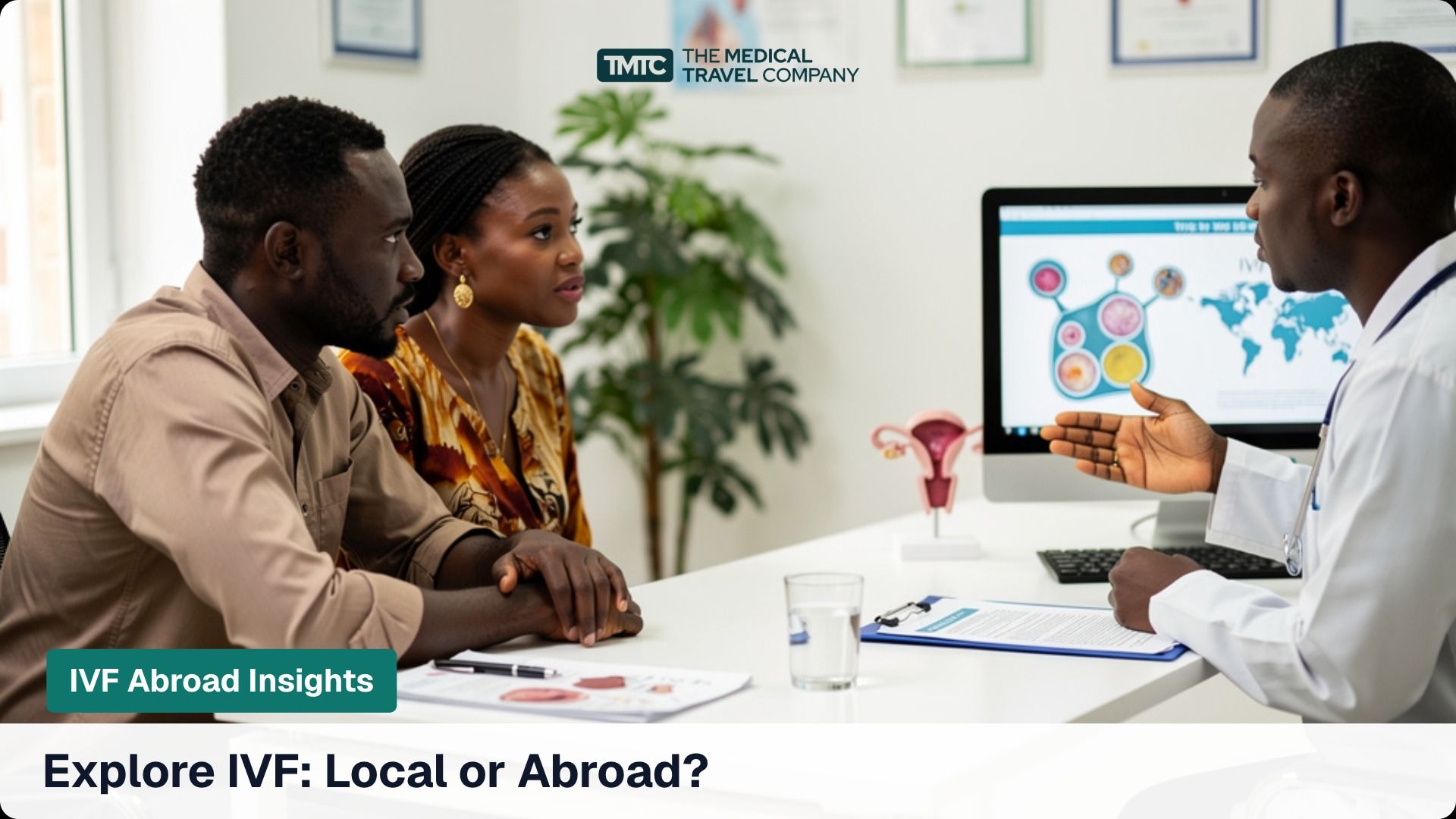
When you're facing fertility challenges, choosing between local IVF treatment and seeking care abroad can feel overwhelming. Many Ghanaian couples find themselves weighing the familiarity of home-based treatment against the potential advantages of world-class international care.
The good news is that you have more options than ever before. Whether you choose to stay in Ghana or explore treatment abroad, understanding your choices will help you make the best decision for your unique situation.
Understanding IVF in Ghana
In vitro fertilisation, commonly known as IVF or test tube baby treatment, is a fertility procedure where eggs are retrieved from your ovaries and fertilised with sperm in a laboratory. The resulting embryos are then transferred to your uterus, where hopefully one will implant and develop into a pregnancy.
How the IVF process works
Your IVF treatment typically begins with ovarian stimulation using hormone medications. These drugs help your ovaries produce multiple eggs instead of the single egg released during a natural cycle. Your fertility specialist will monitor your response through blood tests and ultrasounds.
Once your eggs are ready, usually after 10-14 days of stimulation, you'll undergo egg retrieval. This minimally invasive procedure is performed under light sedation, and your eggs are collected using a thin needle guided by ultrasound.
In the laboratory, your eggs are combined with sperm through conventional IVF or intracytoplasmic sperm injection. The fertilised embryos develop for 3-5 days before the best quality embryo is selected for transfer into your uterus.
IVF success rates in Ghana
Success rates for fertility treatment vary significantly based on your age, the cause of infertility, and the clinic's expertise. Women under 35 typically have the highest success rates, with chances decreasing as age increases.
Local fertility clinics in Ghana are working hard to improve their outcomes, but many couples find that international centres offer higher success rates due to advanced technology and greater experience with complex cases.
Comparing Your Treatment Options: Ghana vs International Care
Local fertility clinics in Ghana
Several reputable fertility clinics operate in Ghana, primarily in Accra and Kumasi. These centres offer basic IVF services and have helped many couples achieve their dreams of parenthood. The main advantages include familiar surroundings, no travel requirements, and the ability to receive follow-up care close to home.
However, local clinics may have limitations in terms of advanced techniques, specialised procedures, and success rates compared to international centres with decades of experience and cutting-edge technology.
Why many couples choose treatment abroad
Countries like India, Thailand, and Turkey have become popular destinations for Ghanaian couples seeking fertility care. These international centres often provide world-class facilities, highly experienced specialists, and advanced techniques that may not be readily available locally.
Many international clinics also offer comprehensive packages that include accommodation, airport transfers, and personalised treatment plans designed specifically for international patients. This seamless experience can reduce stress during an already challenging time.
Cost comparison and affordability
Surprisingly, seeking treatment abroad can often be more affordable than local options when you factor in success rates and the potential need for multiple cycles. While local IVF treatment in Ghana typically costs between $3,000-$5,000 per cycle, international treatment packages can range from $2,500-$4,500, often including additional services and higher success rates.
| Treatment Option | Average Cost (USD) | Success Rate | Additional Benefits |
|---|---|---|---|
| Local Ghana Clinics | $3,000-$5,000 | 25-35% | No travel required, familiar environment |
| India (Top Clinics) | $2,500-$3,500 | 45-60% | Advanced technology, experienced specialists |
| Thailand | $4,000-$6,000 | 50-65% | Luxury facilities, comprehensive packages |
| Turkey | $3,000-$4,500 | 40-55% | European standards, convenient location |
When considering costs, remember to factor in the emotional and financial impact of potentially needing multiple treatment cycles. Higher success rates abroad may actually save you money in the long run.
Key Considerations for Making Your Decision
Personalised treatment plans
The best fertility centres, whether local or international, will create a personalised treatment plan based on your specific situation. This includes considering your age, medical history, previous treatments, and any underlying fertility issues.
International clinics often have more resources to offer specialised treatments like egg freezing, genetic testing of embryos, and advanced sperm selection techniques. These options might be crucial for your success, depending on your circumstances.
Emotional support and counselling
Fertility treatment can be emotionally challenging, and having proper support is essential. Many international clinics provide dedicated patient coordinators who speak your language and understand the cultural sensitivities of Ghanaian couples.
Consider whether you'll have adequate emotional support during treatment abroad, or if being close to family and friends during local treatment is more important for your wellbeing.
Legal and ethical considerations
Different countries have varying laws regarding fertility treatment, including regulations about egg and sperm donation, embryo storage, and parental rights. Make sure you understand the legal framework in your chosen treatment destination and how it might affect your family-building journey.
Questions to consider before choosing your treatment location
- What are the clinic's success rates for patients in my age group and situation?
- What advanced treatments and technologies are available?
- How many treatment cycles might I need, and what's the total expected cost?
- What support services are provided for international patients?
- How will follow-up care be handled after returning home?
- What are the legal requirements and implications in this country?
- Do I feel comfortable with the level of emotional support available?
Understanding the Complete IVF Process
The stages of your IVF cycle
Your IVF journey begins with thorough testing and evaluation, including blood tests, ultrasounds, and sometimes additional procedures to assess your reproductive health. This pre-treatment phase is crucial for developing an effective treatment strategy.
The stimulation phase typically lasts 10-14 days, during which you'll take hormone medications to encourage multiple egg development. Regular monitoring ensures your response is optimal and helps time the egg retrieval perfectly.
After egg retrieval and fertilisation, your embryos develop in the laboratory for 3-5 days. The best quality embryo is selected for transfer, while any additional good-quality embryos can be frozen for future use.
What to expect during embryo transfer
Embryo transfer is typically a quick, painless procedure that doesn't require anaesthesia. Using ultrasound guidance, your doctor will place the embryo in your uterus through a thin catheter. Most patients can return to normal activities immediately, though some rest is recommended.
The two-week wait following embryo transfer can be emotionally challenging. Your fertility team will provide guidance on what to expect and when to take a pregnancy test.
Potential risks and side effects
Like any medical procedure, IVF carries some risks. The hormone medications can cause side effects like bloating, mood swings, and breast tenderness. There's also a small risk of ovarian hyperstimulation syndrome, particularly in women who respond strongly to the medications.
Multiple pregnancies are more common with IVF, which can increase health risks for both mother and babies. However, many clinics now recommend single embryo transfer to reduce this risk while maintaining good success rates.
Your Next Steps Toward Parenthood
Scheduling your initial consultation
Whether you choose local or international treatment, your first step is scheduling a comprehensive consultation with a fertility specialist. This appointment will include a review of your medical history, discussion of your goals, and recommendations for any additional testing needed.
If you're considering treatment abroad, many clinics offer virtual consultations that allow you to meet your potential doctor and discuss your treatment plan before traveling. This can help you feel more confident about your choice.
Building your support network
Don't underestimate the importance of emotional support during your fertility journey. Whether from family, friends, support groups, or professional counsellors, having people who understand what you're going through can make a significant difference in your experience.
Consider connecting with other couples who have gone through similar experiences, either locally or through online communities. Their insights and encouragement can be invaluable.
Many international fertility centres now offer comprehensive packages specifically designed for couples from Ghana, including IUI treatment and advanced fertility-enhancing therapies. These packages often include airport transfers, accommodation, interpreter services, and dedicated patient coordinators to ensure your treatment journey is as smooth as possible.
Essential questions to ask your fertility specialist
- What's my specific diagnosis and recommended treatment plan?
- What are my realistic chances of success with this treatment?
- What additional tests or procedures might be needed?
- How many cycles should I plan for?
- What support services are available during treatment?
- How will my care be coordinated if I choose treatment abroad?
- What are the next steps if this treatment cycle is unsuccessful?
- What lifestyle changes can improve my chances of success?
Remember, there's no single right answer for every couple. The best choice is the one that aligns with your medical needs, financial situation, and personal preferences. Take time to research your options thoroughly, and don't hesitate to seek second opinions if you're unsure.
Whether you choose to pursue fertility treatment in Ghana or abroad, the most important thing is taking that first step toward building the family you've always dreamed of. With the right medical team, support system, and treatment plan, many couples overcome fertility challenges and achieve successful pregnancies.
References:
- This article provides general information about IVF options and considerations. For specific medical advice about your fertility treatment options, please consult with a qualified fertility specialist who can evaluate your individual circumstances.
Related Articles

Ready to open the door to better health?