Understanding the Types of Kidney Stones: A Comprehensive Guide
Explore the different types of kidney stones and how to prevent them with expert guidance and personalized care.
Last Updated On 16 April 202611m


Medical professional with 10+ years’ experience in diagnosis, patient care, and clinical leadership.
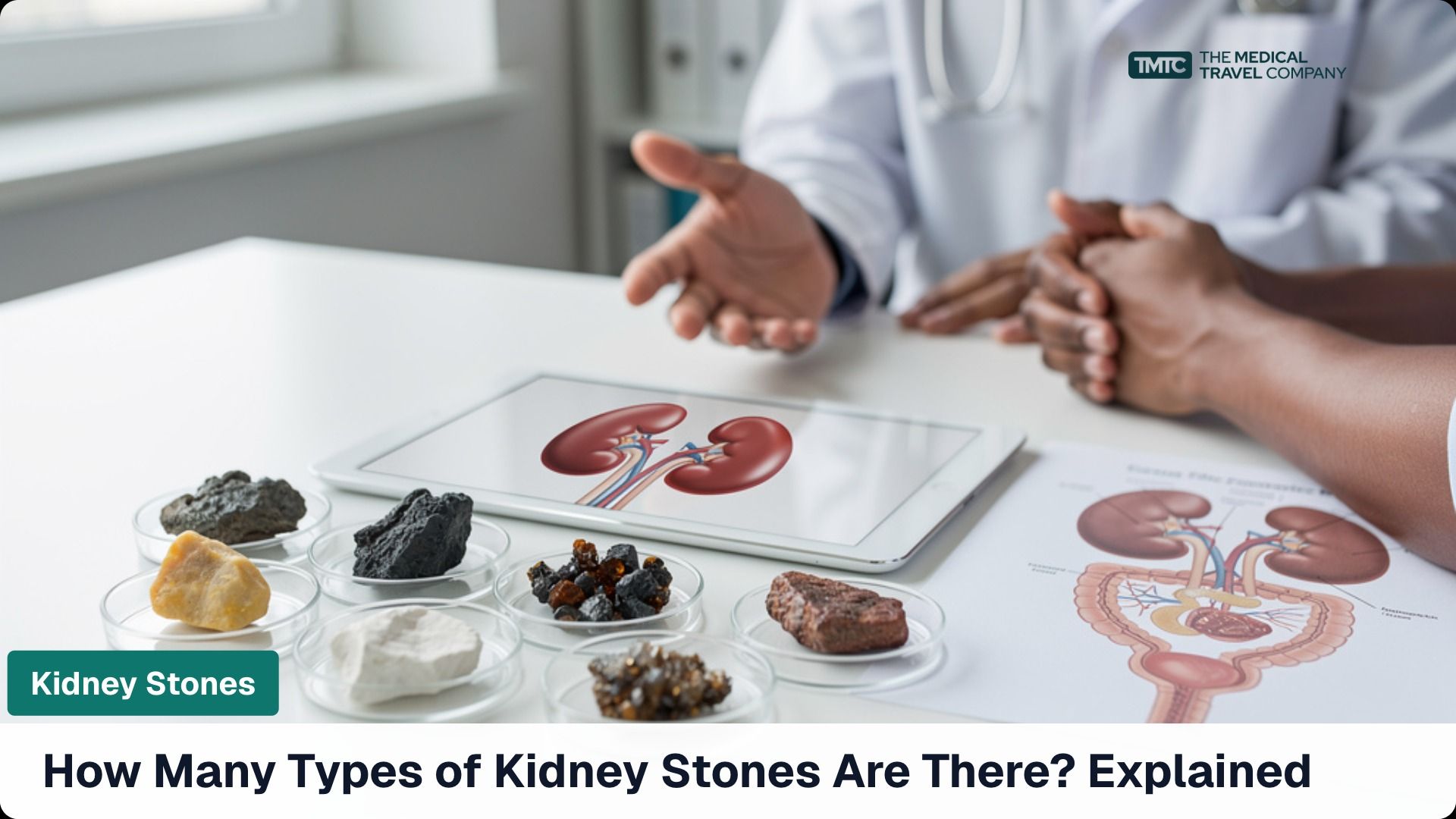
If you've ever experienced the sharp, sudden pain of a kidney stone, you're part of a growing number of people affected by this condition. Kidney stones affect approximately 12% of the global population, with rates increasing worldwide. What many people don't realize is that not all kidney stones are the same - there are actually four distinct types, each with different causes and prevention strategies.
Understanding which type of kidney stone you're dealing with isn't just medical trivia. It's the key to effective treatment and, more importantly, preventing future stones. Your doctor needs to know the specific chemical composition of your stone to create a personalized treatment plan that actually works for your unique situation.
What Are Kidney Stones?
Kidney stones are hard deposits that form when your urine contains more crystal-forming substances than the fluid can dilute. Think of it like sugar crystallizing in a concentrated syrup - when certain minerals and salts become too concentrated in your urine, they stick together and form stones.
These stones can range from tiny grains smaller than a grain of sand to large stones the size of golf balls. The Mayo Clinic reports that stones smaller than 4mm often pass on their own, while larger stones typically require medical intervention.
The process of stone formation can take weeks, months, or even years. During this time, layers of crystals build up around a central core, much like how a pearl forms inside an oyster. Understanding this process helps explain why prevention strategies focus on changing the chemical environment in your urine.
The Four Types of Kidney Stones
Medical research has identified four main types of kidney stones, each with distinct characteristics and causes. Let's explore each type in detail.
1. Calcium Oxalate Stones
Calcium oxalate stones are by far the most common type, accounting for about 80% of all kidney stones. These stones form when calcium in your urine combines with oxalate, a naturally occurring substance found in many foods.
What makes these stones tricky is that both calcium and oxalate are normal parts of a healthy diet. Foods high in oxalate include spinach, rhubarb, chocolate, nuts, and tea. The problem occurs when you have too much oxalate relative to the amount of fluid you're drinking, or when your body absorbs too much oxalate from food.
Interestingly, getting too little calcium in your diet can actually increase your risk of calcium oxalate stones. When you don't eat enough calcium, more oxalate gets absorbed from your intestines into your blood and eventually your urine.
2. Uric Acid Stones
Uric acid stones make up about 5-10% of all kidney stones and are more common in men than women. These stones form when your urine becomes too acidic, creating an environment where uric acid crystallizes instead of dissolving.
Uric acid is a waste product that comes from breaking down purines - substances found in high concentrations in red meat, organ meats, and some seafood. Harvard Health reports that people with gout, diabetes, or those undergoing chemotherapy have higher risks of developing uric acid stones.
What's unique about uric acid stones is that they can often be dissolved with medication, unlike other types that typically need to be passed or removed physically.
3. Struvite Stones
Struvite stones are less common but potentially more dangerous. These stones form primarily in women and are almost always associated with urinary tract infections caused by specific bacteria that produce an enzyme called urease.
This enzyme changes the chemical environment in your urine, making it more alkaline and allowing magnesium, ammonium, and phosphate to combine into struvite crystals. What makes these stones particularly concerning is their rapid growth - they can become large "staghorn" stones that fill the entire kidney collecting system.
Medical literature shows that struvite stones often require surgical removal because of their size and the ongoing infection risk they represent.
4. Cystine Stones
Cystine stones are the rarest type, affecting less than 1% of people with kidney stones. These stones occur only in people with a genetic disorder called cystinuria, which prevents the kidneys from properly reabsorbing the amino acid cystine.
When cystine builds up in the urine, it forms crystals that can grow into stones. Because cystinuria is inherited, people with this condition often develop their first stones in childhood or adolescence and continue forming stones throughout their lives.
Cystine stones are particularly challenging to treat because they're resistant to shock wave lithotripsy, a common non-surgical treatment for other types of stones.
What Causes Each Type of Stone?
Understanding the specific causes behind each type of kidney stone helps explain why different prevention strategies work for different people.
Dietary Factors
Your diet plays a significant role in kidney stone formation, but the relationship isn't always straightforward. For calcium oxalate stones, the traditional advice to avoid calcium has been turned upside down by research showing that adequate calcium intake actually reduces stone risk.
High sodium intake increases calcium excretion in urine, raising the risk of calcium-based stones. Meanwhile, animal protein increases both calcium and uric acid in urine while decreasing citrate, a natural stone inhibitor.
For uric acid stones, purine-rich foods are the main dietary culprit. These include red meat, organ meats, sardines, anchovies, and some types of alcohol, particularly beer.
Health Conditions and Medications
Several medical conditions significantly increase kidney stone risk. Research published in medical journals shows that diabetes, obesity, and inflammatory bowel disease all alter the chemical composition of urine in ways that promote stone formation.
Certain medications can also contribute to stone formation. Diuretics, calcium-based antacids, and some antibiotics can change urine chemistry. If you're taking medications and develop kidney stones, your healthcare provider will review your prescriptions as part of developing a prevention strategy.
Hyperparathyroidism, a condition where your parathyroid glands produce too much hormone, leads to increased calcium in both blood and urine. This condition is found in up to 5% of people with calcium stones and may require specific medical treatment beyond dietary changes.
Genetic and Environmental Factors
Genetics play a larger role in kidney stone formation than many people realize. If you have a family history of stones, you're two to three times more likely to develop them yourself. This genetic predisposition affects how your body processes minerals and maintains the chemical balance in your urine.
Environmental factors also matter significantly. Living in hot climates increases stone risk because you lose more fluid through sweating, concentrating your urine. Occupations that involve heavy physical work in hot conditions - like construction or military service - show higher rates of kidney stones.
How Doctors Diagnose Kidney Stone Types
Identifying the specific type of kidney stone you have is crucial for effective treatment and prevention. Your healthcare provider uses several diagnostic approaches to determine stone composition and underlying causes.
The gold standard for stone type identification is chemical analysis of a stone that you've passed or that has been surgically removed. The National Institute of Diabetes and Digestive and Kidney Diseases recommends trying to catch any stone you pass so it can be analyzed.
When stone analysis isn't possible, doctors use blood and urine tests to identify risk factors and likely stone types. A 24-hour urine collection provides detailed information about the minerals and substances in your urine that contribute to stone formation.
Blood tests check for conditions like hyperparathyroidism or high uric acid levels that predispose to specific stone types. Imaging studies like CT scans can sometimes suggest stone composition based on density, though this method isn't as reliable as direct chemical analysis.
Prevention Strategies for Each Stone Type
Effective kidney stone prevention isn't one-size-fits-all. The strategies that work depend entirely on what type of stones you form.
Universal Prevention Principles
Regardless of stone type, increasing your fluid intake is the most important prevention step. Medical research consistently shows that people who drink enough fluid to produce at least 2.5 liters of urine daily have significantly lower stone recurrence rates.
Water is the best choice for hydration, though other beverages can contribute to your fluid intake. Coffee and tea may actually provide some protection against stone formation, while sugary sodas, particularly colas, may increase risk.
Daily Prevention Habits for All Stone Types
- Drink enough fluid to produce light yellow or clear urine
- Limit sodium intake to less than 2,300mg daily
- Maintain a healthy body weight
- Eat a balanced diet with plenty of fruits and vegetables
Type-Specific Prevention Strategies
For calcium oxalate stones, the key is balancing calcium and oxalate intake rather than eliminating either completely. Eat calcium-rich foods with meals containing oxalate, as calcium can bind oxalate in your intestines and prevent its absorption.
Uric acid stone prevention focuses on reducing purine intake and keeping urine alkaline. This might involve limiting red meat and adding more fruits and vegetables to your diet. Your doctor might also prescribe medication to reduce uric acid production or alkalinize your urine.
Struvite stone prevention is primarily about preventing and promptly treating urinary tract infections. For people with a history of these stones, long-term antibiotic therapy might be necessary.
Cystine stone prevention requires specialized medical management, often including medications that help dissolve cystine in urine and very high fluid intake - sometimes 3-4 liters daily.
When to Seek Professional Help
While understanding kidney stone types is valuable, professional medical care is essential for proper diagnosis and treatment. If you've had kidney stones before, working with a healthcare provider who specializes in kidney conditions can make a significant difference in preventing future episodes.
Seek immediate medical attention if you experience severe pain, fever, chills, or difficulty urinating - these could indicate a serious complication like infection or complete blockage. Even if your symptoms are mild, getting proper medical evaluation helps ensure you receive the right treatment approach.
Modern healthcare offers sophisticated diagnostic tools and treatment options that weren't available even a decade ago. From advanced imaging techniques to minimally invasive surgical procedures, patients today have access to more effective treatments than ever before.
Understanding your specific stone type transforms kidney stone management from guesswork into precision medicine. Our patients consistently see better outcomes when treatment plans are tailored to their individual risk factors and stone composition.
For those seeking world-class care with personalized treatment plans, comprehensive kidney stone evaluation includes detailed stone analysis, 24-hour urine testing, and development of customized prevention strategies. This thorough approach, combined with ongoing monitoring and support, provides patients with the tools they need for long-term stone prevention.
Expert guidance makes a crucial difference in managing kidney stones effectively. When you work with specialists who understand the nuances of different stone types, you receive treatment recommendations based on the latest research and proven clinical outcomes.
Taking Control of Your Kidney Stone Risk
Knowledge about kidney stone types empowers you to take meaningful action in preventing future stones. Whether you're dealing with common calcium oxalate stones or a rarer type like cystine stones, understanding the specific factors that contribute to your stone formation guides more effective prevention strategies.
The key insight is that kidney stone prevention isn't about following generic dietary advice - it's about understanding your individual risk factors and making targeted changes. A person with uric acid stones needs different dietary modifications than someone with calcium oxalate stones, and someone with struvite stones requires a completely different approach focused on infection prevention.
If you're dealing with recurrent kidney stones, don't settle for one-size-fits-all advice. Seek out healthcare providers who can offer comprehensive evaluation and personalized treatment plans. With the right approach, most people can significantly reduce their risk of future stones and enjoy better long-term health outcomes.
Remember that preventing kidney stones is often more effective and certainly more comfortable than treating them after they form. Understanding your kidney health in general can help you make informed decisions about your care and maintain optimal urinary tract function.
Key Points to Remember
- There are four main types of kidney stones: calcium oxalate (most common), uric acid, struvite, and cystine
- Each stone type has different causes and requires specific prevention strategies
- Identifying your stone type through analysis is crucial for effective treatment
- Increased fluid intake helps prevent all stone types, but additional strategies vary by type
- Professional medical evaluation provides personalized prevention plans based on your specific risk factors
References:
- Kidney stones - PMC- Comprehensive overview of kidney stone epidemiology and global prevalence rates
- Kidney Stone Prevention - PMC- Evidence-based prevention strategies and medical research on stone recurrence
- Kidney stones - Symptoms and causes - Mayo Clinic- Clinical information on stone types, symptoms, and treatment approaches
- Types of Kidney Stones: Chart, Comparison, and Treatment- Detailed breakdown of stone types and dietary factors
- What causes kidney stones (and what to do) - Harvard Health- Medical insights on stone causes and risk factors
- Definition & Facts for Kidney Stones - NIDDK- Official health information on kidney stone diagnosis and management
- Kidney stones - PMC- Clinical research on struvite stones and surgical management approaches
Related Articles




Ready to open the door to better health?