Affordable Kidney Stone Removal Abroad for Nigerian Patients: Cost, Recovery, and More
Discover the costs and recovery strategies for kidney stone removal abroad. Explore options tailored for Nigerian patients seeking world-class care.
Last Updated On 29 April 202612m


Medical professional with 10+ years’ experience in diagnosis, patient care, and clinical leadership.
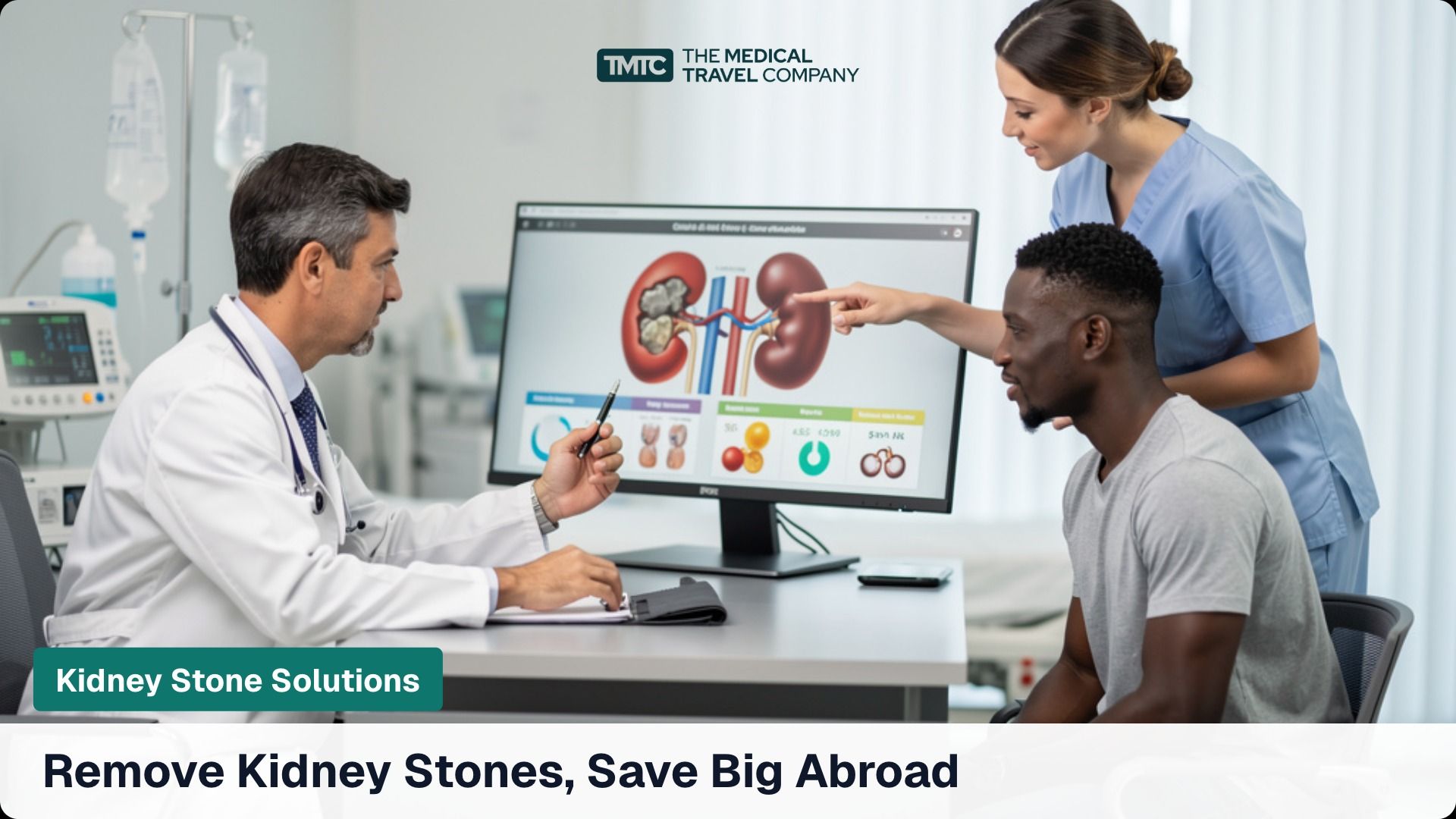
Dealing with kidney stones can be incredibly painful and disruptive to your daily life. If you're a Nigerian patient facing this challenge, you might be surprised to learn that seeking treatment abroad could offer both superior care and significant cost savings. From advanced laser treatments to minimally invasive procedures, international medical facilities provide access to cutting-edge kidney stone removal techniques that might not be readily available locally.
Understanding Kidney Stones and Their Impact
Kidney stones are hard mineral deposits that form inside your kidneys when waste products in your blood crystallise and stick together. These stones can range from the size of a grain of sand to as large as a golf ball, affecting about 10% of people worldwide at some point in their lives.
The most common types include calcium oxalate stones, which account for about 80% of all kidney stones, followed by calcium phosphate, uric acid, and struvite stones. Each type forms under different conditions and may require different treatment approaches.
Recognising kidney stone symptoms
The symptoms of kidney stones can be severe and unmistakable. You'll typically experience sharp, cramping pain in your back and side, often just below your ribs. This pain may radiate to your lower abdomen and groin area, coming in waves that fluctuate in intensity.
Other common symptoms include blood in your urine, which may appear pink, red, or brown, frequent urination with only small amounts of urine produced, nausea and vomiting, and fever with chills if an infection is present. Some patients also experience a persistent urge to urinate or burning sensations during urination.
Why Nigerian Patients Choose Kidney Stone Treatment Abroad
Many Nigerian patients are discovering that seeking kidney stone removal abroad offers compelling advantages beyond just cost savings. International medical facilities often provide access to the latest surgical technologies and treatment methods that deliver better outcomes with shorter recovery times.
Countries like India, Turkey, and Thailand have established themselves as leading destinations for urological procedures, offering world-class care at a fraction of the cost you'd pay in Western countries. These facilities maintain international accreditation standards while providing personalised treatment plans tailored to each patient's specific needs.
The comprehensive approach taken by these international centres often includes detailed pre-operative assessments, advanced imaging technology, and extensive post-operative care that ensures optimal outcomes. Many facilities also provide dedicated international patient coordinators who assist with travel arrangements, accommodation, and language translation services.
Advanced Kidney Stone Removal Procedures Available Abroad
Modern kidney stone treatment has evolved significantly from traditional open surgery to minimally invasive techniques that offer faster recovery and fewer complications. Understanding your options can help you make an informed decision about which procedure might be best for your specific situation.
Laser kidney stone treatment
Laser kidney stone treatment, specifically holmium laser lithotripsy, represents one of the most advanced techniques available today. This procedure uses a flexible ureteroscope to access the stone directly, then employs laser energy to fragment it into tiny pieces that can be easily passed or removed.
The precision of laser technology allows surgeons to target stones with minimal damage to surrounding tissue. Success rates exceed 95% for most stone types and sizes, making it an excellent choice for complex cases that might not respond well to other treatments.
Extracorporeal shock wave lithotripsy (ESWL)
ESWL represents a completely non-invasive approach to kidney stone treatment. This procedure uses focused shock waves generated outside your body to break stones into small fragments that can pass naturally through your urinary system.
When comparing ESWL vs laser treatment, ESWL works best for stones smaller than 2 centimetres located in specific areas of the kidney or upper ureter. While it's less invasive, it may require multiple sessions and isn't suitable for all stone types or locations.
Ureteroscopy procedure
The ureteroscopy procedure involves inserting a thin, flexible telescope through your urethra and bladder to reach stones in your ureter or kidney. This technique allows direct visualisation and treatment of stones using various tools, including lasers, ultrasonic devices, or mechanical extraction instruments.
Ureteroscopy is particularly effective for stones in the lower ureter and can achieve stone-free rates of 90-95% in most cases. The procedure typically takes 30 minutes to 2 hours, depending on the stone's size and location. Similar to other advanced surgical procedures, recovery is generally quick with most patients returning to normal activities within a few days.
| Procedure | Best For | Recovery Time | Success Rate |
|---|---|---|---|
| Laser Lithotripsy | All stone types/sizes | 1-2 days | 95%+ |
| ESWL | Stones <2cm | Same day | 70-90% |
| Ureteroscopy | Lower ureter stones | 2-3 days | 90-95% |
| Open Surgery | Large/complex stones | 1-2 weeks | 98%+ |
Kidney Stone Surgery Cost: International vs Local Options
Understanding the financial aspect of kidney stone treatment is crucial when considering your options. The cost difference between local and international treatment can be substantial, often making overseas treatment an economically attractive option even when factoring in travel expenses.
Ureteroscopy procedure cost breakdown
The ureteroscopy procedure cost varies significantly depending on your chosen destination. In countries like India, you can expect to pay between $2,000-$4,000 for a complete ureteroscopy with laser lithotripsy, including hospital stay and initial follow-up care.
Turkey offers similar procedures ranging from $3,000-$6,000, while Thailand typically charges $4,000-$7,000. These prices often include comprehensive packages covering pre-operative assessments, the procedure itself, hospital accommodation, and post-operative care.
| Country | ESWL Cost | Laser Treatment | Ureteroscopy | Package Includes |
|---|---|---|---|---|
| India | $800-1,500 | $2,000-4,000 | $2,500-4,500 | Hospital stay, follow-up |
| Turkey | $1,200-2,000 | $3,000-5,000 | $3,500-6,000 | Full care package |
| Thailand | $1,500-2,500 | $4,000-6,000 | $4,500-7,000 | VIP treatment options |
| Local (Nigeria) | $3,000-8,000 | $8,000-15,000 | $6,000-12,000 | Basic care only |
When you factor in the comprehensive care packages, advanced technology, and shorter waiting times available abroad, the value proposition becomes even more compelling. Many international facilities also offer fixed-price packages that eliminate surprise costs and provide complete transparency in pricing.
Recovery After Kidney Stone Surgery: What to Expect
Recovery after kidney stone surgery varies depending on the procedure type, but understanding what to expect can help you prepare and ensure optimal healing. Most minimally invasive procedures offer relatively quick recovery periods, allowing you to return to normal activities sooner than traditional surgical approaches.
Immediate post-operative period
In the first 24-48 hours following your procedure, you'll likely experience some discomfort as your body adjusts to the treatment. Pain levels are generally manageable with prescribed medications, and many patients report feeling significantly better than they did with the original stone symptoms.
You may notice blood in your urine for several days after surgery, which is completely normal and typically resolves on its own. Drinking plenty of water helps flush out stone fragments and promotes healing. Some patients also experience temporary urinary frequency or urgency as the urinary tract returns to normal function.
Essential Recovery Steps
- Drink 2-3 litres of water daily to flush stone fragments
- Take prescribed medications as directed for pain and infection prevention
- Avoid heavy lifting or strenuous activity for 1-2 weeks
- Attend all scheduled follow-up appointments
- Strain urine to collect stone fragments for analysis
- Monitor for signs of complications like fever or severe pain
- Begin dietary modifications to prevent future stones
Long-term recovery considerations
Most patients can return to desk work within 2-3 days after minimally invasive procedures, while physically demanding jobs may require 1-2 weeks off. The key is listening to your body and not pushing too hard too quickly, as this can potentially slow your healing process.
Follow-up imaging, typically performed 4-6 weeks after surgery, confirms complete stone clearance and ensures your kidneys are functioning properly. This step is crucial, as residual stone fragments could serve as nuclei for new stone formation. Just as with other surgical procedures, proper follow-up care significantly impacts your long-term outcomes.
Diet for Kidney Stone Prevention: Your Long-term Strategy
Preventing kidney stone recurrence requires a comprehensive approach that combines dietary modifications with lifestyle changes. Since about 50% of people who have had kidney stones will develop them again within 10 years, implementing an effective prevention strategy is crucial for your long-term health.
Your diet for kidney stones prevention should focus on adequate hydration as the cornerstone of prevention. Aim for at least 2.5-3 litres of fluid daily, with water being the best choice. The goal is to produce at least 2.5 litres of urine per day, which helps dilute stone-forming substances.
Specific dietary modifications
Reducing sodium intake to less than 2,300mg per day helps decrease calcium excretion in your urine, reducing the risk of calcium-based stones. This means limiting processed foods, restaurant meals, and adding less salt to your cooking.
Contrary to popular belief, you shouldn't eliminate calcium from your diet entirely. Normal calcium intake from dietary sources actually helps prevent stones by binding with oxalate in your intestines. However, calcium supplements should be taken with meals and only under medical supervision.
For oxalate stones, moderating high-oxalate foods like spinach, nuts, chocolate, and tea can be beneficial, but complete elimination isn't necessary. Pairing these foods with calcium-rich options can help reduce oxalate absorption.
Preventing Recurrence: A Comprehensive Approach
Recurrence prevention kidney stones requires understanding your specific stone type and underlying risk factors. This personalised approach ensures that your prevention strategy targets the most likely causes of your stone formation.
Stone analysis provides valuable information about your stone composition, allowing your healthcare team to recommend targeted prevention strategies. For example, uric acid stones respond well to dietary changes and medications that alkalinise your urine, while calcium stones may require different approaches.
Regular monitoring through blood and urine tests helps track your progress and allows for adjustments to your prevention plan. These tests can identify metabolic abnormalities that contribute to stone formation, such as hyperparathyroidism or inflammatory bowel disease.
Medications may be recommended based on your stone type and risk factors. These might include thiazide diuretics for calcium stones, allopurinol for uric acid stones, or potassium citrate to increase urine alkalinity. Working closely with specialists experienced in kidney stone prevention, similar to how patients benefit from comprehensive orthopaedic care, ensures optimal outcomes.
Choosing Your Medical Journey: Key Considerations
Selecting the right destination and facility for your kidney stone treatment requires careful research and consideration of multiple factors. The quality of care, technology available, and overall patient experience should weigh heavily in your decision-making process.
Look for facilities with international accreditation from organisations like JCI (Joint Commission International) or similar bodies. These accreditations ensure that the facility meets rigorous international standards for patient safety, care quality, and operational excellence.
Evaluating medical facilities and surgeons
Research the qualifications and experience of potential surgeons, focusing on their specialisation in urological procedures and kidney stone treatment specifically. Many leading international facilities publish surgeon profiles that include their training, certifications, and procedure volumes.
Consider facilities that offer comprehensive urology programs rather than general hospitals that occasionally perform kidney stone procedures. Specialised centres typically have better outcomes, more advanced equipment, and teams experienced in managing complications should they arise.
Patient reviews and testimonials can provide valuable insights into the actual patient experience, including communication quality, facility cleanliness, and post-operative care. However, balance these reviews with objective measures of quality and safety.
Practical travel considerations
Plan for a stay of 5-10 days, depending on your procedure type and recovery progress. Most facilities recommend staying in the destination country for at least a few days after discharge to monitor for any complications before travelling home.
Arrange for comprehensive travel insurance that covers medical tourism, including potential complications, extended stays, or emergency medical evacuation if needed. Some medical tourism companies offer specialised insurance products designed for these situations.
Take the First Step Towards Expert Care
Dealing with kidney stones doesn't have to mean accepting substandard care or paying excessive costs. World-class treatment options abroad offer you access to advanced procedures, experienced specialists, and comprehensive care packages at a fraction of local costs.
The combination of cutting-edge technology, personalised treatment plans, and dedicated patient support makes international treatment an attractive option for Nigerian patients seeking the best possible outcomes. From initial consultation through complete recovery, these facilities provide the expert guidance and seamless experience you deserve.
Don't let kidney stones continue to impact your quality of life. Contact The Medical Travel Company today for a personalised consultation that will help you explore your options and take the first step towards effective, affordable treatment. Our experienced team can guide you through every aspect of your medical journey, from selecting the right facility to coordinating your travel and ensuring you receive the world-class care you need. For more information about kidney-related conditions and treatments, you can also learn about kidney cancer symptoms and treatment options.
References:
- This article is based on current medical literature and best practices in kidney stone treatment. For the most current information about your specific condition, always consult with qualified medical professionals who can provide personalised recommendations based on your individual health situation.
Related Articles


Ready to open the door to better health?