Comprehensive Guide to Egg Freezing Abroad for Kenyan Women: Cost, Process & Benefits
Explore egg freezing abroad for Kenyan women. Understand costs, processes, and benefits of fertility preservation options with expert guidance.
Last Updated On 29 April 20269m


Medical professional with 10+ years’ experience in diagnosis, patient care, and clinical leadership.
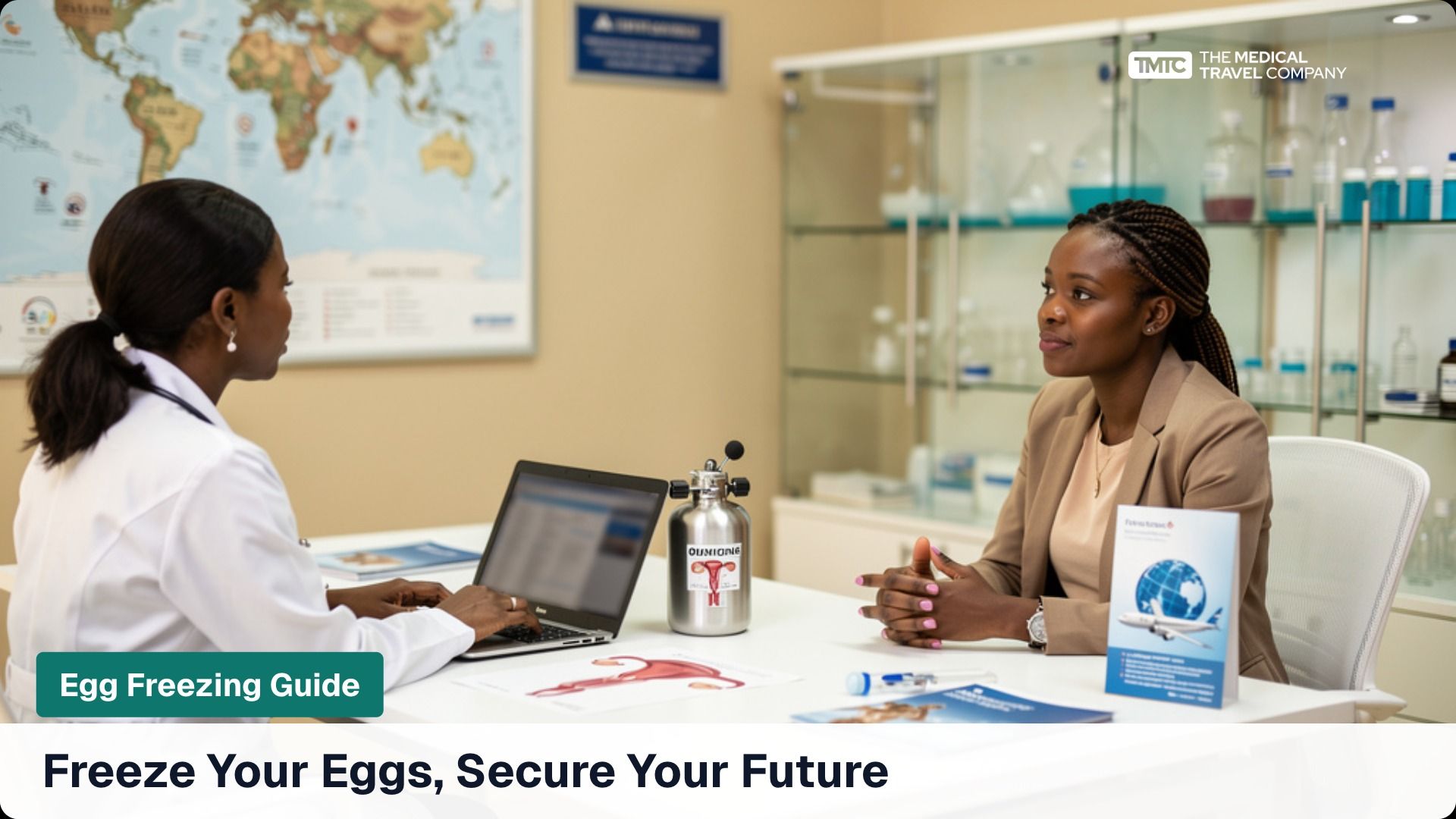
For Kenyan women considering their fertility options, egg freezing abroad has emerged as a practical solution that combines world-class care with significant cost savings. More women are choosing to preserve their fertility through oocyte freezing treatment, gaining the flexibility to start families when the timing feels right.
Why Kenyan women are choosing egg freezing abroad
Egg freezing, medically known as oocyte cryopreservation, allows women to preserve their eggs at their current age and quality for future use. This fertility preservation option has gained tremendous popularity among Kenyan women who want to balance career ambitions with family planning.
The process involves stimulating the ovaries to produce multiple eggs, retrieving them through a minor procedure, and freezing them using advanced vitrification techniques. When you're ready to start a family, these eggs can be thawed and used for IVF treatment.
Many women choose to freeze their eggs abroad because of access to cutting-edge technology, experienced specialists, and comprehensive care packages that aren't always available locally. The combination of advanced medical facilities and affordable pricing makes international treatment an attractive option.
Understanding egg freezing costs abroad
The egg freezing cost varies significantly depending on your chosen destination, but most Kenyan women can save 40-60% compared to Western countries while receiving the same quality of care.
| Country | Average Cost (USD) | Annual Storage Cost (USD) | Success Rate |
|---|---|---|---|
| India | $2,500–$3,500 | $200–$400 | 85–90% |
| Turkey | $3,000–$4,000 | $300–$500 | 80–85% |
| Thailand | $3,500–$4,500 | $400–$600 | 85–88% |
| Cyprus | $4,000–$5,000 | $500–$700 | 80–85% |
These costs typically include initial consultations, hormone medications, monitoring appointments, the egg retrieval procedure, and initial freezing. However, you'll need to budget for egg storage cost long term, which ranges from $200-700 annually depending on the facility.
Additional expenses to consider include travel costs, accommodation, and time off work. Many egg freezing programs for Kenyan women offer package deals that can help you budget more effectively.
Step-by-step guide to the egg freezing process
Understanding what happens during egg freezing helps you prepare mentally and physically for the journey ahead.
1. Initial consultation and testing
Your fertility specialist will review your medical history and conduct blood tests to assess your ovarian reserve. These tests measure hormone levels like AMH (Anti-Müllerian Hormone) and FSH (Follicle Stimulating Hormone) to determine how your ovaries might respond to stimulation.
An ultrasound will count your antral follicles, giving doctors insight into how many eggs they might be able to retrieve. This information helps create your personalised treatment plan.
2. Hormone stimulation process
The hormone stimulation process typically lasts 10-12 days. You'll inject fertility medications daily to encourage your ovaries to produce multiple eggs instead of the single egg released during a natural cycle.
During this phase, you'll have regular monitoring appointments every 2-3 days. These include blood tests to check hormone levels and ultrasounds to track follicle development. Your medication dosage may be adjusted based on how your body responds.
Common side effects include bloating, mood swings, and breast tenderness. Most women can continue their normal activities, though you might need to avoid intense exercise as your ovaries enlarge.
3. Egg retrieval procedure
When your follicles reach the right size, you'll receive a trigger shot to final maturation. The egg retrieval takes place about 36 hours later under light sedation.
Using ultrasound guidance, your doctor inserts a thin needle through the vaginal wall to aspirate eggs from each follicle. The procedure typically takes 15-30 minutes, and you can go home the same day after a short recovery period.
4. Egg freezing and storage
Your eggs are immediately evaluated by embryologists. Mature eggs are frozen using vitrification, a rapid-cooling process that prevents ice crystal formation and maintains egg quality.
The eggs are stored in liquid nitrogen at -196°C, where they can remain viable for many years. Storage facilities maintain strict quality controls and backup systems to ensure your eggs remain safe.
Key benefits of freezing your eggs
Egg freezing offers several advantages that appeal to modern women balancing multiple life priorities.
Benefits of egg freezing for Kenyan women
- Preserve fertility at your current age
- Reduce pressure to find a partner quickly
- Focus on career advancement without worry
- Access to world-class fertility technology
- Insurance against age-related fertility decline
- Peace of mind about future family options
- Potential for multiple pregnancy attempts
The flexibility to choose when to start your family can be invaluable. Whether you're pursuing higher education, building your career, or simply haven't found the right partner yet, frozen eggs give you options.
Many women report feeling empowered by taking control of their reproductive timeline. This confidence can actually improve other areas of life, from career decisions to relationship choices.
Finding the best age for egg freezing
Age plays a crucial role in egg freezing success rates, making timing an important consideration in your fertility planning options.
The best age for egg freezing is typically between 25-35 years old. During this window, eggs are generally healthier and more numerous, leading to better outcomes when you're ready for fertility treatment. Early Egg Freezing Delivers the Best Results, Success rates can exceed 90% when eggs are frozen before age 35
Women under 30 typically need fewer cycles to collect an adequate number of eggs. Those in their early to mid-30s may need 2-3 cycles to achieve the recommended 15-20 eggs for optimal pregnancy chances.
While egg freezing is still possible after 35, success rates gradually decline as egg quality and quantity decrease with age. However, even women in their late 30s can benefit from the technology, especially if they have good ovarian reserves.
Your fertility specialist will assess your individual situation through hormone testing and ovarian reserve evaluation to determine if egg freezing makes sense for your specific circumstances.
Understanding success rates and outcomes
Egg freezing success rate depends on several factors, with your age at the time of freezing being the most important predictor of future success.
Current vitrification technology achieves survival rates of 90-95% when eggs are thawed. However, not all thawed eggs will fertilise successfully, and not all fertilised eggs will develop into healthy embryos.
On average, each mature frozen egg has about a 5-8% chance of resulting in a live birth. This means collecting 15-20 eggs gives you a reasonable chance of achieving pregnancy when you're ready.
IVF after egg freezing success rates mirror those of fresh IVF cycles using eggs from women of the same age. This means a 30-year-old's frozen eggs will perform like fresh eggs from a 30-year-old, even if she uses them at age 40.
Addressing common concerns about egg freezing
Many women have questions and concerns about egg freezing. Here are answers to the most frequently asked questions.
Is egg freezing safe?
Egg freezing is considered a safe procedure with minimal risks. Serious complications occur in less than 1% of cases. The most common side effects are temporary bloating and mild pelvic discomfort.
The fertility medications used are the same ones prescribed for IUI treatment and IVF, with decades of safe use documented in medical literature.
Will egg freezing affect my natural fertility?
Egg freezing doesn't reduce your natural fertility or bring on menopause earlier. The eggs retrieved would have been lost naturally during that cycle anyway.
You can continue trying to conceive naturally after egg freezing, and many women do successfully get pregnant on their own even years after the procedure.
How long can eggs stay frozen?
Eggs can remain frozen indefinitely without losing quality. Some countries have legal limits on storage duration, but the eggs themselves don't deteriorate over time when properly stored.
Choosing the right clinic for your journey
Selecting the right clinic abroad is crucial for your egg freezing success. Look for facilities with high success rates, experienced specialists, and comprehensive support for international patients.
The best clinics provide detailed information about their laboratory standards, freezing techniques, and storage facilities. They should also offer clear communication throughout your treatment and have protocols for international patients.
Consider clinics that offer package deals including accommodation, airport transfers, and dedicated patient coordinators. These services can make your treatment abroad much more comfortable and stress-free.
Many Kenyan women benefit from working with medical travel coordinators who can help navigate the logistics of treatment abroad. These professionals understand the unique needs of international patients and can streamline your entire experience.
Taking the next step in your fertility journey
If you're considering egg freezing abroad, start by researching your options and understanding what the process involves. The sooner you begin planning, the more flexibility you'll have in choosing your treatment timing.
Getting your fertility assessed is the first practical step. This can often be done locally before traveling abroad, helping you understand whether egg freezing is right for your situation.
World-class fertility care is within reach for Kenyan women who want to preserve their reproductive options. With expert guidance and personalised treatment plans, you can make informed decisions about your fertility future.
The investment in egg freezing abroad represents more than just a medical procedure – it's an investment in your future choices and peace of mind. With the right planning and support, you can access world-class care while saving significantly on treatment costs.
References:
- This article synthesizes information from leading fertility organisations and medical research to provide accurate, up-to-date guidance on egg freezing abroad for Kenyan women. Statistics and success rates reflect current industry standards from accredited international fertility clinics.
Related Articles


Ready to open the door to better health?