Kidney Stone Removal Abroad: Affordable Options for Ghanaian Patients
Discover affordable kidney stone removal options abroad for Ghanaian patients, including costs, recovery, and expert guidance.
Last Updated On 29 April 20269m


Medical professional with 10+ years’ experience in diagnosis, patient care, and clinical leadership.
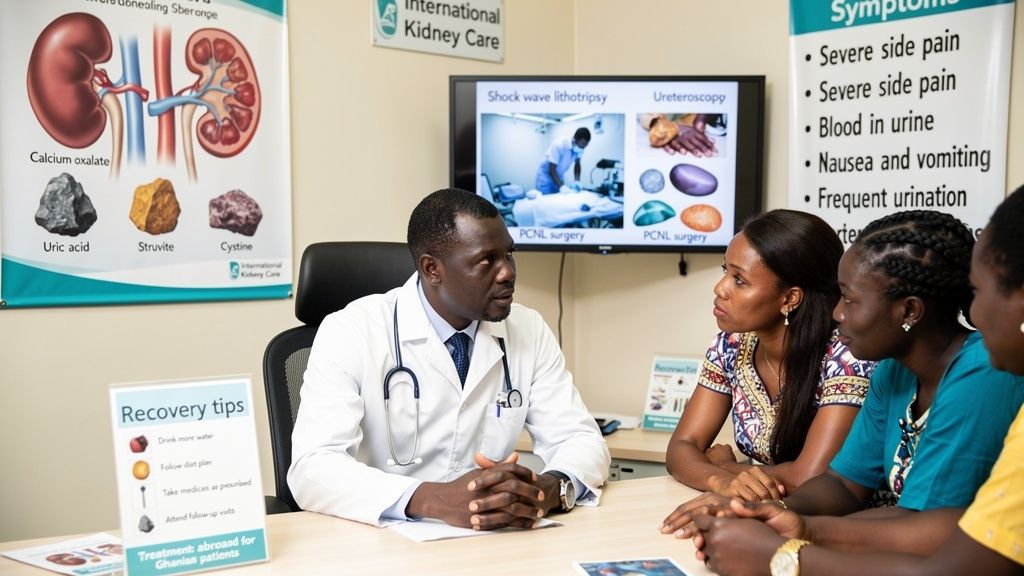
If you're dealing with kidney stones in Ghana, you're not alone. The burden of kidney stones affects many Ghanaians, and traditional local treatment options can be expensive or limited. What many don't realize is that seeking kidney stone removal abroad can offer world-class care at affordable costs, often saving you up to 50% compared to private treatment in Ghana while providing access to cutting-edge surgical techniques.
Understanding Kidney Stones And When to Act
Kidney stones are hard deposits made of minerals and salts that form inside your kidneys. They can range from as small as a grain of sand to as large as a golf ball. The most common types include calcium oxalate stones, which make up about 80% of all kidney stones, uric acid stones, struvite stones, and cystine stones.
Key symptoms that signal you need treatment
You'll know something's wrong when kidney stones start causing symptoms. The most telling sign is severe pain in your side or back, below the ribs, that often comes in waves and fluctuates in intensity. You might also experience pain when urinating, blood in your urine, nausea and vomiting, frequent urination, or fever and chills if an infection is present.
According to Ghana's Standard Treatment Guidelines, early intervention is crucial for preventing complications like kidney damage or severe infections. Don't wait until the pain becomes unbearable - seeking treatment early can prevent more serious complications and reduce overall treatment costs.
Modern kidney stone removal options
Today's kidney stone treatments are far more advanced than traditional open surgery. You have several minimally invasive options that can get you back to normal life quickly.
1. Laser kidney stone treatment
Laser treatment is one of the most effective modern approaches. During this procedure, a thin scope is passed through your urethra and bladder to reach the stone. A laser then breaks the stone into tiny pieces that can pass naturally through your urine. This technique works particularly well for stones in the ureter or kidney and typically requires only a day procedure with minimal recovery time.
2. Ureteroscopy procedure
The ureteroscopy procedure uses a small telescope-like instrument to locate and remove stones from your kidney or ureter. Your surgeon can either grab the stone with a basket-like device or break it up using laser energy. This approach is excellent for stones that are stuck in the ureter or for smaller kidney stones.
3. ESWL vs laser treatment
Extracorporeal Shock Wave Lithotripsy (ESWL) uses sound waves to break up stones from outside your body. While ESWL works well for certain types of stones, laser treatment often provides better results for harder stones or those located in difficult positions. Your surgeon will recommend the best approach based on your stone's size, location, and composition.
For complex cases requiring advanced surgical techniques, many Ghanaians find excellent care through specialized surgical programs abroad that offer comprehensive treatment packages including pre-operative planning and post-surgical support.
Understanding kidney stone surgery costs abroad
Cost is often the deciding factor for many Ghanaians considering treatment options. Here's what you can expect when seeking kidney stone removal abroad.
| Treatment Type | Cost Abroad (USD) | Local Private Cost (Ghana) | Savings |
|---|---|---|---|
| Laser Kidney Stone Treatment | $2,500 - $4,000 | $5,000 - $7,000 | Up to 50% |
| Ureteroscopy | $2,000 - $3,500 | $4,000 - $6,000 | Up to 45% |
| ESWL | $1,500 - $2,500 | $3,000 - $4,500 | Up to 44% |
| Complete Package (incl. accommodation) | $3,500 - $5,500 | $6,000 - $9,000 | Up to 40% |
Factors that influence your total costs
Several factors affect the final cost of your kidney stone removal abroad. The complexity of your case plays a major role - multiple stones or larger stones require more extensive procedures. The specific technique used also matters, with laser treatments typically costing more than ESWL but offering better success rates.
Additional costs to consider include pre-operative tests, medications, accommodation for your recovery period, and follow-up consultations. However, many international medical facilities offer comprehensive packages that bundle these costs together, making budgeting easier and often reducing your overall expenses.
What to expect during recovery after kidney stone surgery
Recovery after kidney stone surgery is generally straightforward, but knowing what to expect helps you plan better and recover faster.
Immediate post-surgery period
Most kidney stone procedures are outpatient, meaning you can go home the same day. You'll likely experience some mild discomfort or burning when urinating for the first 24-48 hours. This is normal and indicates your urinary system is healing. You might also notice small stone fragments or blood in your urine for a few days.
Pain levels are generally manageable with over-the-counter medications, though your doctor may prescribe stronger pain relief if needed. Most patients return to normal activities within 2-3 days, though heavy lifting should be avoided for about a week.
Recovery checklist for optimal healing
- Drink 2-3 liters of water daily to help flush out stone fragments
- Take prescribed medications as directed, including antibiotics if given
- Strain your urine for 2-3 days to collect stone fragments for analysis
- Avoid heavy lifting or strenuous activities for 7-10 days
- Contact your doctor if you experience fever, severe pain, or inability to urinate
- Attend your follow-up appointment as scheduled
Signs that require immediate medical attention include fever above 101°F, severe pain that doesn't respond to medication, complete inability to urinate, or heavy bleeding. While complications are rare, being aware of warning signs ensures you get help quickly if needed.
Preventing kidney stones from coming back
Successfully removing your kidney stones is just the first step. Research shows that without proper prevention, about 50% of people who've had kidney stones will develop them again within 10 years. The good news is that most recurrences can be prevented with the right approach.
Dietary changes that make a difference
Your diet plays a crucial role in preventing new stones. Contrary to popular belief, you don't need to avoid calcium completely. In fact, getting adequate calcium from food sources can actually help prevent calcium oxalate stones by binding to oxalate in your digestive system.
What you should limit includes foods high in oxalate like spinach, nuts, tea, and chocolate if you've had calcium oxalate stones. Reduce sodium intake to less than 2,300mg daily, as excess salt increases calcium in your urine. Also limit animal protein to about 6-8 ounces per day, as too much can increase uric acid and reduce citrate levels.
Daily prevention habits that work
- Drink enough water to produce 2.5 liters of urine daily (urine should be light yellow)
- Add fresh lemon juice to water daily for natural citrate
- Include calcium-rich foods with meals (dairy, leafy greens)
- Limit sodium intake by avoiding processed foods and not adding table salt
- Choose lean proteins and limit red meat to 2-3 servings per week
- Maintain a healthy weight through regular physical activity
The critical role of hydration
Adequate hydration is your most powerful tool for preventing kidney stones. When you're well-hydrated, your urine is diluted, making it harder for minerals to crystallize and form stones. Aim to drink enough water that your urine is pale yellow throughout the day.
In Ghana's climate, you'll need even more fluids to compensate for water loss through sweating. A good rule is to drink an extra glass of water for every hour you spend outdoors in hot weather or during physical activity.
Choosing the right medical center abroad
Not all medical facilities are created equal when it comes to kidney stone treatment. The center you choose can make the difference between a smooth experience and unnecessary complications.
What to look for in a urology center
First, ensure the facility has experience specifically with kidney stone treatments and uses modern equipment. Look for centers that offer multiple treatment options, including laser lithotripsy and ureteroscopy, as this indicates they can choose the best approach for your specific case.
The surgical team's credentials matter significantly. Your urologist should be board-certified with extensive experience in minimally invasive kidney stone procedures. Many top international centers also provide detailed pre-operative consultations via telemedicine, allowing you to discuss your case before traveling.
Quality medical centers abroad often provide comprehensive care packages similar to specialized orthopedic programs that include everything from initial consultation to post-operative follow-up, ensuring continuity of care throughout your treatment journey.
A Word From the TMTC Team
We've helped patients access world-class kidney stone treatment abroad at costs 40-50% lower than local private options. Our personalized treatment plans and seamless experience ensure you receive expert guidance from consultation through complete recovery.
Questions to ask before choosing
Before committing to treatment abroad, ask about the surgeon's experience with your specific type of kidney stone and the facility's success rates. Find out what's included in the quoted price - some centers charge separately for anesthesia, medications, or follow-up visits.
Also inquire about post-operative support. Will you have access to your surgical team if questions arise after you return home? Many reputable centers provide telemedicine follow-up consultations as part of their comprehensive care approach.
Taking the next step toward treatment
Kidney stones don't have to control your life or drain your finances. With modern minimally invasive techniques available abroad at significantly reduced costs, effective treatment is within reach for most Ghanaian patients.
The key is acting promptly when symptoms appear and choosing a reputable medical center with experience in treating international patients. With proper treatment and prevention strategies, you can eliminate current stones and dramatically reduce your risk of developing new ones.
Remember that every day you wait, kidney stones can cause more damage and pain. Modern surgical techniques mean you can be back to your normal activities within days, not weeks. Take the first step by consulting with qualified urologists who can evaluate your specific case and recommend the most appropriate treatment approach.
Don't let cost concerns prevent you from getting the treatment you need. Explore your options for affordable, high-quality kidney stone removal abroad and regain control of your health and quality of life.
References:
-
Ghana Ministry of Health Standard Treatment Guidelines- Guidelines for urological conditions and early intervention protocols
-
Current and Emerging Treatment Options for Multidrug Resistant Escherichia coli Urosepsis- Research on urological complications and treatment approaches
-
WHO Housing and Health Guidelines- Health factors affecting kidney stone development and prevention strategies
Related Articles




Ready to open the door to better health?