Your Step-by-Step Guide to IVF in India: What You Need to Know
Discover the detailed process of IVF in India, from costs to success rates, and how to choose the right clinic for your journey.
29 April 202612m

Dr Piyush Das
Dr Piyush- Medical professional with 10+ years’ experience in diagnosis, patient care, and clinical leadership.
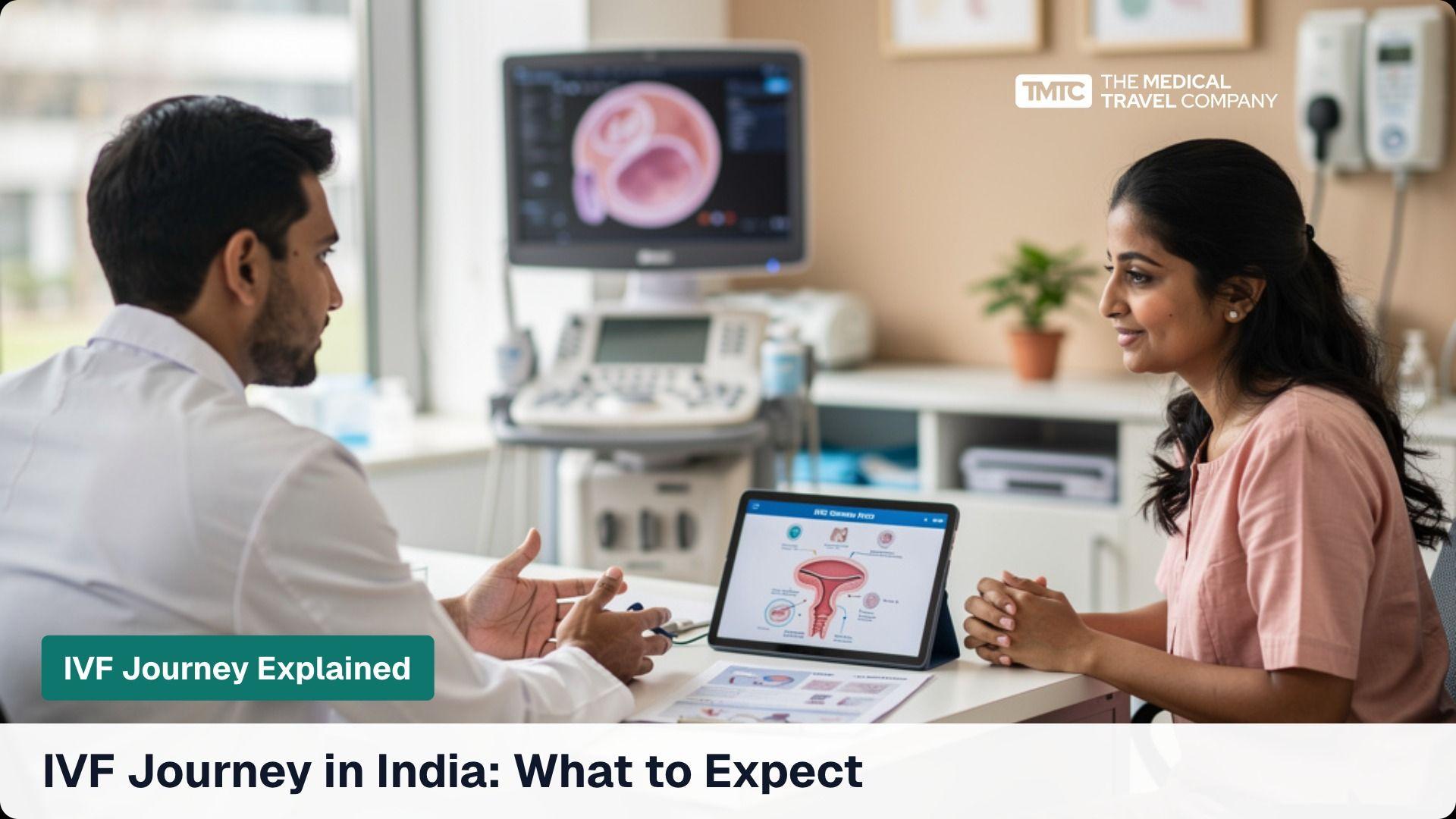
If you've been trying to conceive for months or years without success, IVF in India might be the answer you're looking for. India has become a leading destination for couples seeking affordable, world-class fertility treatment. With success rates comparable to international standards and costs that are 60-70% lower than Western countries, more couples are choosing India for their fertility journey.
The country's fertility industry is projected to reach $3.72 billion over the next five years, driven by advanced medical technology and highly qualified specialists. But navigating this process can feel overwhelming when you're facing such an important decision about your future family.
Understanding IVF: What Exactly Happens?
In vitro fertilisation, or IVF, is a process where eggs are retrieved from your ovaries and fertilised with sperm in a laboratory. The resulting embryos are then transferred back into your uterus, where hopefully one will implant and develop into a healthy pregnancy.
The process might sound straightforward, but it involves several carefully timed steps. Your doctor will monitor your hormone levels and egg development through blood tests and ultrasounds. Once your eggs are mature, they're collected through a minor surgical procedure. Meanwhile, sperm is prepared in the lab, and fertilisation occurs in controlled conditions.
After 3-5 days of development, the healthiest embryos are selected for transfer back into your uterus. Any remaining quality embryos can be frozen for future use, giving you additional chances at pregnancy without repeating the entire process.
Why Choose IVF in India? The Numbers Tell the Story
India offers compelling advantages for international patients seeking fertility treatment. The combination of affordable healthcare, expert medical care, and impressive success rates makes it an attractive option for couples worldwide.
World-Class Care at Fraction of the Cost
The cost difference is significant. While IVF in the United States can cost $15,000-$20,000 per cycle, you can expect to pay $3,000-$5,000 for the same treatment in India. This affordability doesn't come at the expense of quality - many Indian fertility clinics are internationally accredited and use the latest technology.
Indian fertility specialists often train at leading international institutions and bring that expertise back home. The country has invested heavily in medical infrastructure, with state-of-the-art labs and equipment that rival those found anywhere in the world.
Success Rates That Compete Globally
Success rates in top Indian fertility clinics range from 40-60% for women under 35, which is comparable to leading clinics worldwide. Research published in BMJ Open Quality shows that Indian fertility centres are working to reduce waiting times and improve patient outcomes through systematic quality improvements.
These statistics vary based on factors like your age, the cause of infertility, and the specific clinic you choose. That's why it's crucial to research clinics thoroughly and discuss your individual prognosis with qualified specialists.
Your Step-by-Step IVF Journey in India
Understanding what to expect can help reduce anxiety and ensure you're prepared for each stage of treatment. Here's how the process typically unfolds:
1. Initial Consultation and Testing
Your journey begins with a comprehensive consultation, often available via video call before you travel. The fertility specialist will review your medical history and may request specific tests. For women, this typically includes hormone level checks, ovarian reserve testing, and ultrasound scans. Men will need semen analysis and sometimes additional hormone tests.
Many clinics can coordinate these tests in your home country, saving time once you arrive in India. If you're from Kenya, Nigeria, or other African countries, specialised IVF packages for international patients like Kenya often include pre-arrival coordination and testing.
2. Treatment Planning and Medication
Based on your test results, your doctor will create a personalised treatment plan. This includes the specific medications you'll need and the timeline for your cycle. Most patients start hormone injections to stimulate egg production before arriving in India.
The medication protocol typically lasts 10-12 days and requires regular monitoring through blood tests and ultrasounds. Your clinic will provide detailed instructions and support throughout this phase, often through dedicated patient coordinators who speak your language.
3. Egg Retrieval and Fertilisation
Once your eggs are mature, you'll undergo egg retrieval - a 20-30 minute procedure performed under light sedation. The process is minimally invasive, using ultrasound guidance to collect eggs through a thin needle.
While you're recovering, the embryology team prepares the sperm and begins fertilisation in the laboratory. You'll typically know by the next day how many eggs were successfully fertilised and are developing into embryos.
4. Embryo Transfer and Follow-Up
After 3-5 days, the best quality embryo is transferred back into your uterus. This is a simple procedure that doesn't require anaesthesia. Many patients describe it as similar to a cervical smear test.
The two-week wait until your pregnancy test can feel endless. Your clinic will provide progesterone support and clear instructions for this period. Some clinics offer additional services like egg freezing in Botswana if you have extra embryos you'd like to preserve for future attempts.
Understanding the Real Costs of IVF in India
While IVF in India is significantly more affordable than many other countries, it's important to budget for the complete experience, not just the basic treatment cost.
Basic Treatment Costs
A standard IVF cycle in India typically costs between $3,000-$5,000. This includes consultation fees, monitoring scans, egg retrieval, laboratory work, and embryo transfer. However, medication costs can add another $800-$1,500, depending on your specific protocol.
Additional procedures like ICSI (intracytoplasmic sperm injection) may cost an extra $500-$800, while genetic testing of embryos can add $1,000-$2,000 to your bill. These costs are still significantly lower than what you'd pay in Western countries.
Hidden Costs to Consider
Don't forget to budget for travel and accommodation. A typical IVF cycle requires a 3-4 week stay in India. Flights, visa fees, accommodation, meals, and local transportation can add $2,000-$4,000 to your total cost, depending on your country of origin and comfort preferences.
Some couples also choose to extend their stay for sightseeing or plan for multiple attempts, which affects the overall budget. Many fertility clinics partner with local hotels to offer discounted rates for international patients.
| Cost Component | Price Range (USD) | Notes |
|---|---|---|
| IVF Cycle | $3,000 - $5,000 | Basic treatment package |
| Medications | $800 - $1,500 | Varies by protocol |
| ICSI (if needed) | $500 - $800 | Additional procedure |
| Accommodation (3-4 weeks) | $600 - $1,500 | Depends on hotel category |
| Flights | $800 - $2,500 | Varies by origin country |
| Visa & Other Expenses | $300 - $500 | Medical visa and miscellaneous |
Choosing the Right IVF Clinic in India
With hundreds of fertility clinics across India, selecting the right one for your needs requires careful research and consideration of several key factors.
Key Factors to Evaluate
Start by looking at success rates, but remember these vary significantly based on patient age and specific fertility issues. Recent research in The BMJ highlights concerns about malpractice in India's growing IVF industry, making it crucial to choose clinics with proper accreditation and transparent reporting.
Look for clinics accredited by organizations like NABH (National Accreditation Board for Hospitals) or international bodies like JCI. Check if the lead doctors are board-certified reproductive endocrinologists with proper training and experience.
Patient reviews and testimonials can provide valuable insights, but be wary of clinics with exclusively positive reviews - authentic feedback includes both positive and constructive comments. Ask about their experience with international patients and language support.
Top Cities for IVF Treatment
Mumbai, Delhi, Bangalore, and Chennai are considered the leading destinations for fertility treatment in India. These cities have the highest concentration of experienced specialists and internationally accredited facilities.
Mumbai and Delhi offer the most options but can be more expensive and crowded. Bangalore combines excellent medical facilities with a more relaxed pace, while Chennai is known for its medical tourism infrastructure and slightly lower costs.
Navigating Medical Visa and Travel Requirements
Planning your travel for IVF requires attention to visa requirements, timing, and practical arrangements that can impact your treatment success.
Medical Visa Process Made Simple
Most countries' citizens can apply for an Indian medical visa, which allows multiple entries and is typically valid for one year. You'll need a letter from your chosen clinic confirming your treatment appointment, along with standard visa documentation.
The application process usually takes 3-7 working days, but apply early to avoid delays. Some countries have e-visa facilities that expedite the process. Your clinic's international patient coordinator can often help with visa support letters and guidance.
Essential Travel Tips for IVF
Plan to arrive in India at least 2-3 days before your treatment begins to recover from travel fatigue and adjust to the time zone. Book accommodations near your clinic to reduce daily travel stress during your treatment cycle.
Bring all your medical records, previous test results, and current medications. Many clinics recommend specific vaccines depending on your home country, so check these requirements well in advance.
IVF Travel Preparation Checklist
- Apply for medical visa 4-6 weeks before travel
- Book flights with flexible dates for potential cycle changes
- Arrange accommodation near your chosen clinic
- Organize medical records and test results translation
- Check vaccination requirements for your home country
- Set up international phone plan or local SIM card
- Arrange travel insurance covering medical treatment abroad
- Plan for 3-4 week stay with potential extension
What to Expect: Success Rates and Realistic Outcomes
Research from fertility experts emphasizes that IVF success depends on multiple factors including age, underlying fertility issues, and clinic expertise. In India, success rates for women under 35 typically range from 40-60% per fresh cycle.
However, success rates decline with age. Women aged 35-37 see success rates around 35-45%, while those over 40 may have success rates of 15-25% per cycle. These statistics include both fresh and frozen embryo transfers.
Many couples need multiple cycles to achieve pregnancy. Recent research on time to live birth shows that cumulative success rates increase significantly when considering multiple treatment attempts over time.
Alternative Fertility Treatments Available in India
IVF isn't the only fertility treatment option available in India. Depending on your specific situation, other treatments might be more appropriate or serve as stepping stones to IVF.
Intrauterine insemination (IUI) in Nigeria is often the first line treatment for couples with unexplained infertility or mild male factor issues. It's less invasive and more affordable than IVF, though success rates are generally lower.
For women concerned about age-related fertility decline, egg freezing services in Ghana allow you to preserve younger, healthier eggs for future use. This option is becoming increasingly popular among women who want to delay childbearing for personal or professional reasons.
Some couples also explore gestational carrier arrangements, though recent regulatory changes in India have affected commercial surrogacy options. Your clinic can explain current legal frameworks and available alternatives.
Making Your Decision: Is IVF in India Right for You?
Choosing to pursue IVF in India represents a significant commitment - financially, emotionally, and logistically. The combination of affordable costs, skilled specialists, and advanced facilities makes India an attractive option for many international couples.
However, success isn't guaranteed, and the journey requires patience, resilience, and realistic expectations. Consider your specific fertility diagnosis, financial situation, and ability to travel for extended periods when making this decision.
"We chose India for our IVF journey after struggling with costs in our home country. The medical care was exceptional, and our coordinator guided us through every step. While it took two cycles, we're now proud parents thanks to the expert team in Mumbai. The savings allowed us to afford multiple attempts, which made all the difference." — Sarah and John, Kenya
If you're considering fertility treatment options, research thoroughly, consult with specialists both at home and in India, and ensure you have adequate support systems in place. The journey to parenthood through IVF requires emotional preparation as much as financial and logistical planning.
Many couples find that combining affordable treatment costs with world-class care gives them the best opportunity to build their families. Whether you're from UK Fertility Care, Africa, or elsewhere, India's fertility industry offers hope and expertise to help you achieve your dreams of parenthood.
Remember that every fertility journey is unique. What works for one couple may not work for another, but with proper research, realistic expectations, and expert guidance, IVF in India could be the path that leads to your long-awaited pregnancy.
References
-
India's roaring IVF trade struggles with malpractice - The BMJ- Analysis of regulatory challenges in India's fertility industry
-
Reducing the waiting time to initiation of infertility treatment at a tertiary care centre in India - BMJ Open Quality- Research on improving patient outcomes and reducing delays
-
Considering using IVF to have a baby? Here's what you need to know - The Conversation- Expert guidance on IVF decision-making and expectations
-
Time to live birth and associated factors following fertility treatments - BMJ Open- Research on success rates and factors affecting fertility treatment outcomes
-
Gestational Carrier IVF - Apollo Hospitals- Information on advanced fertility treatment options available in India
Ready to open the door to better health?