Heart Bypass Surgery Cost in India for Zimbabwe Patients
Explore heart bypass surgery costs in India for Zimbabwe patients, including treatment options, leading cardiac hospitals and personalised recovery support.
Published on 25 September 20269m


Medical professional with 10+ years’ experience in diagnosis, patient care, and clinical leadership.
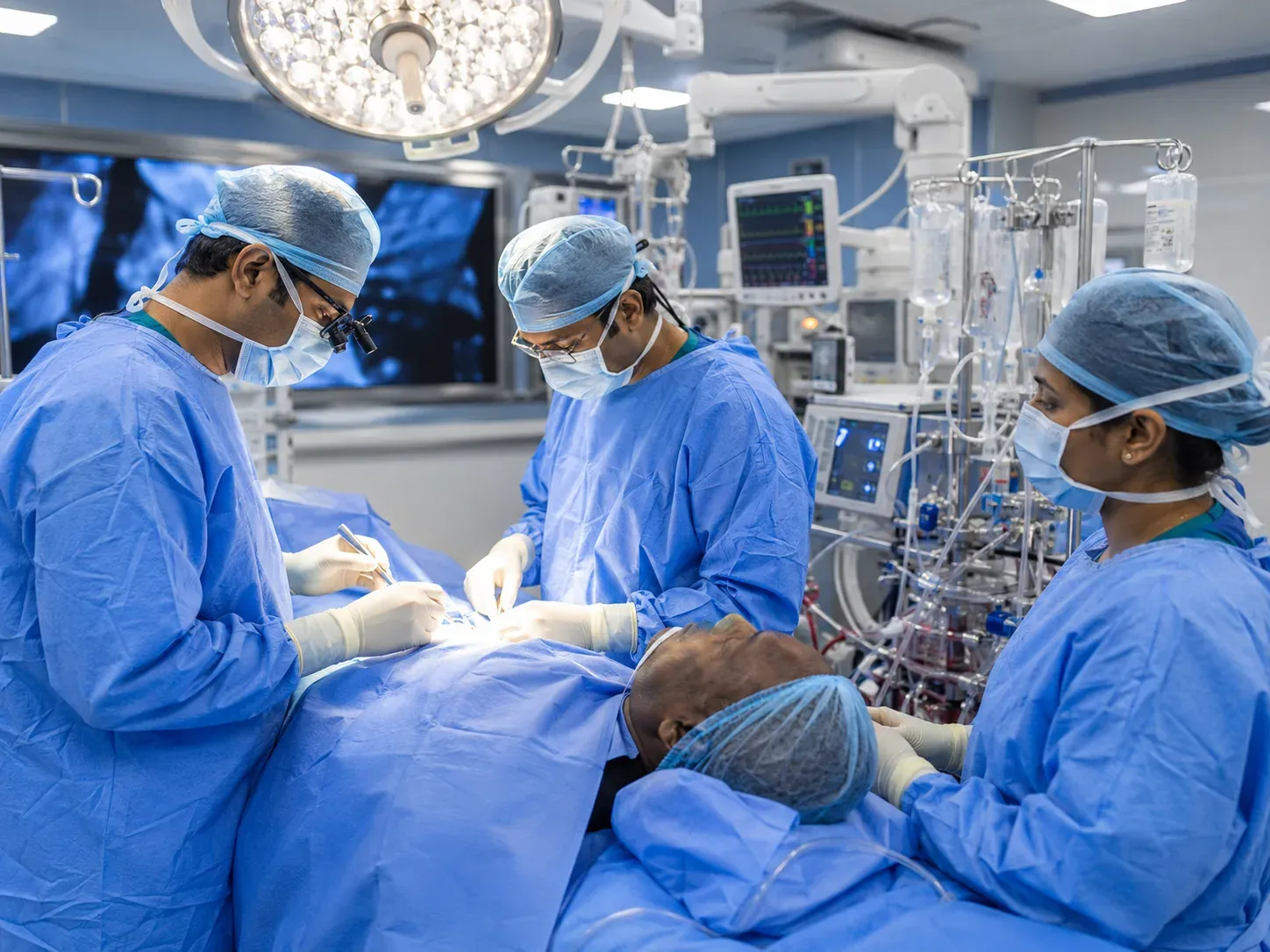
TMTC's base rate for coronary artery bypass grafting in India is US$5,000 for Zimbabwe patients, against a comparison figure of US$6,500 in Zimbabwe and US$12,000 in South Africa. The final cost follows the treatment plan your surgeon sets after reviewing your angiogram. Surgery takes place at JCI and NABH accredited partner hospitals including Fortis, Medanta, Artemis, MAX and Apollo.
Key takeaways
- TMTC's base rate for coronary artery bypass grafting in India for Zimbabwean patients is US$5,000, with the final cost following the treatment plan.
- The comparison figure is US$6,500 in Zimbabwe and US$12,000 in South Africa.
- Three assumptions move a bypass quote: the number of grafts, whether the surgery is on-pump or off-pump, and the days of intensive care included.
- The Embassy in Harare requires the Indian hospital's letter to carry an estimated treatment cost, so a fixed quote serves the visa as well as the plan.
What a bypass costs in Zimbabwe today
In Zimbabwe the comparison figure is US$6,500, met from savings, through a medical aid society or with a relative's help.
A figure like that describes the operation itself rather than the whole episode. Sitting outside it, usually, are the pre-operative workup, the diagnostic angiogram, intensive care days beyond the assumed stay, blood products and rehabilitation. Two quotes cannot be compared unless both rest on the same assumptions.
Key point: Before comparing two bypass prices, establish what each assumes about graft numbers and intensive care days. A figure covering two grafts and two ICU days is not comparable with one covering four and five, however similar the headline looks.
Reading a bypass quote line by line
Four questions are worth putting to whoever issues your quote, in writing.
How many grafts does the figure assume, and what changes if a further vessel needs grafting once the chest is open? Is the operation planned on-pump or off-pump, and does the price move between the two? How many days of intensive care are included, and what is charged beyond that? And what sits outside the number altogether, from imaging and blood products through to physiotherapy and the medication you leave with?
There is a second reason to get it in writing here. The Indian hospital's letter to the Embassy must carry an estimated treatment cost, and if a medical aid society is funding you, its guarantee is written against that same figure. A fixed itemised quote does visa duty as well as planning duty.
TMTC's base rate for bypass surgery
TMTC's base rate for bypass surgery for Zimbabwean patients is US$5,000, with the final cost following the treatment plan.
| Procedure | India | South Africa | Zimbabwe |
|---|---|---|---|
| Coronary artery bypass grafting | US$5,000 | US$12,000 | US$6,500 |
That quote follows an online consultation with the treating Indian specialist, so the figure reflects your angiogram rather than an average. Around the surgery sit a free record review, medical visa support, flight booking assistance, airport transfers, accommodation for you and a companion, an interpreter, a dedicated coordinator, the discharge summary and imaging handover, and a follow-up schedule. What a package covers varies by procedure, so confirm the list that applies to bypass.
Why the figure falls without the standard falling
The difference sits in the cost base rather than in the care. Clinical salaries and facility costs are lower in India, the largest cardiac units spread fixed costs across far more operations, and currency does the rest.
Accreditation is the one part of this you can settle on your own. Joint Commission International publishes its
accredited international organisations
and NABH its accredited healthcare organisations
, so search for the hospital named in your plan on both.Why TMTC. Every plan is reviewed by a UK-registered GP, TMTC's Medical Director of Primary Care, alongside your treating Indian specialist. Treatment is at JCI and NABH accredited partner hospitals, using the implant brands specified in UK and German hospitals. You recover at our aftercare centre with a doctor and nurse on site around the clock until a clinician certifies you fit to fly, and one coordinator handles the visa file, flights, transfers, interpreter and companion accommodation.
Candidacy, the surgical team and the units around it
Whether bypass suits your case better than stenting is a decision for the cardiologist reading your angiogram, turning largely on how many vessels are involved. Two questions then narrow the hospital down. How many bypass operations does the named surgeon perform in a year, and what happens if the first plan does not hold once surgery begins? From there, look at the units around the theatre, since diabetes and reduced kidney function often travel alongside coronary disease. You can review the
specialists
first. Every recommendation is reviewed by TMTC's Medical Director of Primary Care, a UK-registered GP, giving the plan an additional layer of independent UK clinical oversight. That review covers continuity and the reading of your records rather than the surgery itself.On the visa, Zimbabwe appears on the Government of India's
e-Visa eligibility list
, so there are two routes. An electronic medical visa suits firm dates, though it cannot be extended once granted and limits entry to designated ports. The paper route through the Embassy in Harare takes more assembling but produces a visa that can be extended inside India if the clinical picture changes. Applications are accepted on weekdays between 0900 and 1200, visas are normally collected two working days later, and you attend in person for biometric enrolment.The Embassy asks for return air tickets, a passport valid six months with three blank pages, a letter from your Zimbabwean hospital or doctor after examination together with complete copies of your treatment records, and a letter from the Indian hospital naming both you and your attendant and stating an estimated treatment cost, which the hospital must also email directly to the Embassy. Alongside those go a certified bank statement, proof of your attendant's relationship to you, a separate letter detailing any previous visits to India, and the fee in cash in US dollars. Requirements change, so read the current list on the
Embassy of India, Harare
page before you apply.If a medical aid society is funding you, the Embassy requires a letter from the society confirming your admissibility for treatment in India, a guarantee for the treatment expenses, and proof that funds have been transferred. A membership certificate does not satisfy that, so request a letter written against those three points, and note that the society writes its guarantee against the Indian hospital's cost estimate, which is why the estimate comes first.
Recovery, fitness to fly and cover once you are home
Discharge arrives well before anyone is ready for a long flight home. Our patients move to the
aftercare centre
, where a doctor and nurse are on site around the clock, physiotherapy runs daily and meals are designed by a nutritionist, until a clinician certifies them fit to fly, rather than until a booking expires. The return ticket the Embassy asks for is worth thinking about early, so settle a realistic treatment duration with the hospital, recovery included, before booking around the shortest possible stay.The post-treatment insurance included for Zimbabwe patients covers a return flight to India and treatment in India if a complication arises, rather than treatment in Zimbabwe. That is a real limit, and it belongs in your planning rather than in the small print you read afterwards. You travel home with a discharge summary, your imaging, the graft details and a follow-up schedule, along with coordination with your own cardiologist in Harare, Bulawayo or wherever you live, since that clinician manages your medication and monitoring for the years that follow.
Patient tip: Name your Zimbabwean cardiologist before you fly. Tell your coordinator who they are so the discharge summary and imaging reach them directly, and book the first local review while you are in India.
Getting a Bypass Quote You Can Compare
Four checks settle most of it. What the figure assumes about grafts and intensive care days. The named surgeon's annual volume. Whether the hospital appears on the two accreditation registries. And whether the Indian hospital has emailed its costed letter to Harare, since both your visa and any medical aid guarantee wait on it. For those answered against your own angiogram, a
free consultation
is where TMTC's Zimbabwe service
starts.Frequently asked questions
How much does heart bypass surgery cost in India for Zimbabwean patients?
TMTC's base rate is US$5,000, against a comparison figure of US$6,500 in Zimbabwe. It is a starting point rather than a final price, and your own figure follows the treatment plan agreed after an online consultation with the Indian specialist.
What makes one bypass quote higher than another?
Three things mainly. The number of grafts, since a figure built on two is not a figure for four. Whether the surgery is planned on-pump or off-pump. And the days of intensive care assumed, which nobody can promise in advance. Establish all three in writing before funds move.
Will my medical aid society pay for bypass surgery in India?
That depends on your society, but the Embassy in Harare requires a letter confirming your admissibility for treatment in India, a guarantee for the expenses, and proof that funds have been transferred. Request a letter addressing those three points rather than a membership certificate.
How long will I need to stay in India after a bypass?
Longer than the hospital stay alone. Departure follows a clinician certifying you fit to fly rather than a booked date. The Embassy asks for return tickets, so agree a realistic duration with the hospital before booking around the shortest possible stay.
What happens if I have a complication after returning to Zimbabwe?
The post-treatment insurance included for Zimbabwean patients covers a return flight to India and treatment in India, rather than treatment in Zimbabwe. You also return with a discharge summary and graft details, so your own cardiologist can act while that is arranged.
Sources referenced for this guide: TMTC client cost sheet for Zimbabwe and published service, aftercare and specialist pages; Embassy of India, Harare, visa requirements; Government of India e-Visa portal; Joint Commission International and NABH accreditation directories.
Please note: Visa requirements, fees and arrangements change from time to time. Confirm the current position with the relevant mission or official portal before booking travel or committing to treatment.
Disclaimer. This article is for general information only and is not medical advice. It does not replace consultation with a qualified doctor. Treatments, risks, recovery and outcomes vary by individual and depend on your personal circumstances; speak to a registered clinician before making any treatment decision. Insurance cover, including any post-treatment cover, is subject to the full terms, limits and exclusions of the policy document, which is provided before you book.
Heart Bypass
Ready to open the door to better health?