Colorectal Cancer Surgery Cost in India for Zimbabwe Patients
Explore colorectal cancer surgery costs in India for Zimbabwean patients, including treatment options, leading hospitals and personalised recovery support.
Published on 25 September 202610m


Medical professional with 10+ years’ experience in diagnosis, patient care, and clinical leadership.
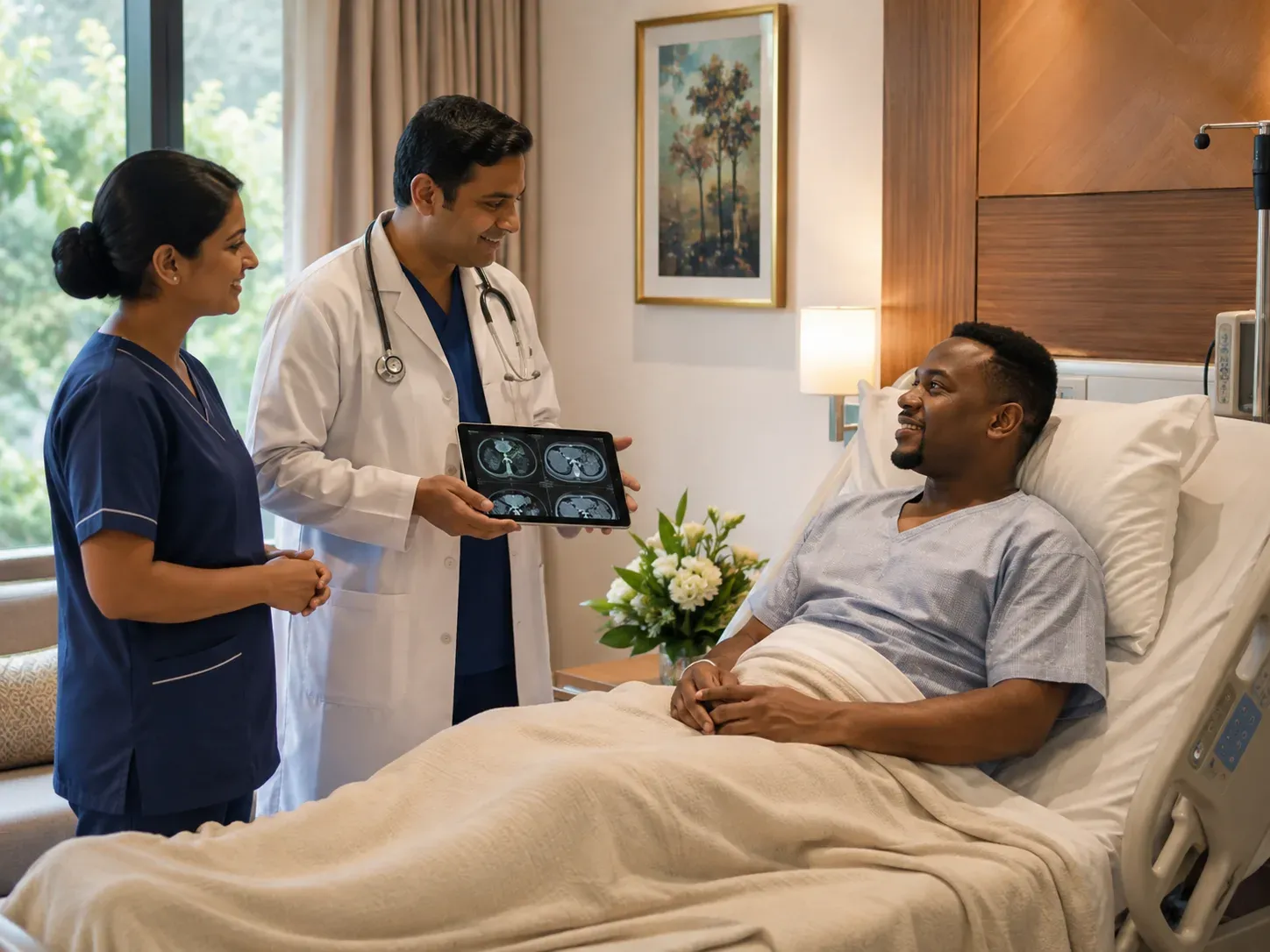
TMTC's base rate for colorectal cancer surgery in India is US$2,500 for Zimbabwean patients, against a comparison figure of US$3,500 in Zimbabwe and US$6,500 in South Africa. One question shapes that figure as much as it shapes the months afterwards: whether a stoma is needed, and if so whether it is temporary or permanent. Surgery takes place at JCI and NABH accredited partner hospitals including Fortis, Medanta, Artemis, MAX and Apollo.
Key takeaways
- TMTC's base rate for colorectal cancer surgery in India for Zimbabwe patients is US$2,500, with the final cost following the treatment plan.
- The comparison figure is US$3,500 in Zimbabwe and US$6,500 in South Africa.
- Whether a stoma is needed, and whether it is temporary or permanent, shapes the operation and the year that follows it.
- A temporary stoma means a reversal later, which for a travelling patient is a second cost, a second visa and the Embassy's letter about previous visits.
What bowel cancer surgery costs in Zimbabwe
In Zimbabwe the comparison figure is US$3,500, met from savings, through a medical aid society or with a relative's help.
Colorectal cancer is commonly called bowel cancer, and the term covers two distinct things. A tumour in the colon and one in the rectum are approached differently and often need different operations, so a single figure for the category tells you less than it appears to. Local quotes also price the colonoscopy, staging scans, stapling devices and histopathology separately.
Key point: Establish which site the quote assumes, colon or rectum, before comparing it with anything. They are different operations with different stays and recoveries, and a price for one tells you little about the other.
The stoma question and what each quote covers
Five things settle what you will pay, and each has an answer somebody can put in writing.
Does the plan involve a stoma, and if so is it intended to be temporary or permanent? If temporary, is the reversal operation quoted now or later? Which site does the figure assume? Are the stapling devices and other consumables inside the number? And what happens if a keyhole operation has to be converted to an open one?
The reversal question deserves most attention, because it catches travelling patients out. A reversal some months later is a second operation, which for a Zimbabwean patient means a second flight, a second visa application and a separate letter to the Embassy detailing the previous visit, which returning patients routinely forget. Price it from the outset.
TMTC's base rate for colorectal surgery
TMTC's base rate for colorectal cancer surgery for Zimbabwean patients is US$2,500, with the final cost following the treatment plan. That figure prices the operation itself.
| Procedure | India | South Africa | Zimbabwe |
|---|---|---|---|
| Colorectal cancer surgery | US$2,500 | US$6,500 | US$3,500 |
The quote follows an online consultation with the treating Indian specialist, who will want your colonoscopy findings and staging scans rather than a summary. A fixed itemised figure also does visa duty, since the hospital's letter to the Embassy must carry an estimated cost. Around the surgery sit the record review, visa support, transfers, accommodation for you and a companion, an interpreter and a coordinator.
Cost base, currency and the standard of care
The lower figure comes from what it costs to run the hospital rather than from a different standard of care. Salaries, facilities and length of stay cost less to fund in India, high-volume units spread their fixed costs widely, and currency accounts for much of the remainder.
Accreditation is the half you can verify yourself, through Joint Commission International's
accredited international organisations
and NABH's accredited healthcare organisations
.Why TMTC. Every plan is reviewed by a UK-registered GP, TMTC's Medical Director of Primary Care, alongside your treating Indian specialist. Treatment is at JCI and NABH accredited partner hospitals, using the implant brands specified in UK and German hospitals. You recover at our aftercare centre with a doctor and nurse on site around the clock until a clinician certifies you fit to fly, and one coordinator handles the visa file, flights, transfers, interpreter and companion accommodation.
Tumour board review and the colorectal team
Carry the original biopsy slides and paraffin blocks rather than the report alone, and confirm before flying that the Indian hospital's pathologists will review them. In rectal cancer particularly, the reading and the staging scans together decide the operation.
Then three questions narrow the centre. Does a tumour board review cases like yours? How many of this operation does the named surgeon perform in a year? And is there a stoma nurse on the team? You can review the
specialists
first. Every recommendation is reviewed by TMTC's Medical Director of Primary Care, a UK-registered GP, giving the plan an additional layer of independent UK clinical oversight. That review covers continuity and the reading of your records rather than the surgery itself.Zimbabwe appears on the Government of India's
e-Visa eligibility list
, so there are two routes. An electronic medical visa suits firm dates, though it cannot be extended once granted and limits entry to designated ports. The paper route through the Embassy in Harare takes more assembling but produces a visa that can be extended inside India if the clinical picture changes. Applications are accepted on weekdays between 0900 and 1200, visas are normally collected two working days later, and you attend in person for biometric enrolment.The Embassy requires return air tickets, a passport valid six months with three blank pages, a letter from your Zimbabwean hospital or doctor after examination together with complete copies of your treatment records, and a letter from the Indian hospital naming both you and your attendant and stating an estimated treatment cost, which the hospital must also email directly to the Embassy. Alongside those go a certified bank statement, proof of your attendant's relationship to you, a separate letter detailing any previous visits to India, and the fee in cash in US dollars. Requirements change, so read the current list on the
Embassy of India, Harare
page before you apply.If a medical aid society is funding you, the Embassy requires a letter from the society confirming your admissibility for treatment in India, a guarantee for the treatment expenses, and proof that funds have been transferred. A membership certificate does not satisfy that, so request a letter written against those three points, and note that the society writes its guarantee against the Indian hospital's cost estimate, which is why the estimate comes first. One limit is stated plainly by the Embassy and is better known early than discovered at the counter: third party sponsorship, where a relative or other person funds the trip, is not accepted for terminal illness treatment. Families in that position should put the question to the Embassy directly about what funding evidence it will accept.
Stoma care, follow-up and what comes after surgery
If a stoma forms part of the plan, the most useful thing you can do before flying home has nothing to do with the surgery. Establish where stoma appliances are obtained where you live, how often supplies come in and what they cost, and settle it with your own clinic.
Our patients stay at the
aftercare centre
, where a doctor and nurse are on site around the clock, physiotherapy runs daily and meals are designed by a nutritionist, until a clinician certifies them fit to fly, rather than until a booking expires. The post-treatment insurance included for Zimbabwean patients covers a return flight to India and treatment in India if a complication arises, rather than treatment in Zimbabwe. You travel home with a discharge summary, the histopathology report, your imaging, stoma care instructions where they apply and a follow-up schedule, along with coordination with your own clinician in Harare or Bulawayo.A full cancer plan often involves more than the operation. Chemotherapy, radiotherapy, imaging between cycles and supportive medication are each priced separately, once the treating oncologist has set the protocol, so request those figures alongside the surgical quote rather than after it.
Patient tip: If a temporary stoma is planned, request the expected reversal window in writing before you leave India, and keep a note of your dates of stay for the Embassy's previous-visits letter.
Get the Stoma Question Answered Early
That one answer moves both the price and the plan. Establish whether a stoma is planned, whether it is temporary, and when a reversal would fall, since a reversal is a second operation with a cost of its own. Then confirm which site the quote assumes and whether consumables sit inside it, ask the named surgeon how many of this operation they perform each year, and find out where your supplies will come from at home. A
free consultation
is where TMTC's Zimbabwe service
begins.Frequently asked questions
How much does colorectal cancer surgery cost in India for Zimbabwean patients?
TMTC's base rate is US$2,670, against a comparison figure of US$3,600 in Zimbabwe. It is a starting point rather than a final price, and it covers the operation, with the site and the extent of surgery shaping the figure you are eventually quoted.
Will I need a stoma after bowel cancer surgery?
Not always, and where one is needed it is often temporary rather than permanent. Whether it is required depends on the position of the tumour and how the bowel is joined afterwards, so put the question to your surgeon about what the plan assumes in your case.
Is the stoma reversal operation included in the price?
Usually not, so raise it explicitly. A reversal is a separate operation some months later, and for a Zimbabwean patient that means a second flight, a second visa application and a letter to the Embassy about the previous visit. Get the expected timing in writing.
What is the difference between colon and rectal cancer surgery?
The rectum sits low in the pelvis, in a tighter space and closer to other structures, so rectal operations are technically different and more likely to involve a stoma. Colon operations vary by which section is removed. The quote should name which applies.
Where do I get stoma supplies once I am back in Zimbabwe?
That is worth settling with your own clinic before you travel rather than after you return. Establish which appliances are available where you live, how often supplies arrive and what they cost, so the practical side of recovery is arranged in advance.
Sources referenced for this guide: TMTC client cost sheet for Zimbabwe and published service, oncology, aftercare and specialist pages; Embassy of India, Harare, visa requirements; Government of India e-Visa portal; Joint Commission International and NABH accreditation directories.
Please note: Visa requirements, fees and arrangements change from time to time. Confirm the current position with the relevant mission or official portal before booking travel or committing to treatment.
Disclaimer. This article is for general information only and is not medical advice. It does not replace consultation with a qualified doctor. Treatments, risks, recovery and outcomes vary by individual and depend on your personal circumstances; speak to a registered clinician before making any treatment decision. Insurance cover, including any post-treatment cover, is subject to the full terms, limits and exclusions of the policy document, which is provided before you book.
Colorectal Cancer
Ready to open the door to better health?