This $500 Toothbrush Has a Camera, AI and Its Own Flosser
Dyson just put a camera inside your toothbrush. Their latest oral-care innovation is designed to spot the spaces you usually miss.
Published on 21 September 20263m

Dr Sukalpa Rathore


Medical content writer with dental expertise (BDS, MSc in F. Odont.), focused on cross-border healthcare.
Brushing your teeth has remained a fairly simple part of our daily routine. But as technology continues to enter healthcare and personal wellness, even oral care is becoming increasingly connected.
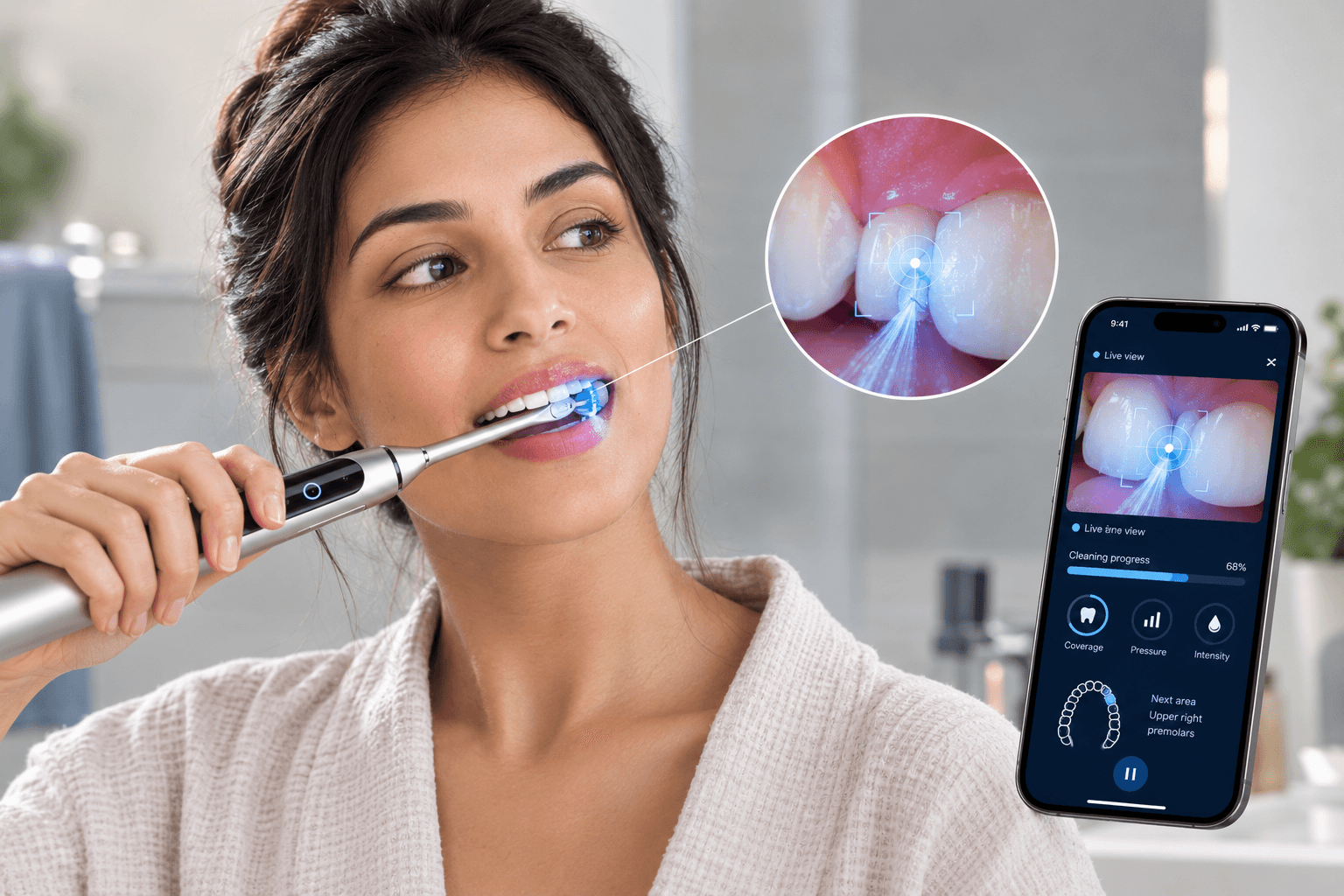
Dyson's latest innovation, the Dyson CameraJet, takes this approach a step further. The high-tech electric toothbrush combines a camera, artificial intelligence, sonic brushing and targeted liquid flossing to help users identify and clean areas that may otherwise be missed.
So, What Makes the CameraJet Different?
The most distinctive feature is the camera built directly into the toothbrush.
The CameraJet features a 100,000-pixel macro camera that captures 28 images per second. Its machine-learning system analyses these images to identify spaces between the teeth in real time. When it detects an interdental space, the device can direct a targeted burst of liquid through its conical jet.
The idea is to combine brushing and interdental cleaning within the same routine, potentially making it easier for users to pay attention to areas that are often overlooked.
Users can also view the cleaning process through the MyDyson app. The app provides live camera footage, guided cleaning, coverage mapping and personalised brushing feedback. According to Dyson, images captured by the camera are processed on the device or app and are not stored or shared.
More Than Just a Camera
The CameraJet also incorporates several features designed to improve brushing technique.
Its contoured dual-bristle brush head is designed to clean around the gumline and remove surface stains, while its variable sonic oscillation is intended to maintain consistent movement against the teeth.
Users can choose between three brushing intensities – Gentle, Variable and Deep Clean – while built-in sensors provide feedback on brushing pressure and technique. Dyson states that the device is water-resistant and offers up to 10 days of battery life.
The company has also reported clinical testing of the technology. In one six-week study involving 204 participants, Dyson reported improved gum health compared with a manual toothbrush. As with any manufacturer-reported research, the study methodology and outcomes should be considered when interpreting these findings.
Premium Price Tag for Premium Oral Care
In typical Dyson fashion, the technology comes at a significant price. The CameraJet is listed at $499.99 in the US, making it considerably more expensive than conventional electric toothbrushes.
The system includes the toothbrush, charging and refill dock, travel case and brush heads. Availability and pricing may vary across markets.
A Dentist's Two Cents: Is It Really Necessary?
As a dentist, I find the most interesting aspect of the CameraJet isn't necessarily the camera itself. It is the focus on interdental cleaning and brushing technique.
A significant part of maintaining good oral health involves cleaning areas that a toothbrush cannot effectively reach. As a dentist, one of the biggest challenges is getting patients to brush with the correct technique and ensure they reach all the nooks and corners of their teeth. This is essential for effective plaque removal and preventing tooth decay. For someone who struggles to maintain consistent interdental cleaning, technology that provides real-time feedback and incorporates this into the brushing routine could be useful.
However, a technologically advanced toothbrush doesn't change the fundamentals of oral hygiene. Effective brushing twice a day, cleaning between the teeth, maintaining good dietary habits and attending regular dental check-ups remain the foundation of oral health. And you don’t need a $500 toothbrush for that.
The CameraJet represents an interesting direction for the future of personal oral care. Whether its combination of imaging, AI and interdental cleaning justifies the premium price will ultimately depend on how much value individual users place on convenience, feedback and personalised oral-care technology.
Ready to open the door to better health?