IVF with Donor Eggs Abroad: Complete Guide for UK Patients in 2026
Considering donor egg IVF abroad? Discover costs, success rates, legal requirements and expert guidance for UK patients seeking egg donation overseas.
Last Updated On 22 July 20269m



Medical content writer with dental expertise (BDS, MSc in F. Odont.), focused on cross-border healthcare.
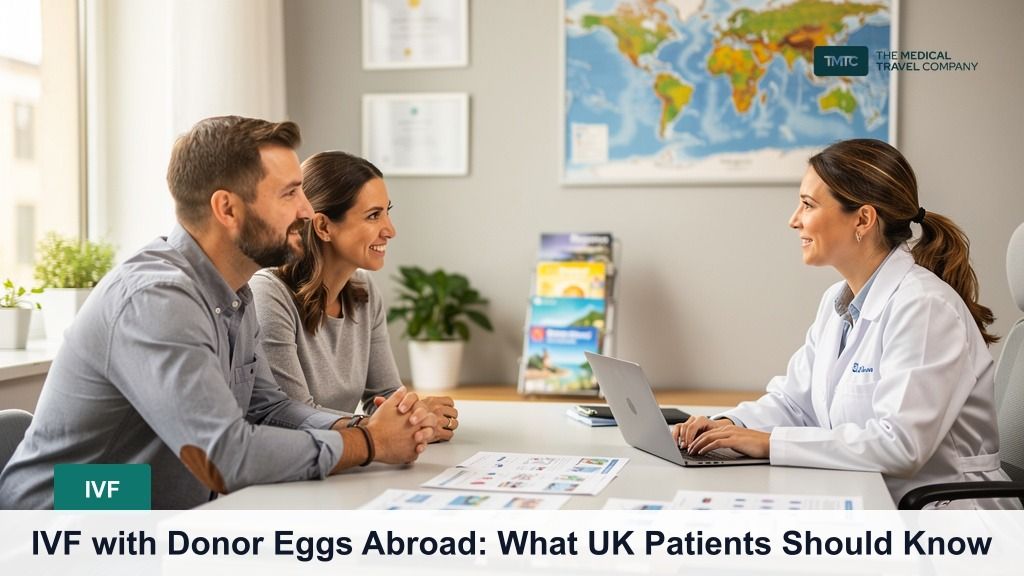
For many UK couples facing fertility challenges, donor egg IVF represents hope when their own eggs are no longer viable. However, the UK's limited donor pool and lengthy NHS waiting lists are driving thousands of patients to seek treatment abroad. With Indian clinics reporting success rates of 60-65% for donor egg IVF and treatment costs up to 60% lower than UK private clinics, overseas options are becoming increasingly attractive.
But donor egg IVF abroad involves unique considerations that don't apply to standard IVF travel. You'll need to understand HFEA regulations, legal parentage rights, and how to maintain continuity of care across international borders.
Why UK Patients Look Beyond Britain for Donor Eggs
The UK's approach to egg donation creates specific challenges that many other countries don't face. Understanding these limitations helps explain why cross-border treatment has become so common.
NHS Funding Criteria and Waiting Times
NHS funding for donor egg IVF varies dramatically across Clinical Commissioning Groups. Most require you to be under 42 and have been trying to conceive for at least two years. Even when you meet the criteria, waiting times typically stretch 2-3 years due to donor shortages.
Many CCGs also require you to find your own known donor before they'll approve funding, which adds another layer of complexity to an already challenging process.
The UK's Donor Shortage Problem
The UK removed donor anonymity in 2005, meaning children conceived through donation can contact their donor when they turn 18. While this protects children's rights, it's significantly reduced the number of women willing to donate eggs.
UK donors can only help create families for up to 10 different recipients, compared to much higher limits in other countries. This restriction further constrains the available donor pool.
Cost Comparison: UK vs International Options
| Location | Average Cost | Success Rate | Waiting Time |
|---|---|---|---|
| UK Private | £8,000-12,000 | 45-50% | 6-12 months |
| India | £3,000-5,000 | 60-65% | 2-4 weeks |
| Cyprus | £4,500-6,500 | 55-60% | 1-2 months |
| Spain | £5,000-7,000 | 50-55% | 1-3 months |
| Czech Republic | £4,000-6,000 | 50-55% | 2-6 weeks |
Popular Destinations for UK Patients
Each country offers different advantages, from legal frameworks to donor availability. Your choice should align with your medical needs, budget, and comfort level with travel.
India: World-Class Care with Exceptional Value
India has emerged as a leading destination for UK patients seeking donor egg IVF. The country's large population provides an extensive donor pool, while advanced medical facilities offer cutting-edge IVF procedures at a fraction of UK costs.
Many Indian clinics cater specifically to international patients, providing English-speaking staff and coordinated care that makes the treatment process smoother for UK couples.
European Options: Cyprus and Czech Republic
Cyprus offers the advantage of EU medical standards with more liberal donor egg regulations than the UK. The island's proximity makes travel easier, and many clinics have established relationships with UK fertility specialists.
The Czech Republic has become increasingly popular due to its combination of high-quality medical care, reasonable costs, and cultural familiarity for UK patients.
Understanding the Treatment Process Abroad
Donor egg IVF abroad follows a carefully coordinated timeline that requires planning between your UK medical team and your overseas clinic.
1. Initial Consultation and Medical Screening
Most overseas clinics require basic fertility tests completed in the UK first. These typically include hormone levels, pelvic ultrasounds, and infectious disease screening. Having recent UK test results speeds up the overseas consultation process.
Your partner will also need a semen analysis and infectious disease tests, which can usually be done at your local GP surgery or private clinic.
2. Donor Selection and Matching
Overseas clinics typically match donors based on physical characteristics, blood type, and sometimes educational background. The matching process varies by country - some allow you to review detailed donor profiles, while others only provide basic characteristics.
In countries like India, donor anonymity is maintained, but clinics provide comprehensive medical and genetic screening information to ensure compatibility.
3. Treatment Timeline and Travel Requirements
Most patients require 2-3 visits to their chosen destination. The first visit typically involves final consultations and treatment planning. The second visit coincides with the donor's egg retrieval and your embryo transfer.
The entire process usually spans 6-8 weeks, though the actual time abroad totals only 2-3 weeks across all visits.
Legal Considerations and HFEA Compliance
Understanding UK law around overseas fertility treatment protects your family's legal status and ensures smooth registration processes.
HFEA Guidelines for Overseas Treatment
While the HFEA doesn't regulate overseas clinics directly, it does provide guidance on what UK patients should expect. NICE guidelines emphasize the importance of choosing clinics that follow international best practices for donor screening and embryo handling.
The HFEA recommends ensuring your overseas clinic follows similar protocols to UK standards for infectious disease testing, genetic screening, and consent processes.
Parental Rights and Birth Registration
UK law recognizes you as the legal parents if you're married or in a civil partnership and both consent to the treatment. Single women and unmarried couples have slightly different requirements but can still establish legal parentage.
You'll need to register the birth in the country where treatment occurred first, then register with the UK authorities. Most overseas clinics familiar with UK patients can guide you through this process.
Legal Preparation Checklist
- Confirm both partners consent to treatment using donor eggs
- Obtain certified copies of marriage certificate or civil partnership documents
- Research birth registration requirements for your chosen country
- Verify the clinic follows international standards for donor screening
- Understand the donor anonymity laws in your treatment country
Ensuring Continuity of Care
Successful overseas treatment depends on good coordination between your UK medical team and your international clinic.
Pre-Treatment Support in the UK
Many UK fertility specialists now offer 'shared care' arrangements for patients seeking treatment abroad. This means they'll complete your initial assessments and required tests in the UK, then coordinate with your overseas clinic.
Some UK consultants also provide ongoing monitoring and support, which can be reassuring if complications arise during treatment.
Post-Treatment Pregnancy Care
If your treatment succeeds, your UK GP and local maternity services will take over pregnancy care. Research shows that pregnancies from donor egg IVF have similar outcomes to other IVF pregnancies, though some monitoring may be needed due to slightly increased risks.
Make sure your overseas clinic provides comprehensive medical records that UK healthcare providers can easily understand and use for ongoing care.
Financial Planning for Treatment Abroad
The cost savings of overseas treatment are significant, but hidden expenses can add up quickly without careful planning.
What's Included in Treatment Packages
Most overseas clinics offer all-inclusive packages that cover donor compensation, medical procedures, embryo culture, and transfer. However, medications are often charged separately and can add £500-1,000 to your total cost.
Always clarify what happens if additional procedures are needed, such as ICSI (intracytoplasmic sperm injection) or assisted hatching.
Travel and Accommodation Costs
Budget for flights, accommodation, and local transport for both treatment visits. Many clinics have partnerships with nearby hotels that offer medical tourism rates, which can significantly reduce your accommodation costs.
Consider staying near the clinic for easier appointment access and reduced stress during treatment. Some patients find this more important than luxury accommodation.
Choosing the Right Clinic and Medical Team
Your choice of overseas clinic will significantly impact your treatment experience and success rates.
Essential Credentials to Verify
Look for clinics accredited by international organizations like JCI (Joint Commission International) or local health ministry certification. These accreditations ensure the clinic meets international standards for patient safety and care quality.
Verify that embryologists and fertility specialists have internationally recognized training and experience with donor egg procedures specifically.
Evaluating Success Rates
Be cautious of clinics advertising unusually high success rates. Reputable clinics provide age-specific success rates and distinguish between pregnancy rates and live birth rates. Research on cross-border IVF shows that outcomes depend heavily on patient selection and clinic protocols.
Ask for success rates specific to donor egg IVF, as these are typically higher than standard IVF rates and should be reported separately.
Managing Expectations and Emotional Preparation
Donor egg IVF abroad involves unique emotional challenges alongside the practical considerations of international treatment.
Realistic Success Rate Expectations
Donor egg IVF typically offers higher success rates than standard IVF because donors are young and carefully screened. However, your age still affects implantation and pregnancy maintenance, with success rates declining after 45.
Most couples need 1-2 cycles to achieve pregnancy, though some require more attempts. Factor this into your emotional and financial planning.
Building Support Systems
Consider counseling before, during, and after treatment to process the emotional aspects of using donor eggs. Many UK fertility counselors offer video sessions for patients abroad.
Connect with other UK couples who've had treatment overseas through online support groups. Their practical insights can be invaluable for navigating logistics and managing expectations.
Expert Support for Your Journey
Choosing donor egg IVF abroad represents a significant decision that affects your family's future. With proper planning and expert guidance, overseas treatment can provide the affordable, high-quality care you need to achieve your dream of parenthood.
The Medical Travel Company’s partner clinics have helped thousands of UK couples access world-class fertility care in UK, providing personalised treatment plans and seamless experiences from initial consultation through to ongoing pregnancy support. Our network includes leading fertility specialists like Dr. Sonu Balhara in India, who brings over 31 years of experience to international patients seeking donor egg IVF.
Your path to parenthood doesn't have to be limited by UK waiting lists or donor shortages. With expert guidance and careful planning, overseas donor egg IVF can offer the hope and results you've been seeking.
Key Takeaways for UK Patients
- Donor egg IVF abroad can cost 50-60% less than UK private treatment with higher success rates
- Legal parentage rights are protected under UK law when proper procedures are followed
- Coordination between UK and overseas medical teams ensures continuity of care
- Most patients require 2-3 visits over 6-8 weeks for complete treatment
- Choose HFEA-recognized or internationally accredited clinics for best outcomes
References
-
Mayo Clinic- Live birth rates for frozen donor egg IVF procedures and pregnancy outcomes
-
Cleveland Clinic- Comprehensive information on IVF procedures and success rates
-
European Journal of Obstetrics & Gynecology- Research on cross-border IVF maternal and neonatal outcomes
-
NICE Guidelines- UK clinical guidelines for fertility treatment assessment and procedures
-
PubMed- Research on families created through identity-release egg donation
Related Articles




Ready to open the door to better health?