Can You Safely Lift Weights After Shoulder Replacement? A Comprehensive Recovery Guide
Learn when it's safe to lift weights after shoulder replacement surgery with expert guidance on exercises, recovery timelines, and safety precautions.
Last Updated On 17 April 20269m


Medical professional with 10+ years’ experience in diagnosis, patient care, and clinical leadership.
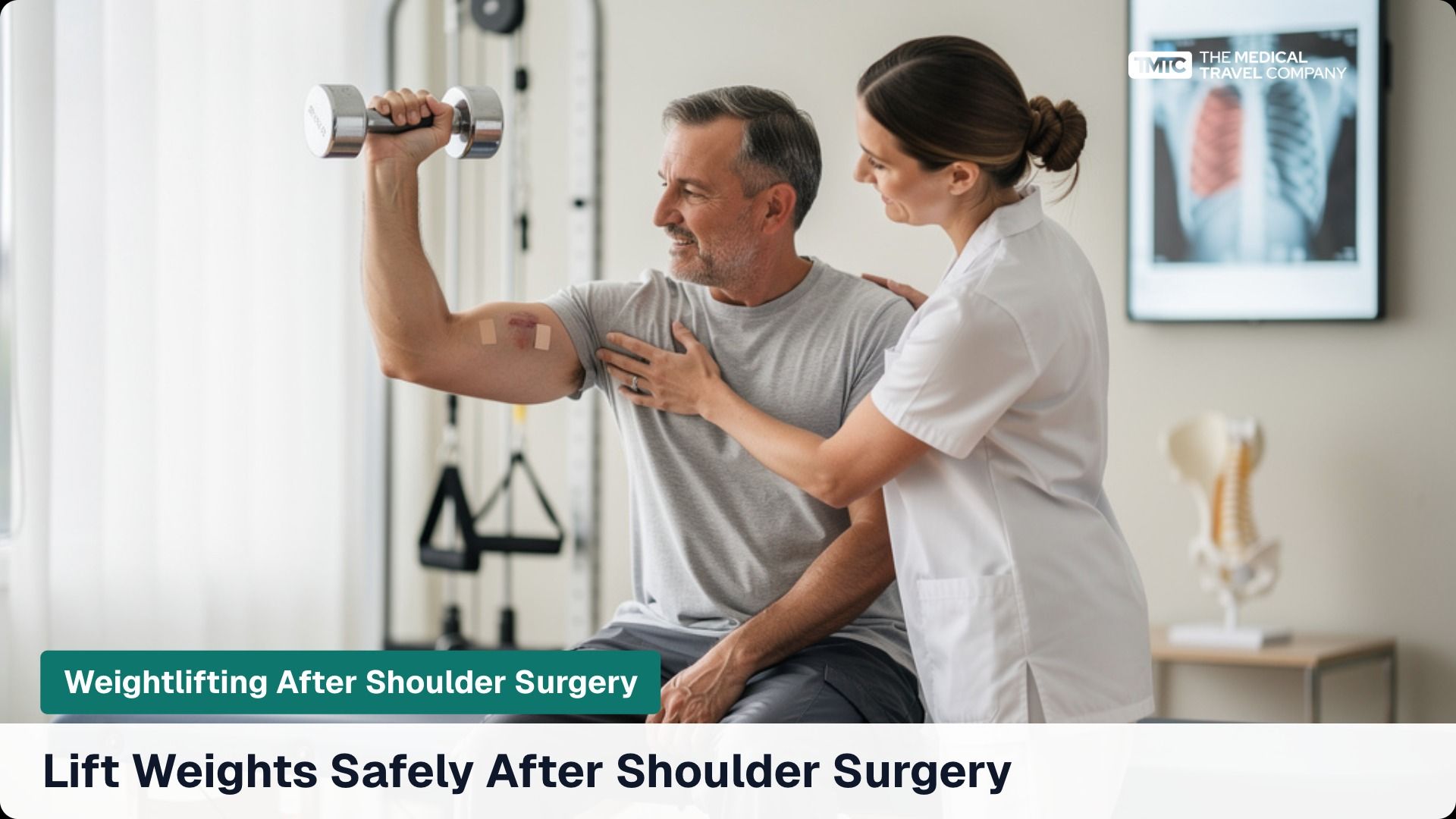
If you're recovering from shoulder replacement surgery, you're probably wondering when you'll be able to return to your normal activities, especially lifting weights. The thought of never being able to strength train again can feel overwhelming, but here's the good news: most people can safely return to weightlifting after proper recovery.
Your recovery journey isn't just about healing - it's about building back the strength and mobility you need for the activities you love. While every patient's timeline is different, understanding what to expect and following a structured approach will help you safely progress from basic movement to full weight training.
Understanding Post Shoulder Surgery Exercise
Post shoulder surgery exercises aren't just recommended - they're essential for your recovery. These carefully designed movements help restore function, prevent stiffness, and gradually rebuild strength in your replaced joint.
What Are Post Shoulder Surgery Exercises?
Post shoulder surgery exercises are structured rehabilitation movements that progress through specific phases of healing. They start with a gentlewith gentle range of motion activities and gradually advance to strength training as your joint heals and adapts to the new implant.
According to UCSF Health, these exercises are critical for encouraging proper healing and preventing complications like frozen shoulder or muscle weakness.
Benefits of Exercising After Shoulder Replacement
Key Benefits of Post-Surgery Exercise
- Restores range of motion and flexibility
- Prevents joint stiffness and scar tissue formation
- Rebuilds muscle strength around the shoulder
- Improves blood circulation to promote healing
- Reduces pain and inflammation over time
- Prepares you for return to daily activities and sports
Timeline for Shoulder Recovery
Understanding your recovery timeline helps set realistic expectations and ensures you don't rush back to lifting weights too quickly. Each phase builds on the previous one, gradually preparing your shoulder for more demanding activities.
| Recovery Phase | Timeline | Exercise Focus | Weight Lifting Status |
|---|---|---|---|
| Initial Recovery | 0-6 weeks | Gentle range of motion, pendulum swings | No lifting - sling immobilization |
| Early Rehabilitation | 6-12 weeks | Active assisted movements, light stretching | No weights - focus on movement |
| Strengthening Phase | 3-4 months | Resistance bands, light weights (1-2 lbs) | Very light weights with supervision |
| Advanced Recovery | 4-6 months | Progressive strengthening, functional training | Moderate weights with restrictions |
| Full Recovery | 6+ months | Unrestricted activity based on surgeon clearance | Return to previous lifting levels |
Initial Recovery Phase (0-6 weeks)
During the first six weeks, your primary focus is protecting the surgical site and allowing initial healing. UCSF Health emphasizes that you'll wear a sling most of the time and perform only gentle movements as prescribed by your physiotherapist.
Weight lifting is completely off-limits during this phase. Your shoulder needs time to heal, and any premature stress could compromise the implant's integration with your bone.
Rehabilitation Phase (6-12 weeks)
Once you reach the six-week mark, you can typically discontinue the sling and begin more active movements. This phase focuses on regaining range of motion and beginning light strengthening exercises with resistance bands or very light weights.
Strengthening Phase (3+ months)
After three months, most patients can begin incorporating light weights into their rehabilitation. This typically starts with 1-2 pound weights and gradually progresses based on your tolerance and surgeon's approval.
Safe Exercises for Shoulder Recovery
The key to successful recovery is following a progressive exercise program that challenges your shoulder without overwhelming it. Each type of exercise serves a specific purpose in rebuilding function and strength.
Gentle Range of Motion Exercises
Your recovery begins with simple movements designed to prevent stiffness. Pendulum swings, where you lean forward and let your arm swing gently in small circles, are often the first exercises you'll perform.
Passive range of motion exercises, where a therapist or your unaffected arm moves your shoulder through gentle stretches, help maintain flexibility while your joint heals. According to Cleveland Clinic, these exercises are crucial for preventing frozen shoulder syndrome.
Strengthening Activities
As you progress, strengthening exercises gradually rebuild the muscles that support your new shoulder joint. These typically begin with resistance bands and progress to light weights under careful supervision.
External rotation exercises using resistance bands help strengthen your rotator cuff muscles, which are essential for shoulder stability. Wall push-ups and gentle arm raises also help rebuild strength without putting excessive stress on the joint.
When to Start Lifting Weights
Most surgeons allow patients to begin light weight training around 3-4 months post-surgery, but this varies significantly based on your healing progress and the type of replacement you received. Your orthopedic surgeon and physiotherapist will evaluate your range of motion, strength, and pain levels before clearing you for weights.
When you do start lifting, expect to begin with weights much lighter than what you could handle before surgery. Starting with 1-2 pound weights and focusing on high repetitions helps rebuild endurance while protecting your joint.
Post-Surgery Precautions for Shoulder Lifting
Understanding what to watch for during your recovery can help prevent setbacks and ensure you're progressing safely. Your body will give you important signals about whether you're pushing too hard or moving in the right direction.
Common Precautions to Follow
Essential Safety Guidelines for Weight Training After Shoulder Replacement
- Never lift overhead without surgeon clearance
- Avoid sudden, jerky movements or explosive lifting
- Don't lift more than 10-15 pounds for the first 6 months
- Stop immediately if you feel sharp pain or instability
- Always warm up with gentle range of motion exercises
- Focus on controlled movements rather than heavy weights
- Work with a qualified physiotherapist or trainer initially
The North Bristol Shoulder Service guidelines emphasize that patients should avoid overhead lifting and heavy resistance training for at least six months post-surgery, with some restrictions potentially lasting longer depending on individual healing.
Signs You Should Avoid Lifting
Your body will tell you when something isn't right. Increased pain, swelling, or a feeling that your shoulder is "giving out" are all signs that you need to scale back your activities and consult your healthcare team.
Other red flags include persistent stiffness that doesn't improve with gentle movement, unusual clicking or grinding sensations, or any sudden loss of range of motion. These symptoms could indicate complications that require immediate medical attention.
Success Stories: Returning to Weights After Surgery
Many patients successfully return to weight training after shoulder replacement, often with better outcomes than they expected. Understanding realistic expectations and learning from others' experiences can help guide your own recovery journey.
Case Studies of Successful Recoveries
Research from Arthroscopy, Sports Medicine, and Rehabilitation shows that athletes and active individuals can successfully return to demanding activities after upper extremity surgery, though the timeline and intensity may be modified compared to pre-surgery levels.
Many patients find that while they may not return to their exact pre-surgery lifting capacity, they can achieve significant strength gains and participate in most activities they enjoy. The key is patience and following a progressive training program.
Expert Tips for a Safe Return to Weightlifting
Professional physiotherapists recommend starting with bodyweight exercises and resistance bands before progressing to free weights. Focus on perfecting your form with light weights rather than rushing to lift heavy loads.
Consider working with a physiotherapist who has experience with post-surgical patients, especially during your initial return to weight training. They can help modify exercises to work around any remaining limitations and ensure you're progressing safely.
Many successful patients also emphasize the importance of listening to their bodies and not comparing their recovery timeline to others. Some people progress faster, while others need more time - both are completely normal.
Embracing Your Recovery with Confidence
Returning to weight training after shoulder replacement surgery is absolutely possible for most patients, but it requires patience, proper guidance, and a commitment to following your recovery plan. While your timeline may be different from what you hoped, the end result can be a stronger, pain-free shoulder that allows you to enjoy the activities you love.
Remember that every patient's journey is unique. Some people return to full weight training within six months, while others may take a year or longer to reach their goals. What matters most is working with your healthcare team to develop a plan that's right for your specific situation.
If you're considering shoulder replacement surgery or are in the early stages of recovery, know that comprehensive shoulder replacement treatment options can provide the seamless experience and expert guidance you need for the best possible outcome. With the right approach and professional support, you can look forward to returning to the weights stronger and more confident than ever.
References
-
UCSF Health - Post-Shoulder Replacement Surgery Exercises- Information on prescribed exercises and rehabilitation protocols.
-
UCSF Health - Recovering from Shoulder Replacement Surgery- Recovery timeline and post-operative expectations.
-
Cleveland Clinic - Shoulder Replacement Surgery- Recovery guidelines and restrictions for shoulder replacement patients.
-
Arthroscopy, Sports Medicine, and Rehabilitation - Rehabilitation and Return to Play- Research on returning to athletic activities after upper extremity surgery.
-
North Bristol Shoulder Service - Post Operative Rehabilitation Guidelines- Professional guidelines for shoulder surgery rehabilitation protocols.
Related Articles




Ready to open the door to better health?