Are Dental Implants Better Than Veneers? Expert Comparison for UK Patients
Explore dental implants vs veneers, comparing durability, cost, and suitability for your smile makeover. Get expert guidance tailored for UK patients.
Last Updated On 17 April 202610m


Medical professional with 10+ years’ experience in diagnosis, patient care, and clinical leadership.
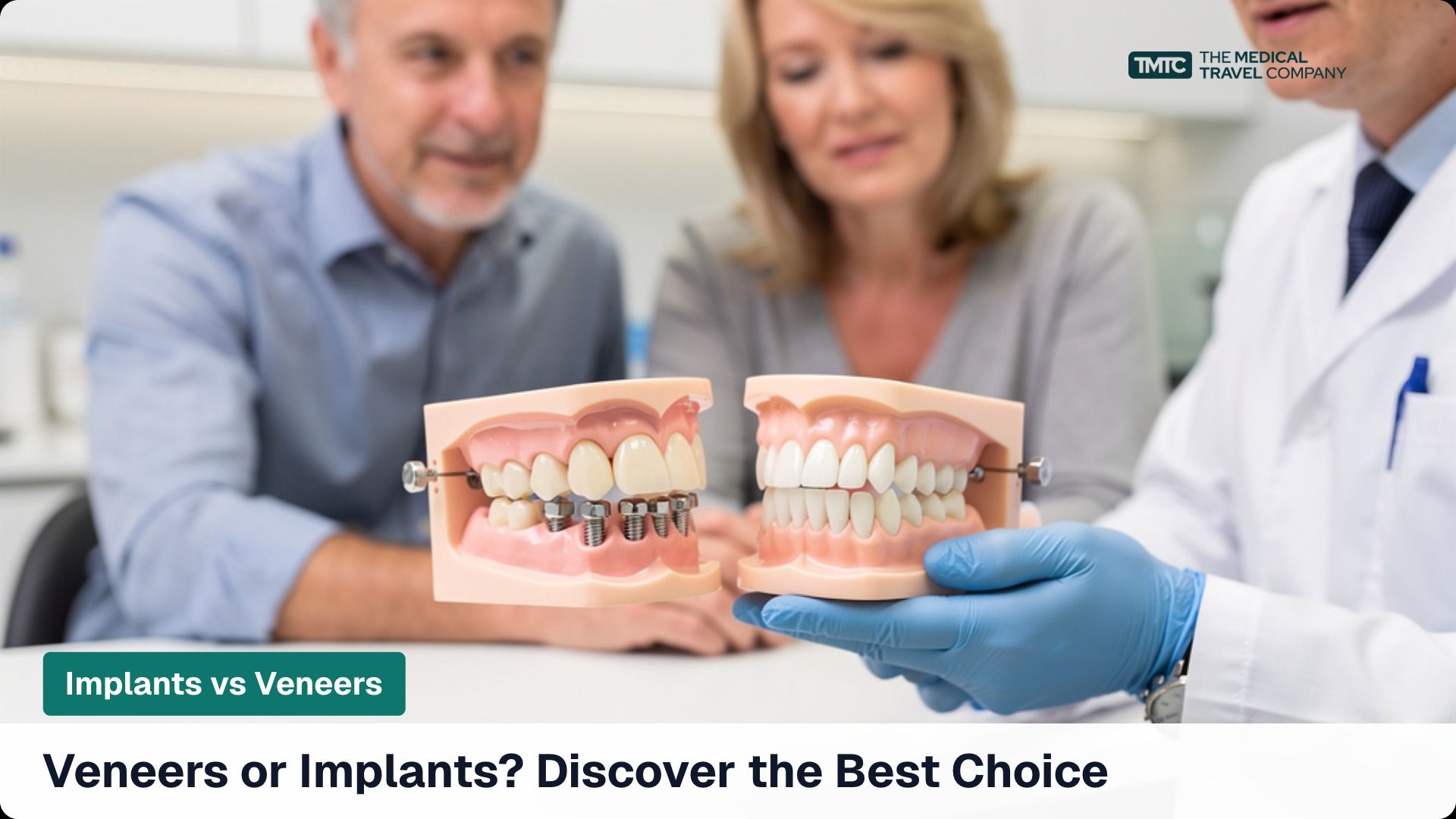
When you're considering a smile makeover, you're likely weighing two popular options: dental implants and veneers. Both can dramatically improve your appearance, but they serve very different purposes and come with distinct advantages and limitations. If you're missing teeth or dealing with damaged ones, understanding these differences will help you make the right choice for your oral health and budget.
This isn't just about aesthetics - it's about functionality, long-term health, and getting the best value from your investment in dental care. Let's explore how these treatments compare specifically for UK patients, including costs, durability, and what you can expect from each procedure.
Understanding dental implants and veneers
Before diving into comparisons, it's essential to understand what each treatment actually involves. These are fundamentally different procedures designed to solve different dental problems.
What are dental implants?
Dental implants are titanium posts surgically placed into your jawbone to replace missing tooth roots. Once the implant integrates with your bone - a process called osseointegration - a crown is attached to create a complete artificial tooth. This process typically takes several months, as the area around the implant needs time to heal before the replacement tooth can be placed on top.
The implant essentially becomes part of your jaw structure, providing a stable foundation for the replacement tooth. This makes implants the closest thing to natural teeth in terms of both function and feel. If you're considering dental implants, you're looking at a permanent solution for missing teeth that can last decades with proper care.
What are veneers?
Veneers are thin shells, typically made from porcelain or composite resin, that cover the front surface of existing teeth. Your dentist removes a small amount of tooth enamel - usually about half a millimetre - to make room for the veneer. The veneer is then bonded to your tooth using dental cement and hardened with ultraviolet light.
Unlike implants, veneers don't replace missing teeth. Instead, they improve the appearance of existing teeth that might be discoloured, chipped, misaligned, or have gaps between them. Veneers are less invasive than crowns, requiring less tooth preparation, making them an attractive option for cosmetic improvements to healthy teeth.
For comprehensive dental veneers treatment, you'll typically need two appointments - one for preparation and impression-taking, and another for placement.
Cost comparison: implants vs veneers in the UK
Cost is often a primary concern when choosing between dental treatments. The financial investment differs significantly between implants and veneers, both in upfront costs and long-term value.
Average costs in the UK
Private dental implant costs in the UK typically range from £1,500 to £3,000 per tooth, depending on the complexity of your case and the clinic you choose. This includes the implant post, abutment, and crown. Additional procedures like bone grafting or sinus lifts can increase these costs significantly.
Porcelain veneers generally cost between £400 and £1,000 per tooth privately. Composite veneers are less expensive, ranging from £150 to £400 per tooth. While the initial cost per tooth is lower than implants, you might need multiple veneers to achieve your desired smile transformation.
NHS vs private healthcare
The NHS approach to these treatments is quite different. With the exception of teeth whitening, implants and veneers, most dental treatments are usually available on the NHS. However, implants may be available on the NHS in very limited circumstances, typically for patients with significant medical conditions or trauma.
Veneers are rarely available through the NHS unless there's a clear medical need rather than cosmetic preference. NHS dental treatments are grouped into 3 bands, with Band 3 treatments costing £307.00, but this typically covers more basic restorative work rather than cosmetic procedures.
For most UK patients seeking cosmetic improvements, private treatment is the only option. However, many clinics offer payment plans to make these treatments more accessible.
Durability and longevity
When investing in dental treatment, you want to know how long your results will last. The durability of implants and veneers varies significantly, affecting their long-term value.
Life expectancy of implants
Dental implants are designed to be permanent solutions. With proper care, the titanium implant post can last a lifetime. The crown attached to the implant typically lasts 10-15 years before needing replacement, though this can vary based on your oral hygiene, eating habits, and whether you grind your teeth.
Success rates for dental implants are impressive, with studies showing success rates of 95-98% over 10 years. The key to longevity is maintaining excellent oral hygiene and attending regular dental check-ups. Unlike natural teeth, implants can't develop cavities, but the surrounding gum tissue still needs care to prevent infection.
Life expectancy of veneers
Porcelain veneers typically last 10-15 years with proper care, while composite veneers generally need replacement after 5-7 years. The lifespan depends on several factors: your oral hygiene, eating and drinking habits, and whether you have habits like nail biting or teeth grinding.
Veneers can chip, crack, or become loose over time. While they're durable, they're not as strong as natural teeth or dental implants. You'll need to avoid biting hard foods directly with veneered teeth and consider wearing a night guard if you grind your teeth.
Advantages and disadvantages
Every dental treatment has benefits and limitations. Understanding these trade-offs will help you make an informed decision based on your specific needs and circumstances.
Dental implants: pros and cons
- Permanent solution that can last a lifetime
- Preserves jawbone structure and prevents bone loss
- Functions exactly like natural teeth for eating and speaking
- Doesn't affect adjacent teeth
- Higher upfront cost than other options
- Requires surgery and several months for full healing
- Not suitable if you have insufficient bone density
- Requires good oral hygiene to prevent complications
Veneers: pros and cons
- Immediate dramatic improvement in smile appearance
- Minimally invasive procedure with quick recovery
- Can correct multiple cosmetic issues at once
- Lower initial cost per tooth than implants
- Irreversible procedure - enamel removal is permanent
- May need replacement every 10-15 years
- Can chip or crack with improper use
- Only suitable for existing teeth, not missing ones
Recovery and aftercare
The recovery process and ongoing care requirements differ significantly between these treatments. Understanding what to expect helps you plan accordingly and ensures the best possible outcomes.
Dental implant recovery process
Implant recovery happens in stages. Immediately after surgery, you'll experience some swelling and discomfort for a few days, which can be managed with prescribed pain medication and anti-inflammatories. Most patients return to work within 2-3 days, though you'll need to stick to soft foods for about a week.
The critical healing phase takes 3-6 months, during which the implant integrates with your jawbone. You'll have a temporary crown or no crown at all during this period, depending on the location of the implant. Once healing is complete, your permanent crown is attached, and you can use the tooth normally.
Long-term care for implants is similar to natural teeth: regular brushing, flossing, and dental check-ups. However, you might need special tools like interdental brushes to clean around the implant properly.
Veneer aftercare
Veneer recovery is much simpler. You might experience some sensitivity for a few days after the procedure, but most patients resume normal activities immediately. The second appointment where veneers are placed typically doesn't last longer than 2 hours, making it a relatively quick procedure.
Ongoing care involves maintaining excellent oral hygiene and being mindful of what you bite. Avoid using your veneered teeth to open packages, bite ice, or eat very hard foods. Regular dental cleanings and check-ups help ensure your veneers stay in good condition and allow your dentist to monitor for any issues.
Choosing the right option for you
The decision between implants and veneers isn't just about preference - it's about what your dental situation requires and what will give you the best long-term results.
Key factors in decision making
Your choice depends primarily on whether you're dealing with missing teeth or existing teeth that need cosmetic improvement. If you have missing teeth, implants are typically the gold standard solution. If you have healthy teeth that just need aesthetic enhancement, veneers might be perfect.
Consider your age and lifestyle too. Younger patients might benefit more from the longevity of implants, while older patients might prefer the quicker results of veneers. Your budget also matters - while implants cost more upfront, their longevity might make them more cost-effective over decades.
Your oral health status is crucial. Implants require sufficient bone density and healthy gums. If you have gum disease or insufficient bone, you might need additional treatments first, or veneers might be more suitable.
Consultation with your dentist
A thorough examination by a qualified dentist is essential before making any decision. They'll assess your oral health, take X-rays, and discuss your goals and expectations. Some patients benefit from a combination approach - implants for missing teeth and veneers for cosmetic enhancement of existing teeth.
Don't hesitate to seek a second opinion, especially for significant treatments. Many dentists offer consultation appointments where you can discuss all your options without committing to treatment.
For comprehensive care, consider looking into smile makeover options that might combine different treatments for optimal results.
“At TMTC, we understand that choosing between dental implants and veneers is a significant decision. Our personalised treatment plans ensure you receive world-class care tailored to your specific needs and budget, providing you with expert guidance every step of the way for a seamless experience.” - TMTC Patient Care Coordinator
Making your final decision
Both dental implants and veneers can dramatically improve your smile, but they're designed for different situations. Implants excel at replacing missing teeth with a permanent, natural-feeling solution, while veneers transform the appearance of existing teeth quickly and effectively.
The "better" option depends entirely on your individual circumstances: what dental problems you're addressing, your budget, your timeline, and your long-term goals. Many patients find that understanding these differences helps them feel confident about their choice.
Remember that both treatments require commitment to excellent oral hygiene and regular dental care. The investment you make in your smile - whether through implants, veneers, or a combination - can provide benefits for decades when properly maintained.
If you're considering either treatment, don't let cost alone drive your decision. Consider the long-term value, your lifestyle, and what will make you feel most confident about your smile. The right choice is the one that addresses your specific needs while fitting your circumstances and goals.
Ready to explore your options? Book a consultation with a qualified dental professional who can assess your individual situation and help you create a personalised treatment plan that delivers the results you're looking for.
References:
- NHS - Dental treatments- Information on NHS availability of dental treatments including implants and veneers
- Healthline - Dental Veneers: Benefits, Procedure, Costs, and Results- Comprehensive guide to veneer procedures, recovery, and care
- NHS - How much NHS dental treatment costs- Official NHS dental treatment pricing bands and costs
Related Articles


Ready to open the door to better health?