7 Warning Signs Your Headache Could Be More Serious
Most headaches are harmless but some can be your body’s way of signalling that something is wrong.
Published on 6 October 20263m

Dr Sukalpa Rathore


Medical content writer with dental expertise (BDS, MSc in F. Odont.), focused on cross-border healthcare.
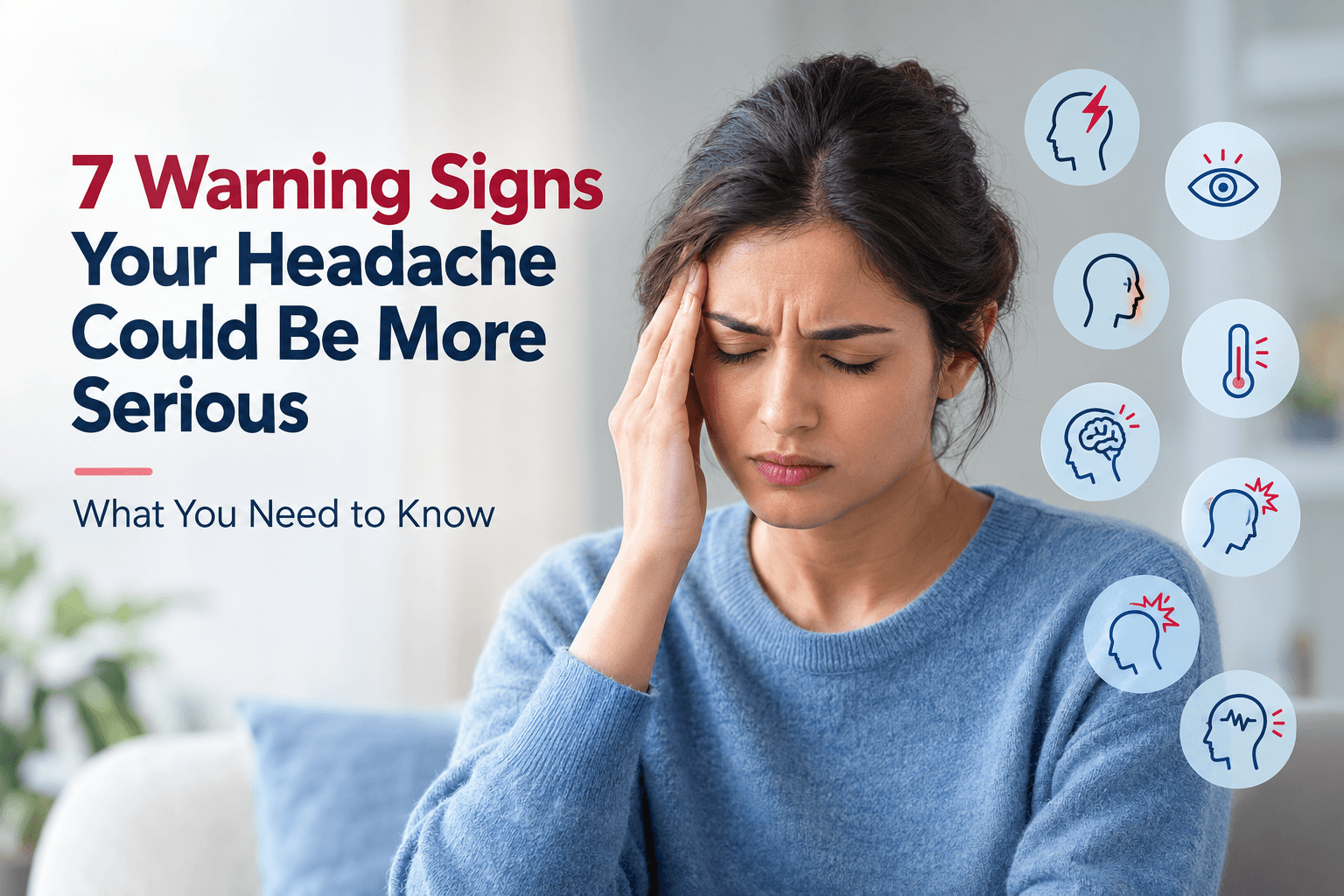
A headache can be as simple as a bad night’s sleep, dehydration or a stressful day. Most headaches are not caused by anything serious and improve on their own.
But sometimes, a headache can be your body’s way of signalling that something needs medical attention. Knowing the warning signs can help you recognise when it is time to seek help.
Here are 7 types of headaches that you shouldn't ignore:
1. Your Headache Comes on Suddenly and Severely
A headache that appears suddenly and becomes extremely painful within minutes sometimes called a “thunderclap headache” should never be ignored.
Although not every thunderclap headache is caused by a serious condition, this type of headache can be a warning sign of bleeding around the brain, including a subarachnoid haemorrhage.
Seek emergency medical attention immediately if you experience this type of headache.
2. You Have Weakness, Numbness or Difficulty Speaking
A severe headache accompanied by weakness or numbness, particularly on one side of your body, facial drooping, difficulty speaking or confusion can be a sign of a stroke.
These symptoms can sometimes disappear after a short time, but they still require immediate medical attention.
3. Your Vision Suddenly Changes
Blurred or double vision, loss of vision or other sudden changes in your eyesight alongside a headache should not be dismissed.
While some types of migraine can cause temporary visual symptoms, sudden vision changes can also occur with more serious neurological conditions. The NHS recommends urgent assessment for headaches accompanied by vision or eye problems.
4. Your Headache Comes With a Fever or Stiff Neck
A headache accompanied by a high temperature, stiff neck, vomiting, sensitivity to light, confusion or a rash can be a warning sign of an infection such as meningitis.
Meningitis can become serious quickly, so these symptoms require urgent medical attention.
5. Your Headaches Are Becoming More Frequent or Severe
Perhaps your headaches used to happen occasionally, but they're now becoming more frequent, lasting longer or getting progressively worse.
A change in your usual headache pattern doesn't necessarily mean something serious is wrong. However, persistent or worsening headaches should be assessed by a doctor rather than repeatedly treated with painkillers at home.
6. Your Headache Started After a Head Injury
A headache following a fall, accident or blow to the head deserves attention, particularly if it is accompanied by vomiting, dizziness, confusion, vision problems, weakness or unusual drowsiness.
Some head injuries can cause complications that are not immediately obvious, which is why certain symptoms require urgent assessment.
7. You Have a Headache Alongside a Seizure or Confusion
A headache accompanied by a seizure, loss of consciousness, significant confusion, problems with balance or difficulty walking can indicate a serious neurological problem.
These are red-flag symptoms that require emergency medical assessment.
When Should You See a Doctor About a Headache?
Most headaches are harmless. But you should seek medical advice if your headaches are new, persistent, getting worse or significantly different from what you normally experience.
And if a headache is sudden and extremely painful, or occurs alongside weakness, difficulty speaking, loss of vision, confusion, seizures, a stiff neck or a recent head injury, seek emergency medical care rather than waiting for it to improve.
Getting the Right Diagnosis Matters
A headache can have many possible causes, from migraine and tension headaches to conditions affecting the brain, blood vessels or surrounding structures. Identifying the cause is the first step towards choosing the right treatment.
If you have persistent or unusual headaches, a neurological assessment can help determine whether further investigations, such as brain imaging, are needed.
At TMTC, we connect international patients with experienced neurological specialists and leading hospitals in India, helping coordinate consultations, diagnosis, treatment and continued support throughout your medical journey.
Long story short, don't ignore a headache that feels different. The right medical assessment could make all the difference.
References:
headache causesheadache warning signs
Ready to open the door to better health?