Heart Valve Replacement Cost in India for Nigerian Patients
Understanding heart valve replacement costs, treatment options, and what Nigerian patients can expect when seeking care in India.
Published on 10 September 20269m


Medical professional with 10+ years’ experience in diagnosis, patient care, and clinical leadership.
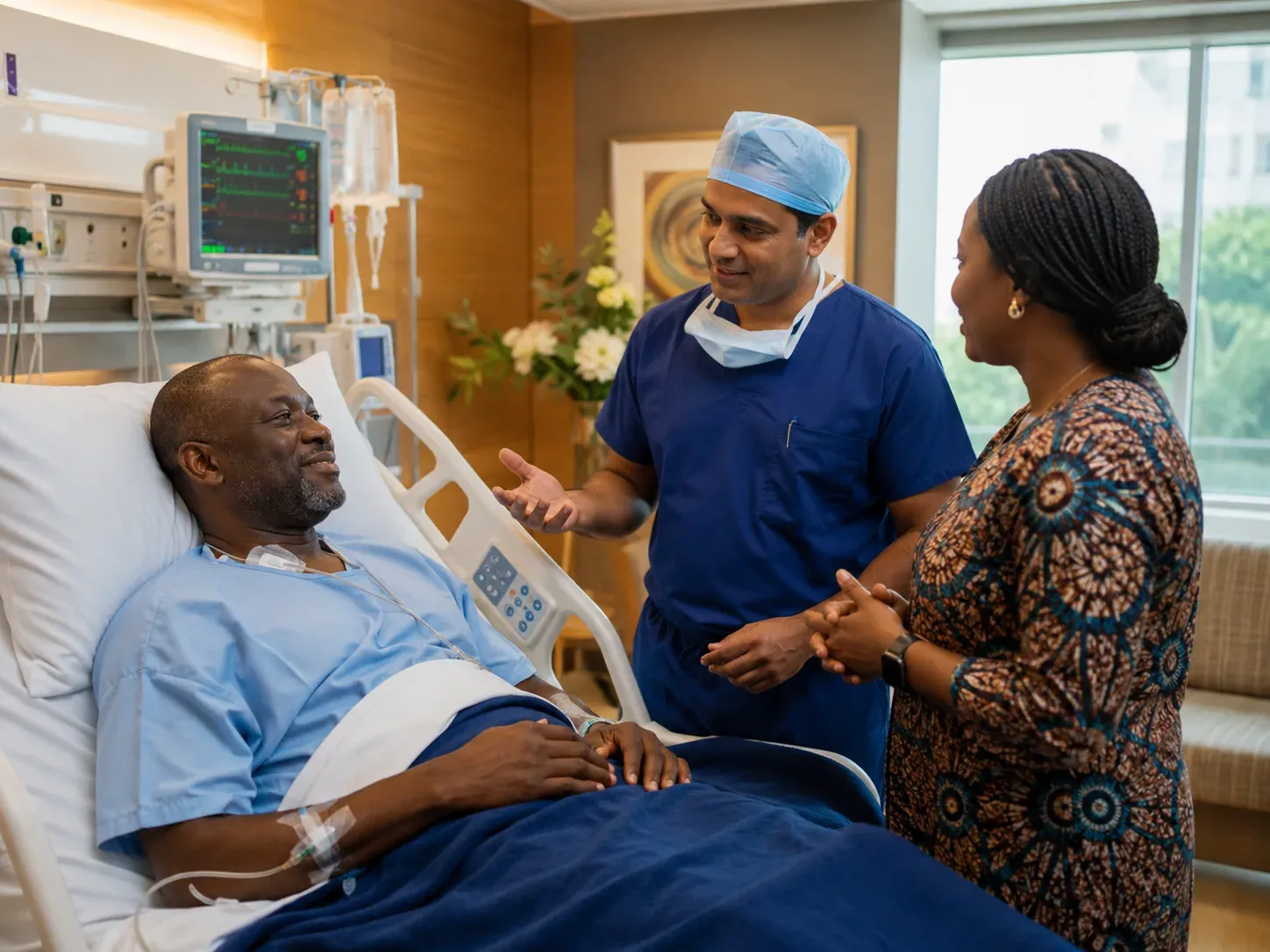
TMTC's base rate for heart valve replacement in India is US$4,600 for Nigerian patients, against a comparison figure of US$6,750 in Nigeria and US$8,800 in Turkey. The catheter route, TAVI, is priced separately at US$13,160 in India. One decision shapes both the price and the decades afterwards: whether the replacement is mechanical or made from tissue. Surgery takes place at JCI and NABH accredited partner hospitals including Fortis, Medanta, Artemis, MAX and Apollo.
Key takeaways
- TMTC's base rate for heart valve replacement in India for Nigerian patients is US$4,600, with the final cost following the treatment plan.
- The comparable figure is US$6,750 in Nigeria and US$8,800 in Turkey, while TAVI, delivered by catheter rather than open surgery, is priced separately at US$13,160 in India.
- A mechanical valve generally lasts longer but commits you to lifelong anticoagulation and regular blood testing, which has to be available where you live.
- Rheumatic heart disease is a common route to valve surgery across sub-Saharan Africa and often reaches patients young, which changes the valve choice.
What valve replacement costs at home
In Nigeria the comparison figure is US$6,750, generally self-financed.
That figure describes one specific operation: a single valve, an opened chest and a standard intensive care stay. Change any of those and the quote changes with it, since two valves in one sitting is longer, and a valve alongside bypass grafting is a different operation again.
Key point: Establish how many valves the quote assumes and whether bypass grafting is planned alongside. A single valve figure set against a double valve figure looks like a price difference when it is a difference in the operation itself.
Mechanical or tissue, and what each quote assumes
The valve decision belongs to you and your surgeon together, and is worth understanding before the quote arrives.
A mechanical valve is made from durable materials and lasts a very long time, but blood clots more readily on it, so it commits the patient to lifelong anticoagulation with regular INR testing. A tissue valve avoids that for most patients, though it wears and may need replacing after some years. Age sits at the centre of the trade-off.
Which leaves four questions for the quote. Which valve type and model does the figure include, named rather than described, and how many valves? Is bypass grafting part of the same operation? Does the price assume open surgery or a catheter-delivered valve? And what does it assume about intensive care?
The India figures for open surgery and for TAVI
| Procedure | India | Turkey | Nigeria |
|---|---|---|---|
| Heart valve replacement | US$4,600 | US$8,800 | US$6,750 |
| TAVI, catheter-delivered valve | US$13,160 | US$25,170 | US$19,300 |
Both are base rates, and the final cost follows the treatment plan. TAVI is generally offered where open surgery carries higher risk, so it is a clinical route rather than a premium version of the same thing. Your own figure is itemised alongside the treatment plan, through the
cardiology service
, and around either procedure sit the record review, medical visa support, flight booking assistance, airport transfers, accommodation for you and a companion, an interpreter and a dedicated coordinator. Inclusions vary between procedures, so confirm what applies to your route.Cost, currency and why the standard holds
Valve surgery is among the operations where Indian tertiary centres run at high volume, largely because domestic demand is considerable. Volume is a capability point rather than a pricing one, and the two are worth keeping apart. The lower figure comes from clinical salaries, facility costs and currency, while the experience comes from how many valve operations a unit performs each year, which is a question you put to the hospital directly.
Accreditation is the half you can verify yourself, through Joint Commission International's
accredited international organisations
and NABH's accredited healthcare organisations
.Why TMTC. Every plan is reviewed by a UK-registered GP, TMTC's Medical Director of Primary Care, alongside your treating Indian specialist. Treatment is at JCI and NABH accredited partner hospitals, using the implant brands specified in UK and German hospitals. You recover at our aftercare centre with a doctor and nurse on site around the clock until a clinician certifies you fit to fly, and one coordinator handles the visa file, flights, transfers, interpreter and companion accommodation.
Rheumatic heart disease, timing and the surgical team
This is where valve disease in Nigeria differs from valve disease in Europe. The World Health Organization describes rheumatic heart disease as chronic damage to the heart valves following rheumatic fever, usually beginning in childhood with a diagnostic peak in adults aged twenty to thirty-nine, and a WHO African Region review records that sub-Saharan Africa accounts for around a quarter of cases worldwide.
The practical consequence is age. A patient reaching valve surgery in their thirties faces a different mechanical or tissue calculation from one in their seventies, and that conversation deserves time. Establish how many valve operations the named surgeon performs each year, and whether the centre handles redo valve surgery, which matters if a tissue valve is chosen and may need replacing later. Profiles for the
specialists
are published for review. Every recommendation is reviewed by TMTC's Medical Director of Primary Care, a UK-registered GP, giving the plan an additional layer of independent UK clinical oversight. That review covers continuity and the reading of your records rather than the surgery itself.Nigeria does not appear on the Government of India's
e-Visa eligibility list
, so the route is a paper medical visa lodged in person in Abuja or Lagos. The mission asks for a signed invitation letter from the Indian hospital, sent from its own verifiable domain email address and giving the treatment and its start and end dates. Alongside it you will need a typed referral letter from a reputable Nigerian hospital, stamped and signed after examination, and a certified three month bank statement or a bank guarantee letter covering medical and living costs. Yellow fever vaccination is required for all except infants under six months, and oral polio or IPV for residents of Nigeria, with that certificate valid for a year from the date it is administered. Requirements change, so read the current list on the High Commission of India, Abuja
page before you apply.Anticoagulation, monitoring and life after the valve
If a mechanical valve is chosen, the most important practical question is not about India at all. It is whether you can get regular INR testing where you live, reliably, for life, so settle that with your own clinic before the valve type is agreed.
Our patients stay at the
aftercare centre
, where a doctor and nurse are on site around the clock, physiotherapy runs daily and meals are designed by a nutritionist, until a clinician certifies them fit to fly, rather than until a booking expires. The post-treatment insurance included for Nigerian patients covers a return flight to India and treatment in India if a complication arises, rather than treatment in Nigeria. You travel home with a discharge summary, the valve implant card naming the model, your imaging, the anticoagulation plan and coordination with your own cardiologist in Lagos, Abuja, Port Harcourt or wherever you live.Patient tip: Put the anticoagulation question to your Nigerian cardiologist before you fly out. Their answer on INR testing may reasonably change which valve you and the surgeon choose.
Choose the Valve, Then Read the Quote
The order matters more than in most cost decisions. Settle the valve type with your surgeon first, since it shapes the operation, the price and how the next decades look. Then establish how many valves the quote assumes and whether bypass grafting is included, confirm the surgeon's annual volume and whether redo surgery is done at that centre, and verify the accreditation yourself. If you would like that sequence handled alongside the visa file, a
free consultation
is where TMTC's Nigeria service
begins.Frequently asked questions
How much does heart valve replacement cost in India for Nigerian patients?
TMTC's base rate is US$4,600, against a comparison figure of US$6,750 in Nigeria. It is a starting point rather than a final price, and it assumes a defined operation, so the number of valves, any bypass grafting and the intensive care assumption all move your eventual figure.
Should I choose a mechanical or a tissue valve?
That belongs to you and your surgeon. Mechanical valves last longer but require lifelong anticoagulation with regular INR testing, while tissue valves usually avoid that but may need replacing after some years. Age and access to monitoring at home both feed the choice.
What is TAVI and how does its cost compare?
TAVI places a replacement valve through a catheter rather than by opening the chest, and is usually offered where open surgery carries higher risk. The base rate is US$13,160 in India against US$19,300 in Nigeria, so it is a clinical route rather than a cost-saving one.
Will I need blood thinners after valve replacement?
With a mechanical valve, yes, for life, with regular INR testing to keep the dose right. With a tissue valve most patients need them only for a limited period, though your own circumstances may differ. Confirm the plan before you leave India.
How long is the recovery before I can fly back to Nigeria?
Departure follows a clinician certifying you fit to fly rather than a booked date, and open valve surgery needs more recovery than a catheter procedure. Plan a stay with real margin, and make sure the treatment dates in your letter reflect it.
Sources referenced for this guide: TMTC client cost sheet for Nigeria and published service pages; World Health Organization guideline on rheumatic fever and rheumatic heart disease; World Health Organization African Region review of RHD programmes; Government of India e-Visa portal; High Commission of India, Abuja, visa requirements; Joint Commission International and NABH accreditation directories.
Please note: Visa requirements, fees and arrangements change from time to time. Confirm the current position with the relevant mission or official portal before booking travel or committing to treatment.
Disclaimer. This article is for general information only and is not medical advice. It does not replace consultation with a qualified doctor. Treatments, risks, recovery and outcomes vary by individual and depend on your personal circumstances; speak to a registered clinician before making any treatment decision. Insurance cover, including any post-treatment cover, is subject to the full terms, limits and exclusions of the policy document, which is provided before you book.
Ready to open the door to better health?