Affordable Dental Implants Abroad for Kenyan Patients: Cost, Procedure & Results
Explore dental implants abroad for Kenyan patients. Learn about costs, procedures, success rates, and the best clinics for quality care.
Last Updated On 29 April 202610m


Medical professional with 10+ years’ experience in diagnosis, patient care, and clinical leadership.
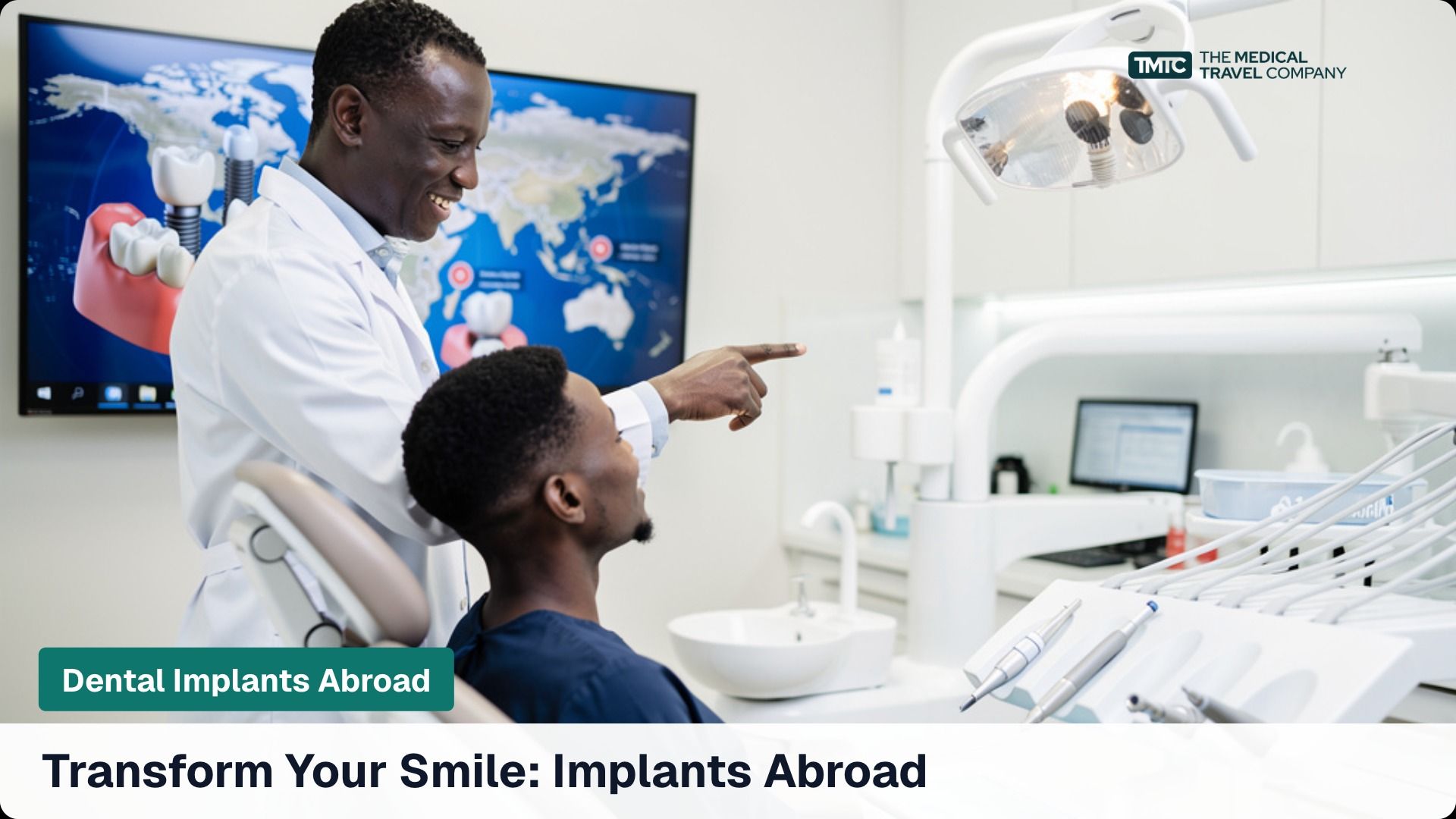
If you're dealing with missing teeth, you're probably wondering about your options for affordable, high-quality care. Many Kenyan patients are discovering that dental implants abroad offer the perfect combination of world-class treatment and significant cost savings.
Dental implants abroad aren't just about saving money - though the savings can be substantial. You're accessing the same advanced technology, experienced specialists, and internationally accredited facilities that charge premium prices elsewhere, but at a fraction of the cost.
What Are Dental Implants and Why Go Abroad?
A dental implant is a titanium post that's surgically placed into your jawbone to replace the root of a missing tooth. Once the implant fuses with your bone - a process called osseointegration - a crown is attached to create a natural-looking, fully functional tooth.
Unlike removable dentures or bridges that rely on adjacent teeth for support, dental implants treatment in kenya stand independently. This preserves your remaining healthy teeth and maintains the strength of your jawbone. With proper care, implants can last a lifetime, making them the gold standard for tooth replacement.
The main reason Kenyan patients choose to travel abroad is cost-effectiveness without compromising quality. Countries like India, Turkey, and Thailand offer the same implant brands used in Western countries - Nobel Biocare, Straumann, and Zimmer - at prices that are 50-70% lower. You're getting identical materials and procedures, just in a different location.
The Dental Implant Procedure: Step by Step
Understanding what happens during your treatment helps you feel more confident about the process. Most patients are surprised by how straightforward and comfortable the experience is.
1. Initial Consultation and Planning
Your journey begins with a comprehensive evaluation. Your dentist will take 3D scans of your mouth to assess bone density and plan the exact placement of your implants. This digital planning ensures precision and helps predict the final result before any treatment begins.
During this phase, you'll discuss your personalised treatment plan, including the number of implants needed, whether additional procedures like bone grafting are necessary, and your expected timeline. Most international clinics provide detailed treatment plans and cost breakdowns upfront, so there won't be any surprises.
2. Implant Placement Surgery
The surgical procedure itself is typically performed under local anaesthesia, though sedation options are available if you're anxious. Your surgeon will make a small incision in your gum and precisely place the titanium implant into your jawbone using the pre-planned positioning.
Most single implant procedures take 30-60 minutes. If you're getting multiple implants or need additional procedures, the time will vary accordingly. Many patients are surprised that the discomfort is minimal - most describe it as less painful than a tooth extraction.
3. Healing and Crown Placement
After implant placement, you'll need time for osseointegration - the process where your bone grows around and fuses with the implant. This typically takes 3-6 months for lower jaw implants and 4-6 months for upper jaw implants. Don't worry about gaps during this time; temporary solutions can be provided.
Once healing is complete, your final crown is created and attached. The crown is custom-made to match your natural teeth in colour, shape, and size. This final step transforms your implant into a fully functional tooth that looks and feels completely natural.
Cost Breakdown: What You'll Actually Pay
Let's talk numbers. Understanding the real costs helps you budget effectively and compare your options.
| Procedure | Kenya (KES) | India (KES) | Turkey (KES) | Thailand (KES) |
|---|---|---|---|---|
| Single Implant with Crown | 200,000-300,000 | 80,000-120,000 | 100,000-150,000 | 90,000-140,000 |
| Full Mouth Implants (All-on-4) | 1,200,000-2,000,000 | 400,000-600,000 | 500,000-700,000 | 450,000-650,000 |
| Bone Graft (if needed) | 80,000-150,000 | 25,000-50,000 | 30,000-60,000 | 28,000-55,000 |
| Consultation & Scans | 15,000-25,000 | 5,000-10,000 | 8,000-15,000 | 6,000-12,000 |
These prices include all components - the implant, abutment, and crown. When comparing costs, make sure you're looking at the complete treatment package, not just the implant itself.
The full mouth dental implants cost varies significantly depending on your specific needs. The All-on-4 technique, where four implants support a complete arch of teeth, is often more cost-effective than individual implants for patients missing most or all teeth.
Remember to factor in travel costs, accommodation, and time off work. Even with these additional expenses, most patients save 40-60% compared to local treatment while receiving the same quality of care.
Success Rates and Quality Standards
One of the biggest concerns about treatment abroad is quality. The good news is that implant success rates are consistently high, regardless of location, when you choose accredited clinics.
95-98% — Success rate for dental implants in internationally accredited clinics
The key is selecting the right clinic. Look for facilities that are internationally accredited by organizations like JCI (Joint Commission International) or equivalent local accreditation bodies. These clinics must meet the same standards as hospitals in developed countries.
What to Look for in Dental Implant Clinics Abroad
- International accreditation (JCI, ISO, or equivalent)
- Surgeons with international training and certifications
- Use of premium implant brands (Nobel Biocare, Straumann, Zimmer)
- Modern equipment including 3D imaging and digital planning
- Comprehensive warranties on implants and crowns
- English-speaking staff and clear communication
- Transparent pricing with no hidden costs
- Post-treatment support and follow-up care
Many top clinics abroad have success rates that match or exceed those in Western countries. This is because they often specialize in specific procedures, seeing high volumes of similar cases, which translates to extensive experience and refined techniques.
Recovery and Long-Term Care
Understanding what to expect during recovery helps you plan your trip and return home with confidence.
Immediate Recovery (First Week)
The first 24-48 hours are the most important for proper healing. You'll experience some swelling and mild discomfort, which is completely normal. Most patients find over-the-counter pain medication sufficient to manage any discomfort.
During this time, stick to soft foods like yogurt, soup, and smoothies. Avoid hard, crunchy, or spicy foods that could irritate the surgical site. Most patients can return to normal activities within a few days, though you should avoid strenuous exercise for about a week.
Long-Term Implant Care
Once your implants have healed and your crowns are in place, caring for them is straightforward. Brush and floss around your implants just like your natural teeth. The crown can't get cavities, but the gum tissue around the implant needs to stay healthy.
Regular dental check-ups every six months are important for long-term success. Your local dentist in Kenya can provide routine maintenance and monitoring. Many international clinics also offer follow-up consultations via video call to check on your progress.
With proper care, dental implants can last 25-30 years or even a lifetime. The crown may need replacement after 10-15 years due to normal wear, but the implant itself typically remains stable indefinitely.
Dental Implants vs Bridges: Making the Right Choice
If you're replacing one or more teeth, you might be wondering whether to choose implants or a dental bridge. Both options restore function and appearance, but they work differently.
| Factor | Dental Implants | Dental Bridge |
|---|---|---|
| Longevity | 25-30+ years | 10-15 years |
| Impact on Adjacent Teeth | None - stands alone | Requires grinding down healthy teeth |
| Bone Preservation | Stimulates bone growth | Bone may deteriorate over time |
| Cleaning | Brush and floss normally | Special flossing technique required |
| Initial Cost | Higher upfront | Lower upfront |
| Long-term Value | Better (fewer replacements) | May need multiple replacements |
| Success Rate | 95-98% | 85-90% |
The main advantage of implants is that they don't affect your healthy adjacent teeth. A bridge requires grinding down the teeth on either side of the gap to support the replacement tooth. This removes healthy tooth structure that can never be restored.
While bridges have a lower upfront cost, implants often prove more economical long-term because they last longer and don't require replacement as frequently. For most patients with healthy bone structure, dental implants are the preferred long-term solution.
When You Need Bone Grafts for Dental Implants
Sometimes your jawbone isn't thick or dense enough to support an implant. This is common if you've had missing teeth for a while, as the bone naturally shrinks when it's not being stimulated by tooth roots.
A bone graft adds material to your jaw to create a solid foundation for the implant. The graft material can come from your own bone, donor bone, or synthetic materials. Most patients find the bone graft procedure no more uncomfortable than the implant placement itself.
If you need a bone graft, it typically adds 3-6 months to your treatment timeline as the graft needs to integrate before the implant can be placed. However, minor grafts can sometimes be done at the same time as implant placement, keeping your treatment on schedule.
The additional cost for bone grafting abroad is still significantly less than having the procedure done locally. Many clinics abroad specialize in complex cases requiring bone grafts, so you'll benefit from their extensive experience with these procedures.
Your Journey to World-Class Dental Care
Getting dental implants abroad might seem daunting, but thousands of Kenyan patients have successfully made this journey. The key is proper planning and choosing the right support team.
Start by getting a consultation and treatment plan. Many international clinics offer virtual consultations where you can discuss your case and get preliminary cost estimates. This helps you understand your options before committing to travel.
Consider working with a medical tourism facilitator who can help coordinate your treatment, travel, and accommodation. They can also provide ongoing support throughout your treatment journey, ensuring you feel confident and informed every step of the way.
The combination of expert guidance, advanced dental care in Kenya, and significant cost savings makes dental implants abroad an attractive option for many Kenyan patients. With proper planning and the right support team, you can achieve the smile you've always wanted while saving substantially on treatment costs.
Key Points to Remember
- Dental implants abroad offer 50-70% cost savings without compromising quality
- Success rates of 95-98% are achievable at internationally accredited clinics
- Complete treatment including travel often costs less than local treatment alone
- Proper planning and clinic selection are crucial for optimal results
- Long-term care is simple and can be managed by your local dentist in Kenya
Don't let missing teeth limit your confidence or quality of life. With affordable, world-class dental implant treatment available abroad, you can restore your smile and your confidence without breaking the bank. The first step is getting a personalised consultation to understand your options and create a treatment plan that fits your needs and budget.
Related Articles

Ready to open the door to better health?