Your Guide to Egg Freezing Abroad for Women in the DRC: Cost, Process & Benefits
Explore egg freezing abroad for women from the DRC. Understand the process, costs, benefits and success factors, and plan your fertility preservation journey.
Published on 29 October 202610m


Medical professional with 10+ years’ experience in diagnosis, patient care, and clinical leadership.
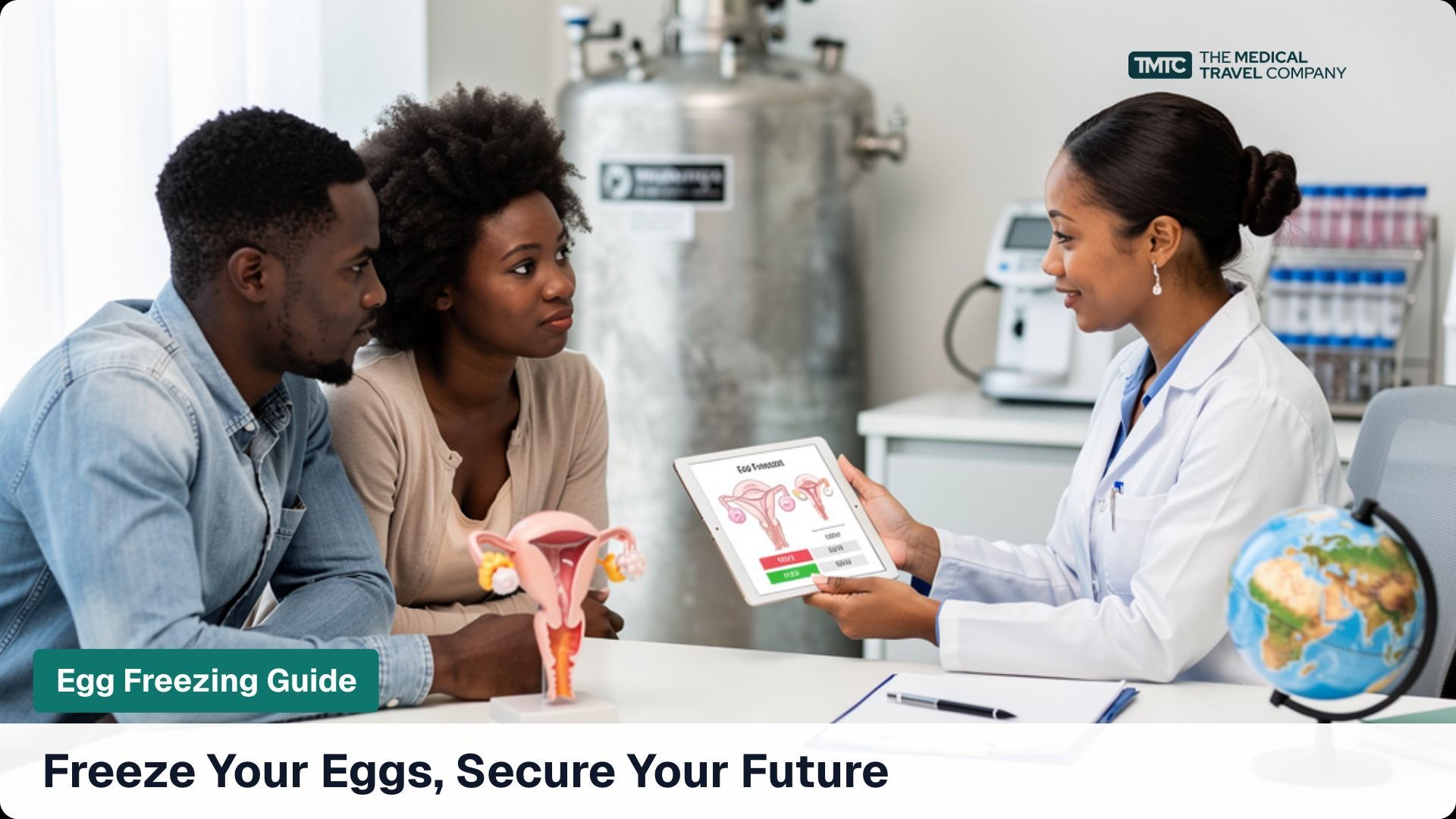
For women in the Democratic Republic of the Congo (DRC), planning for the future may involve balancing career goals, personal circumstances and decisions about parenthood. Egg freezing can offer an additional option for women who wish to preserve their eggs for possible use later in life.
Also known as oocyte cryopreservation, egg freezing involves retrieving mature eggs from the ovaries and storing them at very low temperatures. Women considering this option may explore treatment abroad to access fertility specialists, laboratory facilities and services that may not be readily available locally.
Before making a decision, it is important to understand how the procedure works, what it may cost and what it can and cannot offer.
What Is Egg Freezing and Why Consider Treatment Abroad?
Egg freezing is a fertility preservation procedure that allows a woman to store unfertilised eggs for possible future use through in vitro fertilisation (IVF).
Women may consider egg freezing for several reasons, including:
- Personal or career plans: You may not be ready to have children now but would like to explore future options.
- Medical reasons: Certain treatments, including some cancer therapies, can affect fertility. A specialist may recommend fertility preservation before treatment begins.
- Changing circumstances: You may wish to delay pregnancy while considering your personal or family plans.
- Fertility planning: You want to understand your ovarian reserve and discuss options with a fertility specialist.
Some women from the DRC may consider treatment abroad if they have difficulty accessing suitable services locally. A 2026 study examining assisted reproductive technology (ART) in the DRC highlighted gaps in access to fertility treatment, including limited public-sector ART services.
India, South Africa and other countries with established fertility centres may be options to explore. However, availability, clinical suitability, costs and regulations differ, so it is important to assess each clinic individually.
How Does the Egg Freezing Process Work?
The process usually involves several stages. The exact timeline depends on your medical assessment, response to medication and clinic protocol.
1. Initial Consultation and Fertility Testing
Your journey begins with a consultation with a fertility specialist. The doctor reviews your medical history, menstrual cycle, reproductive goals and any relevant health conditions.
Tests may include:
- Blood tests to assess hormone levels, including anti-Müllerian hormone (AMH)
- An ultrasound to assess the ovaries and estimate the antral follicle count
- Additional investigations based on your medical history
These tests help the specialist assess your likely response to ovarian stimulation. They cannot guarantee how many eggs will be retrieved or whether egg freezing will result in a future pregnancy.
2. Ovarian Stimulation
You will usually take hormone medication for around 10–12 days to encourage several eggs to mature during one cycle.
During this period, the clinic monitors your response through blood tests and ultrasound scans. Medication may be adjusted according to your progress.
If you are travelling from the DRC, ask whether any initial investigations or monitoring appointments can be completed in your home country. This depends on the clinic's arrangements and the availability of suitable local medical support.
3. Egg Retrieval
Once the eggs are ready, the specialist performs an egg retrieval procedure, generally under sedation or anaesthesia.
A thin needle guided by ultrasound is used to collect the eggs from the ovaries. The procedure commonly takes around 15–30 minutes, although preparation and recovery take additional time.
You may experience mild cramping, bloating or discomfort afterwards. Your clinical team will explain possible complications and when you can resume normal activities.
4. Egg Freezing and Storage
The retrieved eggs are assessed by an embryology team. Mature eggs suitable for freezing are generally preserved using a technique called vitrification, which rapidly cools them for storage.
Ask the clinic how the eggs will be monitored, what storage arrangements are available, how long storage is permitted and what happens if you need to change clinics or countries in the future.
How Much Does Egg Freezing Abroad Cost?
The cost of egg freezing varies according to the destination, clinic, medication requirements and number of treatment cycles needed. For women travelling from the DRC, the overall budget should include both medical expenses and the cost of travelling abroad.
| Cost component | What to check |
|---|---|
| Consultation and testing | Specialist fees, hormone tests and ultrasound scans |
| Medication | Hormone injections and any additional prescriptions |
| Monitoring | Follow-up scans and blood tests during stimulation |
| Egg retrieval | Procedure, sedation or anaesthesia and clinical fees |
| Egg freezing | Laboratory processing and vitrification |
| Egg storage | Initial storage period and annual renewal charges |
| Travel and accommodation | Flights, visa, meals, local transport and accommodation |
| Future IVF treatment | Thawing, fertilisation, embryo transfer and associated medication |
Before comparing clinics, request a written quotation that separates treatment charges from storage, travel and future IVF expenses. Confirm what is included, what may cost extra and whether another stimulation cycle could be needed.
There is no single price that applies to every patient. Any cost estimate should be confirmed directly with the clinic, as prices and package inclusions can change.
What Is the Best Age for Egg Freezing?
Age is an important factor because both the number of eggs available and their quality tend to decline over time. Egg freezing is generally more likely to be beneficial when undertaken at a younger age, often in the 20s or early 30s, although suitability varies between individuals.
Women in their mid-to-late 30s or older may still wish to explore the procedure. A fertility specialist can assess their circumstances and explain the likely benefits and limitations.
Tests such as AMH and antral follicle count can help estimate ovarian reserve and predict the response to stimulation. However, they cannot independently predict whether you will have a baby in the future.
Rather than relying on a specific age cut-off, discuss your fertility goals, medical history and individual test results with a qualified specialist.
Understanding Egg Freezing Success Rates
Egg freezing can preserve eggs for possible future use, but it does not guarantee a pregnancy or the birth of a baby.
Future outcomes depend on several factors, including:
- Your age when the eggs are frozen
- The number of mature eggs successfully stored
- How many eggs survive thawing
- Fertilisation and embryo development
- The circumstances in which the eggs are used in IVF
Not every frozen egg will develop into an embryo or result in a live birth. Some women may need more than one egg-freezing cycle, depending on their goals and clinical assessment.
When speaking to a fertility clinic, ask for its outcome data for patients of a similar age and situation. Clarify whether reported figures refer to egg survival, fertilisation, pregnancy or live birth, as these are different measures.
What Are the Benefits and Limitations of Egg Freezing?
Egg freezing may provide greater flexibility for women who are not ready to try for pregnancy now. It also allows mature eggs to be stored without fertilising them at the time of retrieval.
However, it is important to consider the limitations:
- No guarantee of a future baby: Some or all stored eggs may not result in a live birth.
- Medical risks: Hormone stimulation and egg retrieval carry risks, which your specialist should explain.
- Ongoing expenses: Storage fees may apply every year, followed by additional costs when you decide to use the eggs.
- Time and travel: Treatment requires monitoring appointments and a period of availability for retrieval and recovery.
- Future regulations: The rules governing storage, use and transport of eggs differ between countries and clinics.
Egg freezing should be considered an option for fertility preservation, not a way to stop or reverse the natural ageing process.
What Other Fertility Preservation Options Are Available?
Egg freezing is not the only option. Depending on your circumstances, a specialist may discuss:
- Embryo freezing: Eggs are fertilised with sperm and the resulting embryos are frozen for future use.
- Ovarian tissue freezing: Ovarian tissue is removed and preserved in selected medical circumstances.
- Fertility assessment and counselling: Testing and specialist advice can help you understand your current fertility and available options.
These approaches are not interchangeable, and not all are suitable for every patient. Your age, medical history, future plans and personal preferences will influence the decision.
Planning Egg Freezing Treatment Abroad from the DRC
If you are considering treatment in India or another destination, plan the medical and travel arrangements together.
Before travelling:
- Share your medical history and available test results with the clinic.
- Confirm the treatment plan, expected timeline and total estimated cost.
- Ask whether initial tests and any monitoring can be coordinated in the DRC.
- Check visa requirements, flights, accommodation and local transport.
- Confirm how long you may need to remain near the clinic and when you can safely travel home.
- Ask about emergency support, follow-up appointments and communication after returning home.
- Clarify storage duration, renewal fees, consent requirements and the rules for future use of your eggs.
The treatment timeline can vary. Do not book non-refundable travel until the clinic has assessed your case and advised on the likely schedule.
If you choose to explore treatment in India through The Medical Travel Company (TMTC), the team can help you understand potential treatment options and coordinate with partner hospitals and specialists. Confirm the specific clinic, treating doctor, treatment plan, storage arrangements and final costs before travelling.
Taking the Next Step in Your Fertility Journey
Choosing whether to freeze your eggs is a personal decision. For women in the DRC, learning about the procedure, comparing treatment options and understanding the financial and medical commitments can help make the decision more informed.
A consultation with a qualified fertility specialist is the best place to begin. Ask questions, discuss your future plans and make sure you understand both the potential benefits and the limitations before proceeding.
Explore your fertility preservation options with TMTC and seek guidance on treatment planning, specialist consultations and care arrangements in India.
Frequently Asked Questions
1. Does egg freezing guarantee a future pregnancy?
No. Egg freezing preserves eggs for possible future use, but not every egg will survive thawing, fertilise or develop into an embryo that results in a live birth. Outcomes depend on age at freezing, the number of mature eggs stored and other factors.
2. How long does egg freezing take?
Ovarian stimulation often takes around 10–12 days, followed by egg retrieval. The full process may take a few weeks, including initial testing and preparation. Your clinic will provide a personalised timeline.
3. Can I begin the process in the DRC and complete treatment abroad?
Possibly. Some clinics may coordinate initial testing or selected monitoring with a doctor in your home country. This depends on the clinic's protocol and whether appropriate local medical support is available. Confirm these arrangements before travelling.
4. How much does egg freezing cost for women from the DRC?
The total cost depends on the destination, clinic, medication, monitoring, egg retrieval, storage and travel. Request a personalised quotation that clearly lists what is included and any additional charges.
5. Is there an ideal age for egg freezing?
Egg freezing is generally more likely to be beneficial at a younger age, often in the 20s or early 30s. However, individual circumstances vary. A fertility specialist can explain your options based on your age, medical history and ovarian reserve assessment.
6. Can frozen eggs be used years later?
Frozen eggs may be used in future IVF treatment, subject to the applicable laws, clinic policies, storage arrangements and medical suitability. Confirm storage duration, annual fees and future-use requirements with your chosen clinic.
References
- American Society for Reproductive Medicine. (2023). Can I freeze my eggs to use later if I'm not sick? ReproductiveFacts.org. https://www.reproductivefacts.org/news-and-publications/patient-fact-sheets-and-booklets/documents/fact-sheets-and-info-booklets/can-i-freeze-my-eggs-to-use-later-if-im-not-sick/
- Itela, P. K., & Makombo, Y. Y. (2026). Infertility, reproductive equity, and policy pathways for assisted reproductive technology in the Democratic Republic of the Congo. International Journal of Women's Health. https://doi.org/10.2147/IJWH.S610760
- American Society for Reproductive Medicine. (2021). Evidence-based outcomes after oocyte cryopreservation for donor oocyte in vitro fertilization and planned oocyte cryopreservation: A guideline. https://www.asrm.org/practice-guidance/practice-committee-documents/evidence-based-outcomes-after-oocyte-cryopreservation-for-donor-oocyte-in-vitro-fertilization-and-planned-oocyte-cryopreservation-a-guideline-2021/
Ready to open the door to better health?