Spinal Surgery Abroad: A UK Patient's Complete Guide to Overseas Treatment Options
Considering spinal surgery abroad as a UK patient? Discover types of procedures, candidacy requirements, recovery expectations, and what world-class care looks like overseas.
4 May 202612m

Dr Piyush Das
Dr Piyush- Medical professional with 10+ years’ experience in diagnosis, patient care, and clinical leadership.
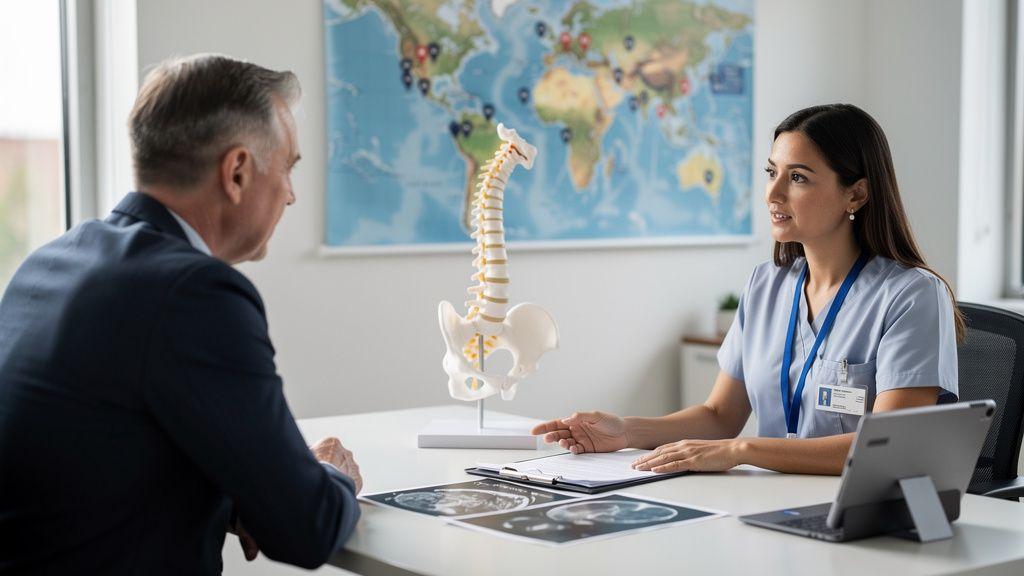
When chronic back pain becomes unbearable and NHS waiting times stretch beyond a year for spinal surgery, many UK patients find themselves exploring overseas treatment options. You're not alone if you've considered spinal surgery abroad - thousands of British patients seek world-class care internationally each year, often receiving faster treatment at a fraction of UK private costs. This comprehensive guide will help you understand your options, candidacy requirements, and what quality spine surgery abroad truly looks like.
Why UK Patients Choose Spinal Surgery Abroad
The decision to seek spinal surgery abroad isn't taken lightly. For many UK patients, it becomes the most practical solution to chronic pain that's severely impacting daily life.
NHS Waiting Times Create Urgent Need
NHS waiting times for non-emergency spinal procedures can extend well beyond comfortable limits. While emergency cases receive immediate attention, conditions like herniated discs, spinal stenosis, and degenerative disc disease often require months of waiting - time during which your pain continues and mobility may worsen.
During these extended waiting periods, you might find yourself dependent on pain medication, unable to work effectively, or missing out on activities you love. Conservative treatments like physiotherapy and steroid injections may provide temporary relief, but when surgery becomes necessary, overseas options can offer immediate availability.
Cost-Effective Private Treatment
Private spinal surgery in the UK typically ranges from £15,000 to £40,000 depending on procedure complexity. When you factor in consultant fees, hospital stays, and rehabilitation costs, the total can be substantial. Overseas treatment often costs 50-70% less while maintaining international quality standards.
These cost savings aren't just about the surgery itself. Many international facilities offer comprehensive packages that include pre-operative assessments, surgery, hospital stay, initial rehabilitation, and post-operative follow-up - all at prices significantly lower than UK private healthcare.
Access to Advanced Techniques
Some overseas centres specialise in cutting-edge minimally invasive spinal techniques that may not be widely available through the NHS. These advanced procedures often result in smaller incisions, reduced scarring, shorter recovery times, and better long-term outcomes.
International spine centres frequently invest heavily in the latest surgical technology and training, as they compete globally for medical tourism patients. This competition drives innovation and excellence in patient care.
Types of Spinal Procedures Available Abroad
Understanding your surgical options is crucial when considering overseas treatment. Different procedures address specific spinal conditions, and the right choice depends on your diagnosis, symptoms, and overall health status.
Minimally Invasive Disc Surgery
For herniated or bulging discs, minimally invasive procedures like microdiscectomy and endoscopic disc removal offer excellent outcomes with faster recovery. These procedures use small incisions and specialised instruments to remove problematic disc material while preserving healthy tissue.
According to NICE guidance on disc implants, these procedures can effectively treat disc herniation that causes sciatica and back pain. The minimally invasive approach typically allows you to return home within 24-48 hours and resume light activities within days rather than weeks.
Spinal Fusion Procedures
For degenerative conditions, instability, or severe disc degeneration, spinal fusion procedures like TLIF (Transforaminal Lumbar Interbody Fusion), PLIF (Posterior Lumbar Interbody Fusion), and ALIF (Anterior Lumbar Interbody Fusion) can provide long-term pain relief and stability.
These procedures involve joining vertebrae together to eliminate painful movement. While recovery takes longer than disc procedures, fusion surgery can be highly effective for conditions that haven't responded to conservative treatment.
Advanced Decompression Techniques
Spinal stenosis, where the spinal canal narrows and compresses nerves, can be treated with procedures like laminectomy and foraminotomy. These surgeries create more space for nerves by removing bone or tissue that's causing compression.
Modern techniques allow surgeons to perform these procedures with minimal disruption to surrounding structures, preserving spinal stability while effectively relieving nerve compression symptoms.
Artificial Disc Replacement
For younger patients with single-level disc degeneration, artificial disc replacement offers an alternative to fusion. This procedure maintains spine mobility while eliminating pain from the diseased disc. Both cervical (neck) and lumbar (lower back) artificial discs are available.
Disc replacement preserves natural spine movement, potentially reducing wear on adjacent levels - a significant advantage over fusion procedures that can accelerate degeneration at neighbouring segments.
Are You a Candidate for Spine Surgery Overseas?
Not everyone is suitable for overseas spinal surgery. Several factors determine your candidacy, from medical stability to psychological readiness for medical tourism.
Medical Eligibility Requirements
- Stable overall health with no active infections or uncontrolled medical conditions
- Clear spinal diagnosis confirmed by MRI or CT imaging
- Failed conservative treatment attempts over at least 6-12 weeks
- Ability to tolerate general anaesthesia
- No active substance abuse or untreated mental health conditions
Travel Fitness Assessment
You'll need to be physically capable of travelling 4-6 hours without severe discomfort. Long flights can be challenging with spinal conditions, but most patients manage well with proper pain management and positioning aids.
Consider your current mobility level, pain tolerance, and ability to sit for extended periods. If you can manage a domestic flight or long car journey, international travel is likely feasible with appropriate planning and medication.
Support System Requirements
Having a strong support system is crucial for overseas surgery success. You'll need someone to accompany you for the procedure and assist with travel arrangements, as you won't be able to lift luggage or navigate airports independently immediately after surgery.
This support person should be prepared to stay for your entire treatment period, which typically ranges from 7-14 days depending on your procedure. They'll also need to assist with post-operative care coordination once you return to the UK.
Popular Destinations for UK Spinal Surgery
Three destinations consistently rank highest among UK patients seeking spinal surgery abroad, each offering unique advantages in terms of expertise, technology, and value.
| Destination | Key Advantages | Typical Savings | Travel Time |
|---|---|---|---|
| Germany | World-renowned orthopaedic expertise, cutting-edge technology, excellent post-op care | 30-50% vs UK private | 2-3 hours |
| India | Internationally trained surgeons, state-of-the-art facilities, comprehensive packages | 60-70% vs UK private | 8-9 hours |
| Turkey | Modern hospitals, European standards, experienced medical tourism infrastructure | 50-65% vs UK private | 4-5 hours |
All three destinations offer English-speaking medical teams and dedicated patient coordinators for international patients. Many surgeons in these countries have trained in the UK, US, or other Western countries, bringing international best practices to their home facilities.
Hospital accreditation is crucial - look for facilities certified by Joint Commission International (JCI) or equivalent international standards. These certifications ensure that safety protocols, equipment standards, and clinical outcomes meet global benchmarks.
Recovery Timelines and Expectations
Understanding recovery timelines helps you plan your overseas surgery journey effectively and set realistic expectations for your return to normal activities.
| Recovery Phase | Timeline | Key Milestones | Expectations |
|---|---|---|---|
| Hospital Stay | 2-5 days | Pain control, mobility assessment, wound healing | Supervised care, initial physiotherapy |
| Travel Clearance | 7-14 days | Medical clearance for air travel | Reduced pain, safe mobility |
| Initial Recovery | 6-8 weeks | Wound healing, basic activities | Activity restrictions, gradual improvement |
| Return to Work | 6-12 weeks | Desk work resumption | Depends on job demands |
| Full Recovery | 3-12 months | All activities, final outcomes | Individual variation expected |
Recovery varies significantly based on your procedure type, overall health, and adherence to post-operative instructions. Minimally invasive procedures typically allow faster recovery than traditional open surgeries or fusion procedures.
The enhanced recovery pathway for spinal surgery emphasises early mobilisation and structured rehabilitation protocols. International centres following these evidence-based protocols often achieve better outcomes with shorter hospital stays.
What Quality Rehabilitation Looks Like
Exceptional rehabilitation starts before your surgery and continues long after you return to the UK. World-class care centres understand that surgery is just one part of your journey to pain-free living.
Pre-Surgery Optimisation
Quality programmes begin with pre-operative conditioning to optimise your surgical outcomes. This might include specific exercises to strengthen supporting muscles, breathing techniques for post-operative recovery, and nutritional guidance to enhance healing.
Pre-surgical fitness optimisation can significantly improve outcomes and reduce complications. Many international centres provide detailed pre-operative exercise programmes that you can complete at home before travelling.
Signs of Quality Rehabilitation Programme
- Structured physiotherapy beginning within 24-48 hours post-surgery
- Personalised treatment plans addressing your specific mobility goals
- Clear progression milestones with objective measurements
- Pain management strategies beyond medication
- Education about activity modifications and spine protection
- Seamless handover protocols to UK physiotherapy teams
Continuity of Care Planning
Excellent overseas centres don't just perform your surgery - they ensure smooth transitions back to UK care. This includes detailed discharge summaries, imaging studies, and specific rehabilitation protocols that your UK physiotherapist can continue.
Look for centres that maintain ongoing communication with your UK healthcare providers and offer telemedicine follow-up appointments. This continuity ensures that any concerns or complications can be addressed promptly by the surgical team who knows your case best.
Ensuring Continuity of Care After Return
Seamless care coordination between your overseas surgical team and UK healthcare providers is essential for optimal outcomes and peace of mind.
Essential Care Coordination Elements
- Complete surgical reports and imaging transferred to your UK GP within 48 hours
- 24/7 emergency contact details for the overseas surgical team
- Clear protocols for UK emergency departments regarding post-surgical complications
- Scheduled follow-up appointments with UK orthopaedic specialist
- Detailed medication schedules and prescription arrangements
- Written guidelines for recognising complications requiring immediate attention
Quality overseas programmes maintain detailed medical records that integrate seamlessly with NHS systems. This documentation should include surgical technique details, implant specifications if used, and specific post-operative care requirements.
Establish relationships with UK specialists before travelling overseas. Many patients arrange consultations with local orthopaedic surgeons or pain management specialists who can provide ongoing care after their return. This proactive approach ensures continuity and local expertise when needed.
Financial Considerations and Planning
Understanding the complete financial picture helps you make informed decisions and avoid unexpected costs during your overseas surgery journey.
| Cost Category | Typical Range | UK Comparison | Notes |
|---|---|---|---|
| Surgery Package | £8,000-£20,000 | 50-70% savings | Includes surgery, hospital stay, basic rehab |
| Travel Costs | £500-£2,000 | Additional expense | Flights for patient + companion |
| Accommodation | £800-£2,500 | Additional expense | 7-14 days for recovery period |
| Insurance/Complications | £1,000-£5,000 | Variable | Depends on coverage and complications |
| Total Investment | £10,000-£30,000 | Still significant savings | Compare to UK private £25,000-£50,000+ |
While cost savings are substantial, budget for additional expenses beyond the surgery package. These include extended accommodation if complications arise, meals, local transport, and potential medication costs.
Some insurance policies cover complications from overseas treatment, but coverage varies significantly. Consider specialised medical tourism insurance that covers both complications and repatriation if necessary. These policies typically cost £200-£500 but provide valuable peace of mind.
Making the Decision: Essential Questions to Ask
Before committing to overseas spinal surgery, thoroughly evaluate your chosen centre and surgical team. The right questions can reveal crucial information about quality, safety, and outcomes.
Critical Questions for Your Surgical Team
- What are the surgeon's international training credentials and board certifications?
- How many of these specific procedures has the surgeon performed?
- What is the hospital's infection rate and complication statistics?
- Can you provide references from recent UK patients?
- What happens if complications arise during or after surgery?
- How do you coordinate care with UK healthcare providers?
- What support is available for UK patients specifically?
Quality centres welcome detailed questions and provide comprehensive information about their outcomes, accreditations, and patient support services. Be wary of any facility that seems reluctant to discuss complications or provide detailed information about their surgical team.
Request to speak with recent patients who've had similar procedures. Most reputable centres maintain networks of satisfied patients willing to share their experiences with prospective patients. These conversations can provide invaluable insights into the reality of treatment abroad.
The Medical Travel Company has helped thousands of UK patients access world-class spinal surgery abroad. Our personalised treatment plans ensure you receive the right procedure at the right facility, with comprehensive support from initial consultation through full recovery. We work exclusively with accredited centres that meet our rigorous quality standards.
When chronic spinal conditions severely impact your quality of life, overseas surgery can provide faster access to world-class care at significant cost savings. The key to success lies in thorough preparation, realistic expectations, and choosing experienced providers who prioritise patient safety and outcomes.
Consider exploring affordable orthopaedic surgery options in UK that could provide the relief you've been seeking. Many UK patients find that the combination of immediate availability, advanced techniques, and substantial cost savings makes overseas treatment the right choice for their circumstances.
Remember that spinal surgery abroad isn't just about the procedure itself - it's about accessing comprehensive care that addresses your pain, restores your mobility, and gets you back to the activities you love. With proper planning and the right medical team, your journey to pain-free living can begin sooner than you might think.
References
-
NICE Interventional Procedures Guidance- Evidence on annular disc implant procedures and outcomes
-
Enhanced Recovery Pathway for Spinal Surgery- Research on optimised recovery protocols and patient outcomes
-
NICE Guidelines on Low Back Pain and Sciatica- Assessment and management recommendations for spinal conditions
-
Medical Tourism Complications and NHS Costs- Analysis of outward medical tourism outcomes and healthcare system impacts
Ready to open the door to better health?